 What Is Frost-Free Air Cooling?
In a conventional direct-cooling freezer, cold surfaces exchange heat with the cabinet and its contents. Moisture can accumulate as frost on cold surfaces, and periodic defrosting may be required.
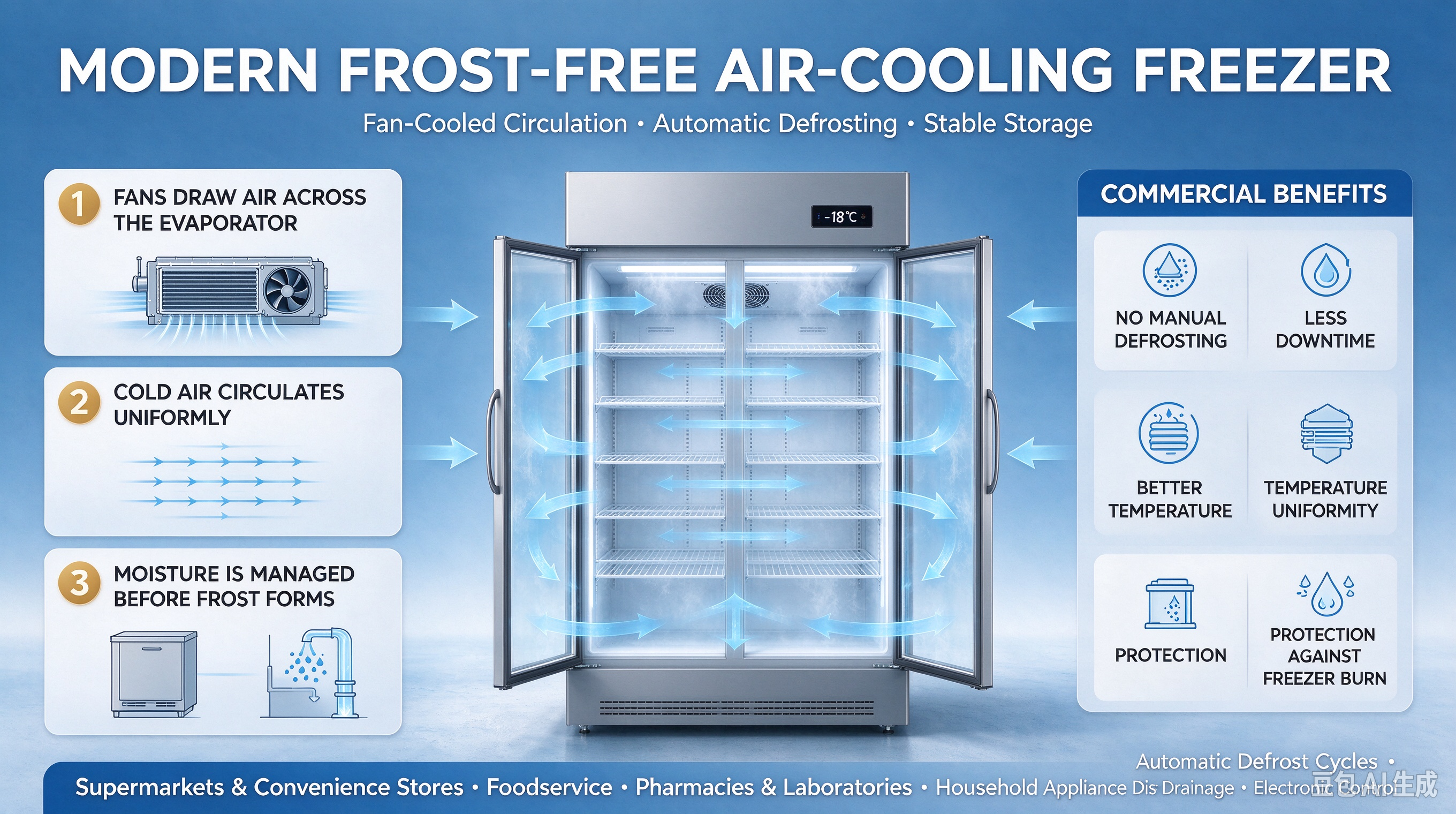
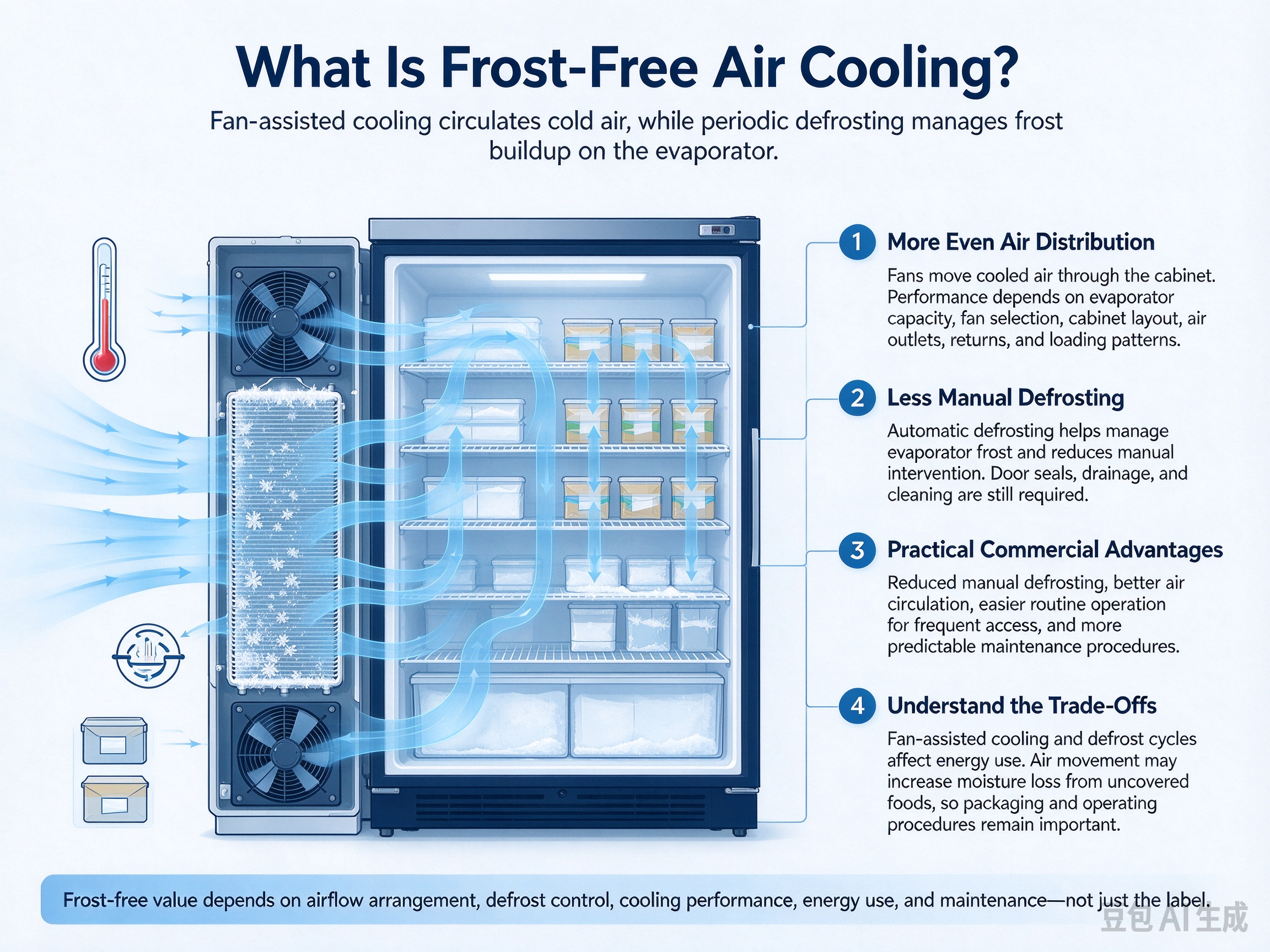
A frost-free, fan-assisted system uses an evaporator and internal fans to circulate cooled air. In many designs, a defrost cycle periodically removes frost from the evaporator so that accumulated ice does not excessively restrict heat exchange or airflow.
The exact system design varies by model. Buyers should confirm the manufacturer's definition of “frost-free” and review the product specifications before comparing equipment.
1. More Even Air Distribution
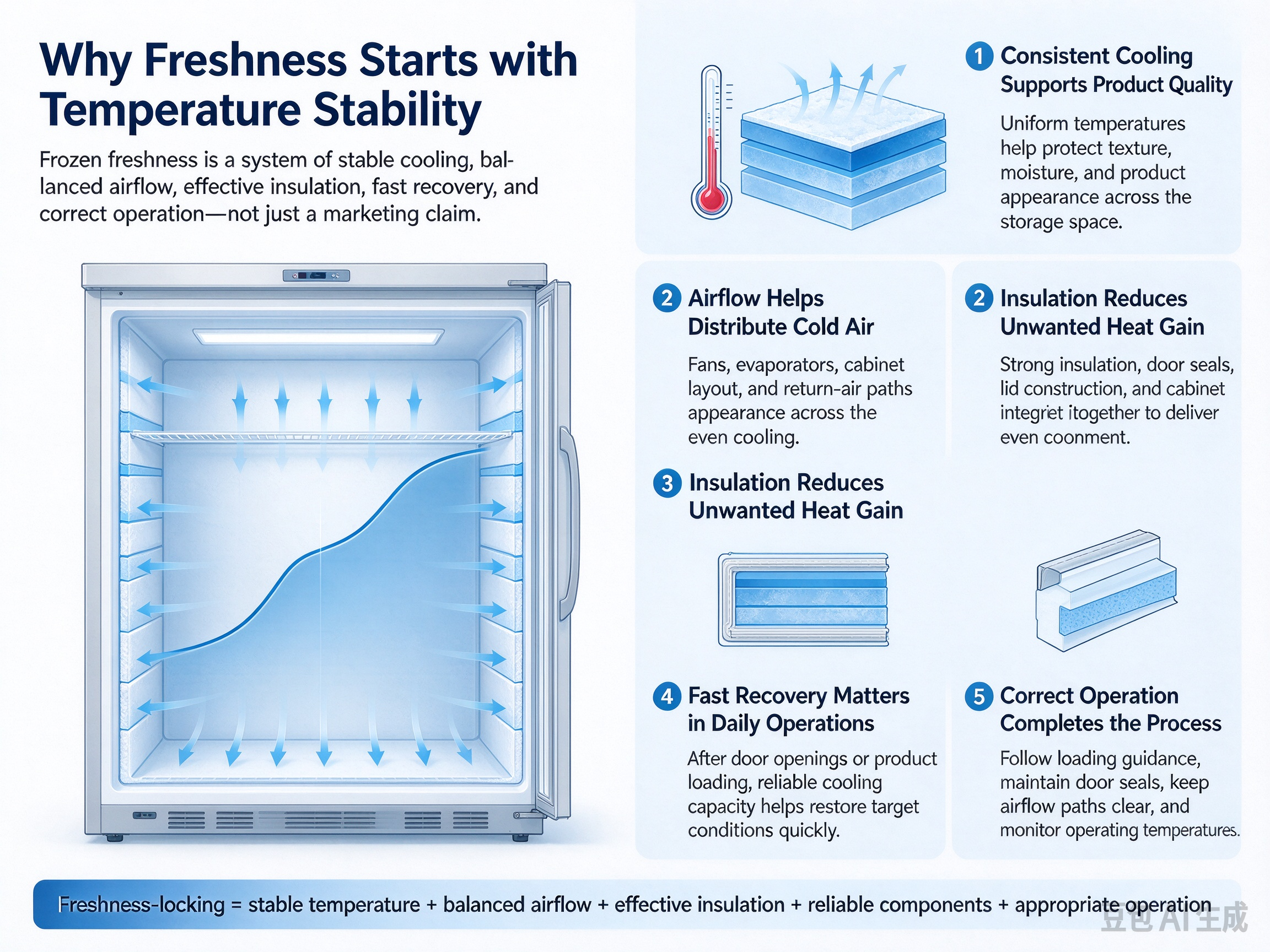
Fans help move cooled air through the cabinet rather than relying solely on natural circulation.
When the air path is properly designed, this can help reduce temperature differences between storage areas. The result depends on evaporator capacity, fan selection, cabinet layout, loading patterns, and the position of air outlets and returns.
A freezer with a well-matched airflow system is generally more useful than one selected simply because it has a larger fan.
2. Less Manual Defrosting
Frost accumulation on an evaporator can restrict airflow and reduce heat-transfer performance. Automatic defrosting helps manage this buildup and can reduce the need for manual intervention.
However, “frost-free” does not mean that no maintenance is ever necessary. Operators should still clean the equipment according to the manufacturer's instructions, inspect door seals, and investigate unusual ice formation or drainage problems.
3. Practical Advantages for Commercial Operations
For supermarkets, convenience stores, food-service businesses, and other commercial users, frost-free systems can offer several operational advantages:
Reduced dependence on manual evaporator defrosting.
Air circulation that supports cooling across the storage area.
Easier routine operation in applications where products are accessed frequently.
Potentially more predictable maintenance procedures.
These advantages depend on correct equipment selection and installation. They should not be treated as a guarantee of lower energy consumption or longer product life for every application.
4. Understand the Trade-Offs
Fan-assisted cooling uses electricity, and defrost cycles also affect energy consumption. Air movement can increase moisture loss from certain uncovered foods, depending on packaging, temperature, and storage duration.
The design must therefore balance cooling performance, airflow, humidity conditions, and energy use.
For businesses storing exposed or moisture-sensitive products, suitable packaging and storage procedures remain important even when a frost-free system is used.
5. Check the Details Before Buying
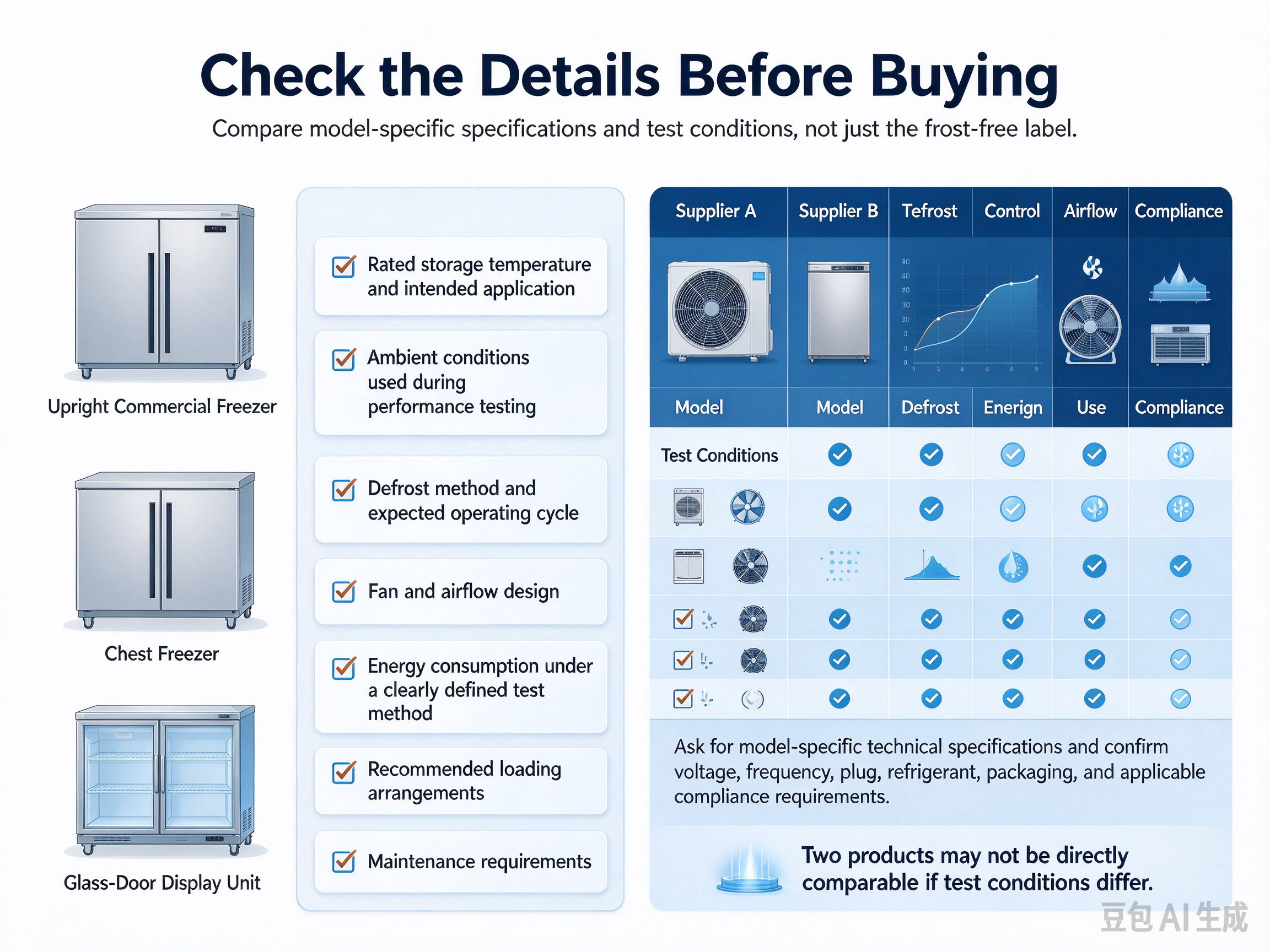
· Rated storage temperature and intended application.
· Ambient conditions used during performance testing.
· Defrost method and expected operating cycle.
· Fan and airflow design.
· Energy consumption under a clearly defined test method.
· Recommended loading arrangements and maintenance requirements.
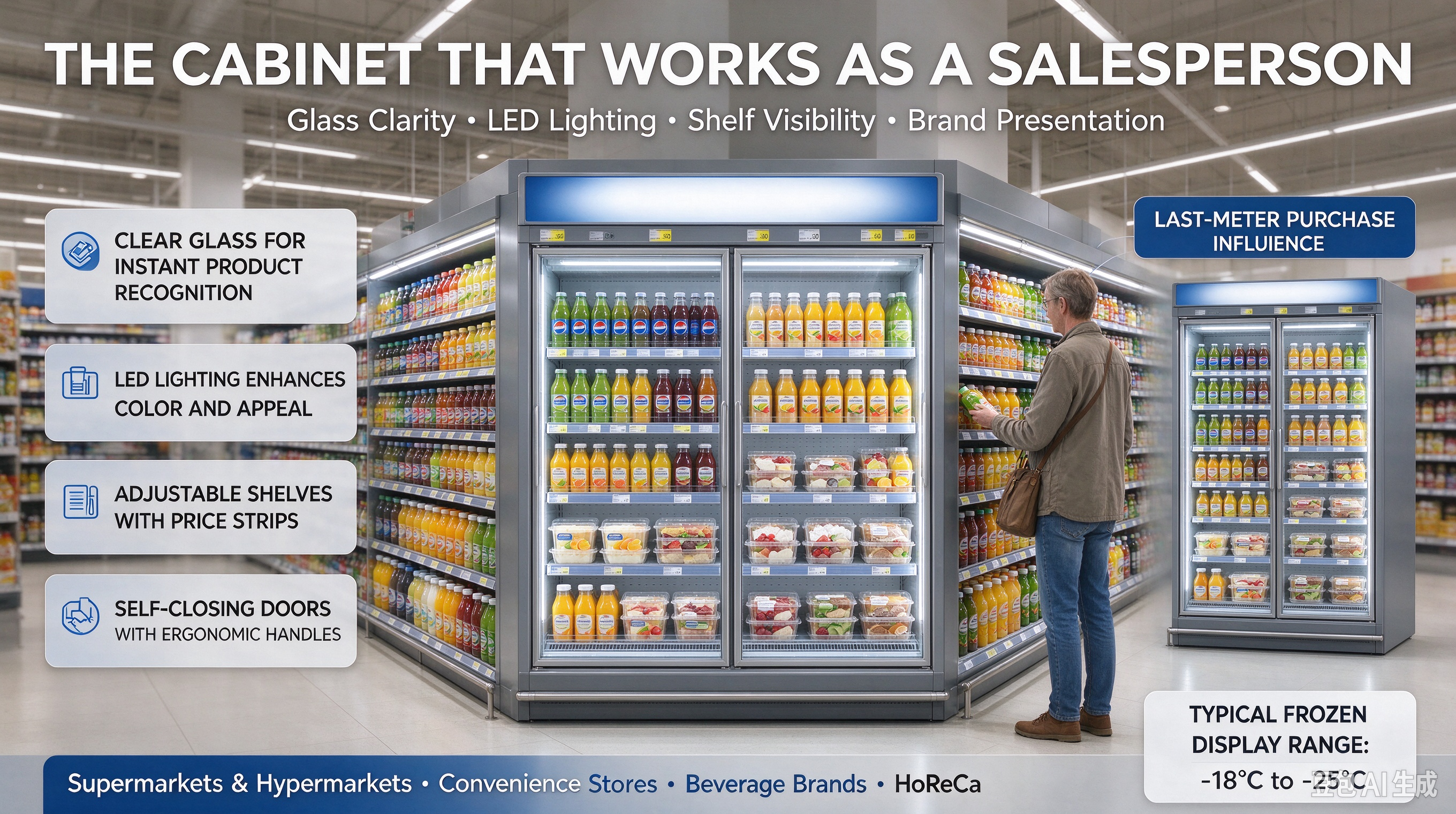
· It is also important to distinguish between an upright commercial freezer, a chest freezer, and a glass-door display unit. Each cabinet format has different airflow and access requirements.
 How to Compare Suppliers
Request a model-specific technical specification and ask the supplier to explain how cooling performance is verified. If two products quote different test conditions, their results may not be directly comparable.
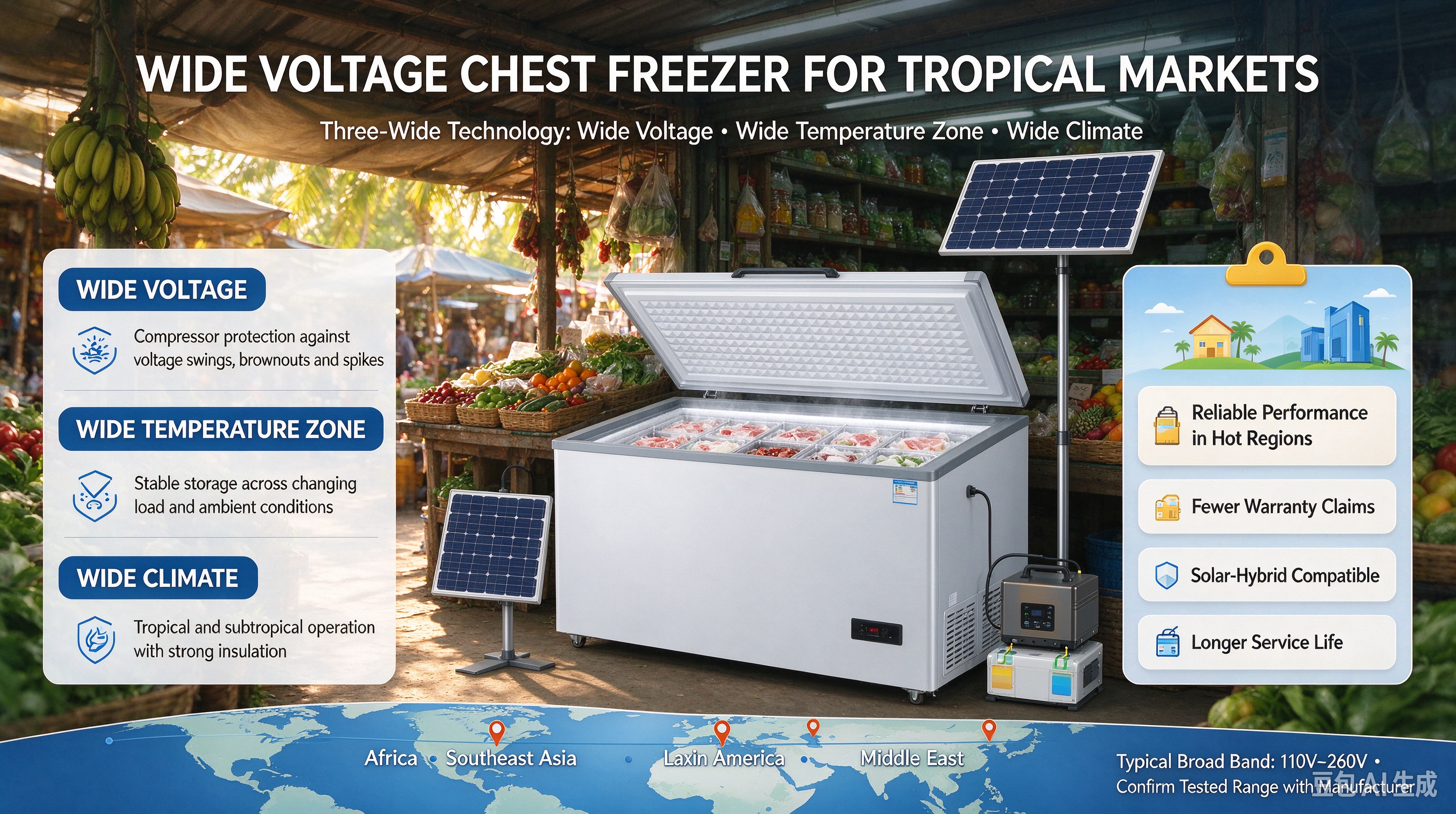
Confirm the voltage, frequency, plug, refrigerant, packaging, and applicable compliance requirements for the destination market.
Conclusion
Frost-free air cooling can simplify routine freezer operation and support more uniform cooling when the system is properly designed. Its real value depends on the cabinet's intended use, airflow arrangement, defrost control, energy performance, and maintenance requirements.
SNOWSEA offers commercial refrigeration solutions for different business applications. Buyers should select a specific model based on verified specifications and local operating conditions rather than relying on the frost-free label alone.
SNOWSEA offers commercial freezer, chest freezer and ice cream freezer platforms together with OEM/ODM support for retail, distributor and project requirements. Food retailers planning a new frozen category, store rollout or equipment standardization program can submit store formats, merchandise data, package dimensions, replenishment plans and expected quantities through SNOWSEA Contact Us to evaluate an appropriate freezer mix before bulk purchasing.