What Is Commercial Freezer Shelf Capacity?
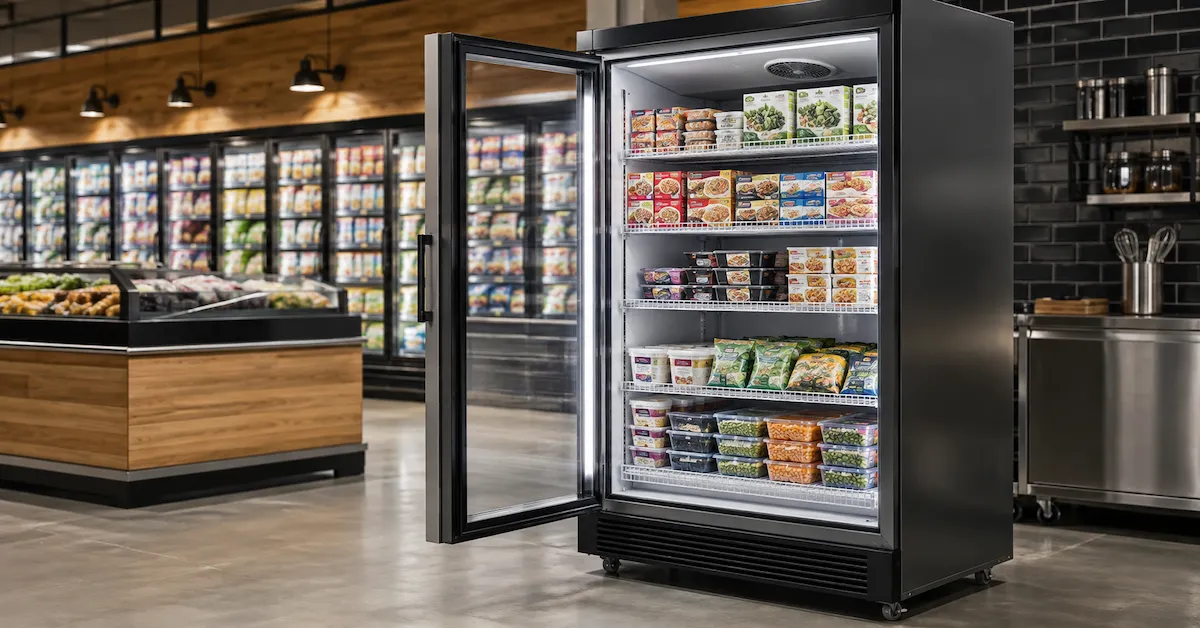
Commercial Freezer Shelf Capacity refers to the amount of usable storage space available on freezer shelves for storing frozen products.
Unlike total freezer volume, shelf capacity focuses on the practical storage space that businesses can actually use during daily operations.
It depends on:
- Internal cabinet dimensions
- Number of shelves
- Shelf spacing
- Product packaging size
- Storage arrangement
A well-designed shelf system helps businesses improve:
- Product organization
- Storage efficiency
- Loading convenience
- Inventory management
Snowsea provides commercial refrigeration products designed for supermarkets, restaurants, catering businesses, and global B2B refrigeration applications.
Why Does Shelf Capacity Matter for Commercial Freezers?
Shelf capacity directly affects how efficiently businesses use their refrigeration space.
Better Storage Efficiency
A well-designed shelf system allows businesses to store more products within the same cabinet footprint.
Benefits include:
- Higher storage density
- Better space utilization
- Easier product arrangement
Improved Product Organization
Proper shelf layouts help operators:
- Find products faster
- Separate different product categories
- Improve inventory management
Lower Operating Costs
Better storage utilization can help businesses:
- Reduce unnecessary equipment purchases
- Improve storage planning
- Increase operational efficiency
Commercial Freezer Shelf Capacity vs Total Capacity
Many buyers focus only on freezer volume, but total capacity and usable shelf capacity are different.
| Factor | Total Freezer Capacity | Shelf Capacity |
|---|---|---|
| Meaning | Total internal volume | Usable storage area |
| Measurement | L / m³ | Shelf space and loading area |
| Focus | Equipment size | Daily storage efficiency |
| Buyer Concern | Selecting freezer size | Maximizing product storage |
A freezer with a larger volume does not always provide better usable storage space.
Shelf design and internal layout also play important roles.
Factors Affecting Commercial Freezer Shelf Capacity
Internal Cabinet Dimensions
The internal cabinet structure determines:
- Shelf width
- Shelf depth
- Number of storage layers
- Available loading space
Factors affecting internal space include:
- Cabinet design
- Insulation thickness
- Cooling system layout
For external and installation considerations, see Snowsea's commercial freezer dimensions for stores guide.
Number of Shelves
The number of shelves affects vertical storage efficiency.
More shelves can provide:
- Better product organization
- More storage levels
- Easier product separation
However, shelf quantity must be balanced with:
- Air circulation
- Product accessibility
- Temperature performance
Shelf Spacing
Shelf spacing determines whether products can be stored efficiently.
Proper spacing helps maintain:
- Product compatibility
- Cold air circulation
- Temperature stability
Overly crowded shelves may restrict airflow and reduce refrigeration performance.
Product Type and Packaging
Different products require different shelf layouts.
Examples include:
- Ice cream cartons
- Frozen vegetables
- Meat packages
- Seafood products
A flexible shelf system helps accommodate different product sizes.
Different Shelf Designs for Commercial Freezers
Fixed Shelves
Fixed shelves provide:
- Stable structure
- Reliable loading support
- Simple maintenance
They are suitable for:
- Storage freezers
- Standard product arrangements
Adjustable Shelves
Adjustable shelves provide greater flexibility.
Advantages include:
- Customizable storage levels
- Better product adaptation
- Improved retail display
They are commonly used in:
- Supermarkets
- Convenience stores
- Retail freezer applications
Heavy-Duty Shelves
Heavy-duty shelves are designed for higher loading requirements.
Benefits include:
- Stronger support
- Better durability
- Higher weight capacity
They are suitable for:
- Catering storage
- Commercial kitchens
- Large-volume frozen food storage
How to Calculate Commercial Freezer Shelf Capacity?
A basic calculation method is:
Shelf Capacity = Shelf Area × Number of Shelves × Loading Efficiency
Actual storage capacity depends on:
- Shelf dimensions
- Product size
- Loading method
- Required airflow space
Theoretical capacity is usually higher than practical capacity because freezers need enough space for proper cooling circulation.
Shelf Capacity for Different Commercial Applications
Supermarket Freezers
Supermarkets usually focus on:
- Product visibility
- Easy customer access
- Efficient space utilization
Important features include:
- Adjustable shelves
- Clear product organization
- Stable temperature performance
For retail applications, see Snowsea's supermarket freezer project supplier guide.
Restaurant Freezers
Restaurants often require:
- Compact storage solutions
- Easy ingredient access
- Efficient internal organization
A suitable shelf layout helps kitchen staff manage frozen ingredients more efficiently.
Catering Storage Freezers
Catering businesses require:
- Large storage capacity
- Strong shelf structures
- Long-term product organization
For catering solutions, see Snowsea's commercial freezer supplier for caterers guide.
Shelf Capacity and Air Circulation Performance
Maximizing storage space does not mean filling every available area.
Proper shelf design must maintain:
- Cold air movement
- Temperature uniformity
- Heat exchange efficiency
Overloading shelves may cause:
- Reduced cooling performance
- Uneven temperatures
- Higher energy consumption
For cooling structure information, see Snowsea's commercial freezer evaporator design guide.
Shelf Materials and Loading Capacity
Common shelf materials include:
| Material | Characteristics |
|---|---|
| Wire Shelf | Good airflow and lightweight structure |
| Stainless Steel Shelf | Durable and corrosion resistant |
| Coated Metal Shelf | Cost-effective and practical |
Material selection depends on:
- Product weight
- Operating environment
- Cleaning requirements
Shelf Capacity and Energy Efficiency
Storage layout affects refrigeration efficiency.
A properly organized freezer helps:
- Maintain airflow
- Reduce cooling losses
- Improve temperature stability
Important factors include:
- Product loading density
- Shelf arrangement
- Door opening frequency
For energy-saving technologies, see Snowsea's Energy Efficiency Solutions.
How Manufacturers Optimize Freezer Shelf Design
Professional manufacturers evaluate shelf systems through:
Storage Testing
Testing includes:
- Product loading capability
- Storage arrangement
- Space utilization
Airflow Testing
Manufacturers evaluate:
- Temperature distribution
- Cooling circulation
Weight Testing
Checks:
- Shelf strength
- Long-term loading performance
Durability Testing
Evaluates:
- Material reliability
- Structural performance
For quality evaluation methods, see Snowsea's commercial freezer quality testing guide.
Common Mistakes When Evaluating Shelf Capacity
Only Looking at Total Volume
Large volume does not always mean efficient storage.
Buyers should also evaluate:
- Shelf layout
- Usable space
- Product organization
Overloading Shelves
Excessive loading may:
- Block airflow
- Reduce cooling efficiency
- Affect temperature stability
Ignoring Product Size
Different products require different shelf spacing.
Choosing Fixed Layouts Without Planning
A rigid layout may limit future product changes.
How to Choose a Commercial Freezer Based on Shelf Capacity
A practical selection process includes:
Step 1: Identify Stored Products
Consider:
- Product types
- Packaging sizes
- Loading frequency
Step 2: Estimate Required Storage Space
Evaluate:
- Shelf quantity
- Product volume
- Storage duration
Step 3: Review Interior Layout
Check:
- Shelf flexibility
- Airflow design
- Loading convenience
Step 4: Confirm Customization Options
Discuss:
- Shelf design
- Cabinet configuration
- Storage requirements
What Information Should You Send a Freezer Supplier?
To receive accurate recommendations, buyers should provide:
- Product types
- Required storage volume
- Freezer application
- Shelf preferences
- Operating environment
- Temperature requirements
- Loading frequency
- Quantity requirements
- Certification needs
- Customization requirements
FAQ
What is commercial freezer shelf capacity?
Commercial freezer shelf capacity refers to the usable storage area available on freezer shelves for storing frozen products.
Is shelf capacity the same as freezer volume?
No. Freezer volume refers to total internal space, while shelf capacity focuses on practical storage space.
How can I increase commercial freezer shelf capacity?
Businesses can improve shelf capacity through adjustable shelves, optimized layouts, and better product organization.
Do more shelves always mean more storage?
Not always. Too many shelves may reduce airflow and affect cooling performance.
What shelf material is best for commercial freezers?
Wire shelves, stainless steel shelves, and coated metal shelves are commonly used depending on application requirements.
Does shelf layout affect freezer energy consumption?
Yes. Proper layouts improve airflow and help maintain refrigeration efficiency.
What affects commercial freezer storage capacity?
Important factors include cabinet dimensions, shelf design, product size, and loading method.
Can shelves be customized for different products?
Yes. Many commercial freezer suppliers offer customized shelf configurations.
How does shelf spacing affect freezer performance?
Proper spacing supports airflow and helps maintain stable temperatures.
Can Snowsea customize freezer shelf designs?
Yes. Snowsea can provide commercial refrigeration solutions based on storage requirements and application needs.
Conclusion
Commercial Freezer Shelf Capacity is an important factor when selecting refrigeration equipment for supermarkets, restaurants, catering businesses, and other commercial applications.
A well-designed shelf system improves storage efficiency, product organization, airflow performance, and daily operating convenience.
For global B2B buyers, evaluating usable shelf space, shelf design, loading capacity, and customization options helps ensure the freezer meets both current and future storage requirements.
Snowsea supports commercial refrigeration projects with professional product solutions and OEM/ODM services. Explore Snowsea's commercial refrigeration products, review its OEM/ODM solutions, or contact Snowsea with your shelf capacity requirements, application details, and project goals.