 Why Purchase Price Is Not the Whole Story
Two freezers with similar dimensions and storage capacity can have different energy requirements, maintenance needs, and performance characteristics.
A lower-priced model may be appropriate for some applications, but its initial price alone does not establish which product offers better long-term value.
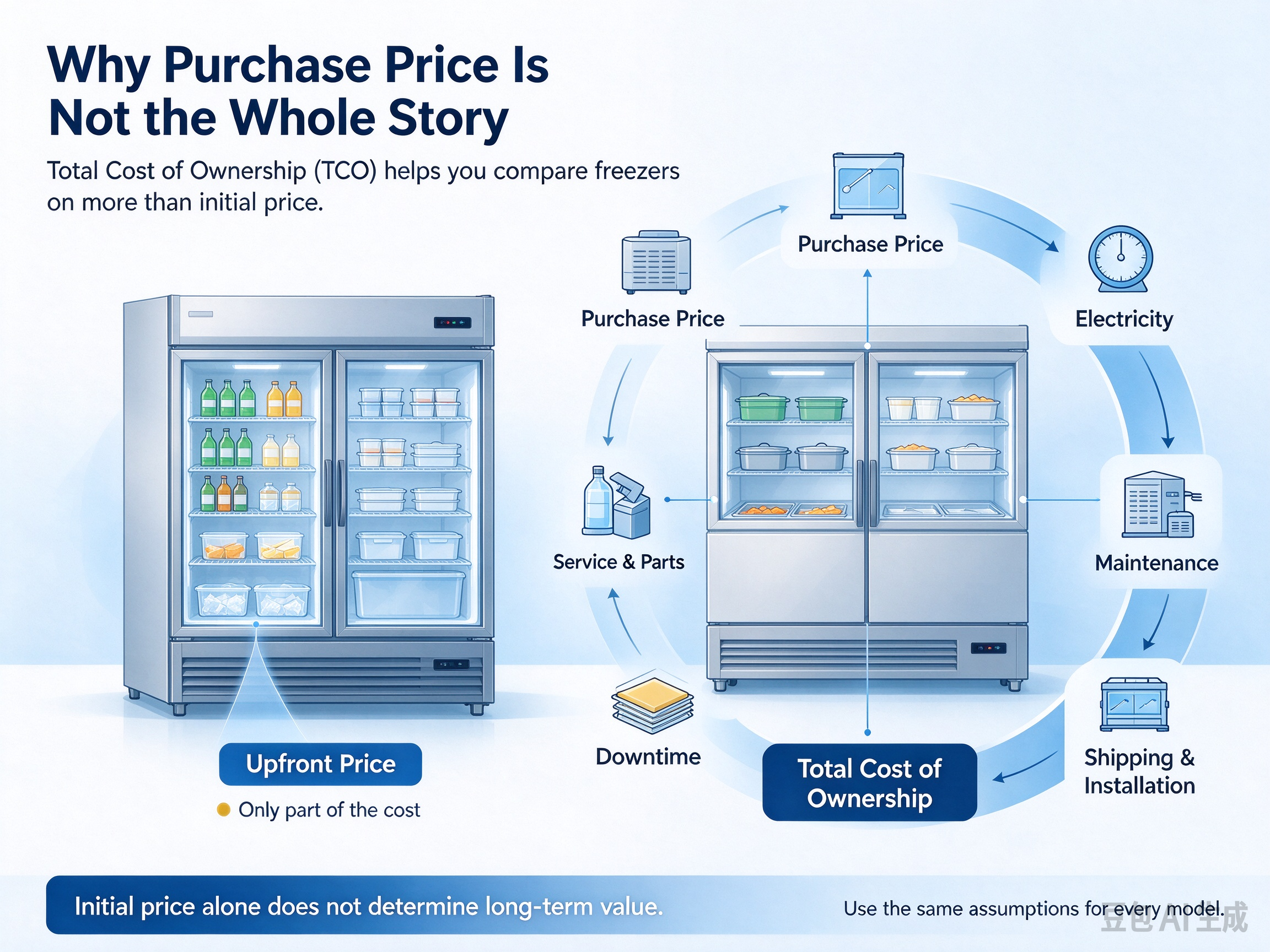
The total cost of ownership (TCO) approach considers the purchase and operating costs over a chosen period. It gives procurement teams a more complete basis for comparing options.
1. Compare Energy Data on a Consistent Basis
When requesting quotations, ask suppliers for rated energy consumption and the applicable test conditions.
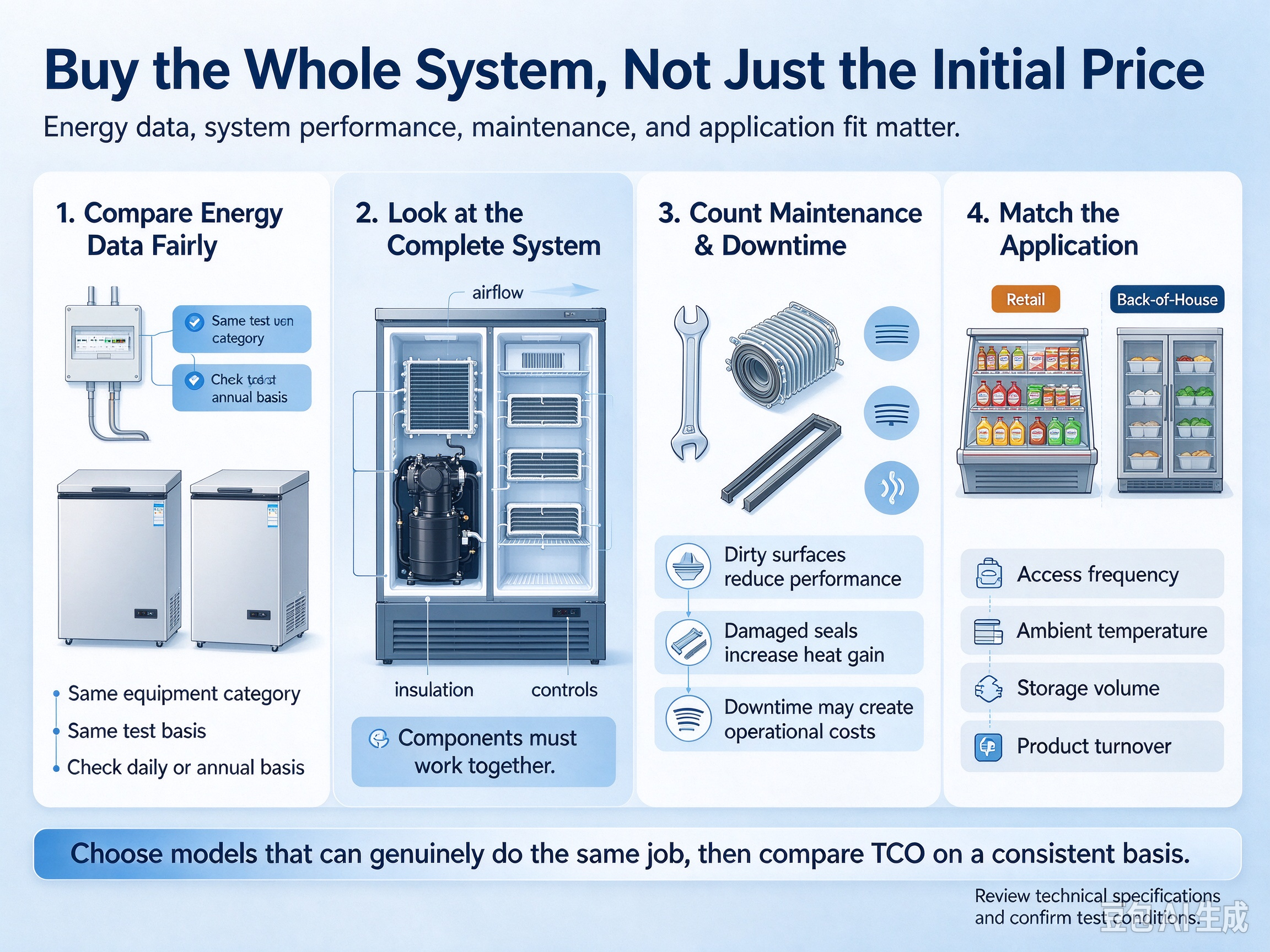
Check whether the figures refer to daily consumption, annual consumption, or another measurement. Also confirm whether the data is based on a standardized test and whether the compared models belong to the same equipment category.
Cabinet size, door type, intended operating temperature, ambient conditions, and equipment configuration can affect results.
A published energy figure should not be compared directly with another figure if the test methods or operating conditions differ.
For markets where energy labels or certification programs apply, verify the requirements and the product's actual eligibility rather than relying on a general claim of energy efficiency.
2. Estimate Annual Electricity Costs
A simple estimate can help buyers understand the potential financial impact of energy consumption.
Annual electricity cost = daily energy consumption × 365 × electricity price per kWh
For example, if a unit uses 3 kWh per day and electricity costs $0.20 per kWh: 3 × 365 × $0.20 = $219 per year.
This is an illustrative calculation, not a performance claim for a particular model. Actual consumption and electricity prices vary by product, location, operating conditions, and usage.
3. Look at the System, Not Just One Component
Energy performance depends on several components working together.
The compressor must match the refrigeration load. The condenser must reject heat effectively. The evaporator and airflow arrangement must support heat exchange. Insulation and seals help limit heat gain, while controls regulate operation.
Improving one component does not guarantee an overall improvement if the rest of the system is poorly matched.
This is why buyers should request model-specific energy data instead of judging a freezer by compressor specifications alone.
4. Consider Maintenance and Downtime
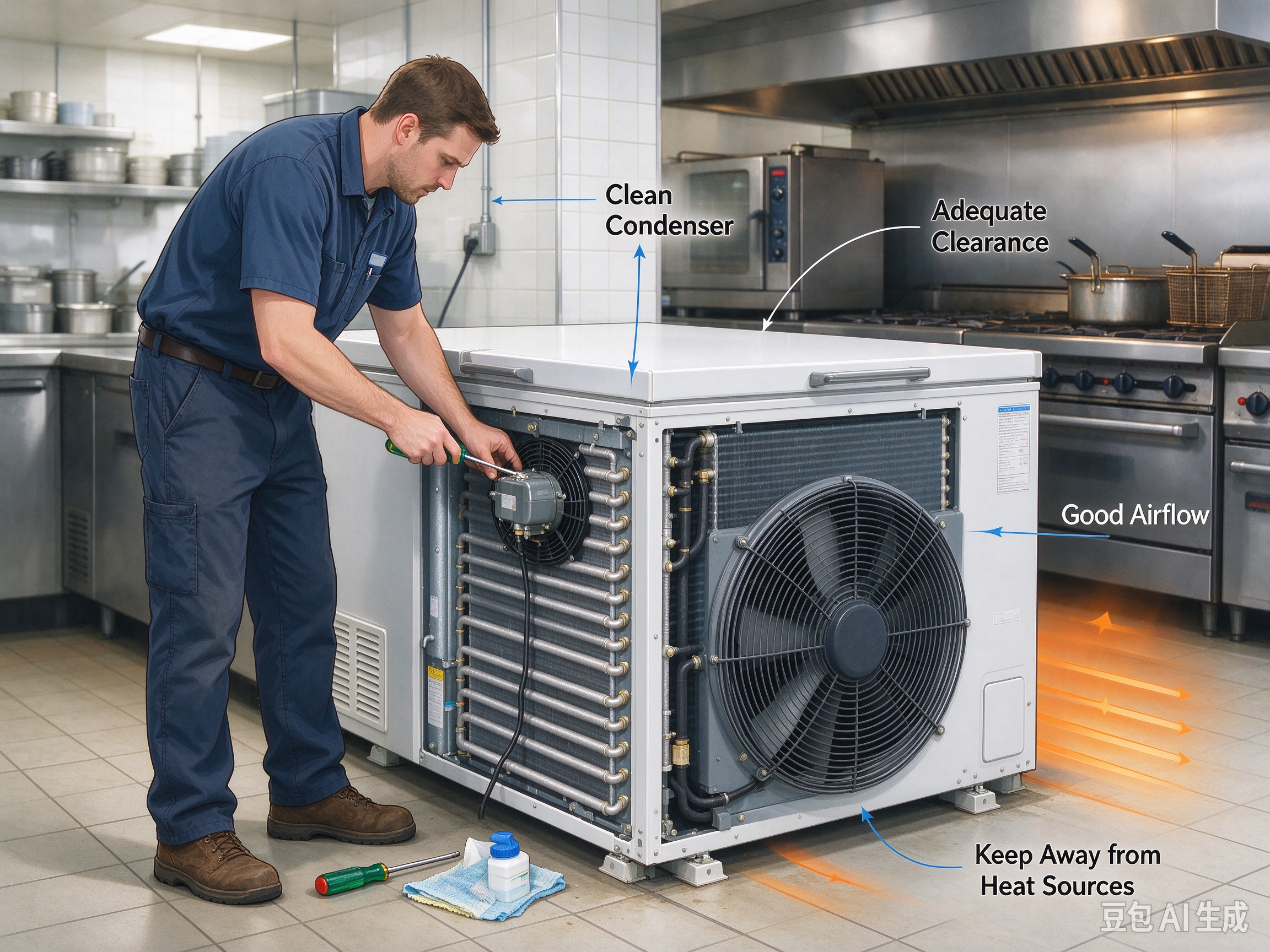
Routine maintenance can help equipment continue operating as intended. Dirty heat-exchange surfaces, damaged door seals, obstructed ventilation, or incorrect loading practices can undermine performance.
For commercial users, downtime may also create operational costs, including lost sales, service calls, and product handling disruption.
Before purchasing, ask about warranty terms, service procedures, spare parts, and technical support in the destination market.
5. Evaluate Total Cost of Ownership
A practical comparison can include initial purchase price, estimated electricity cost over the evaluation period, routine maintenance and likely service expenses, warranty coverage and parts availability, expected operational downtime, and packaging, shipping, import duties, and installation costs.
Use the same assumptions for every model. If the expected service life or maintenance cost is uncertain, show the assumptions clearly rather than presenting the calculation as a guaranteed saving.
6. Match the Product to the Application
A freezer intended for a busy retail environment may need different features from one used primarily for back-of-house storage.
Consider access frequency, ambient temperature, storage volume, product turnover, and the need for visible merchandising. Oversizing or choosing the wrong cabinet configuration may add cost without delivering corresponding operational benefits.
The most useful comparison is between products that can genuinely perform the same job.
 Conclusion
Energy efficiency is a measurable purchasing consideration, but it should be evaluated under comparable conditions. By combining energy data with maintenance, service, and operating costs, B2B buyers can make a stronger total-cost-of-ownership assessment.
SNOWSEA encourages buyers to review the technical specifications of the intended model, confirm the applicable test conditions, and assess equipment against the actual demands of their business.
Further Reading
The U.S. ENERGY STAR program explains its commercial refrigeration criteria and the role of testing in comparing equipment.
Source: https://www.energystar.gov/products/commercial_refrigerators_freezers
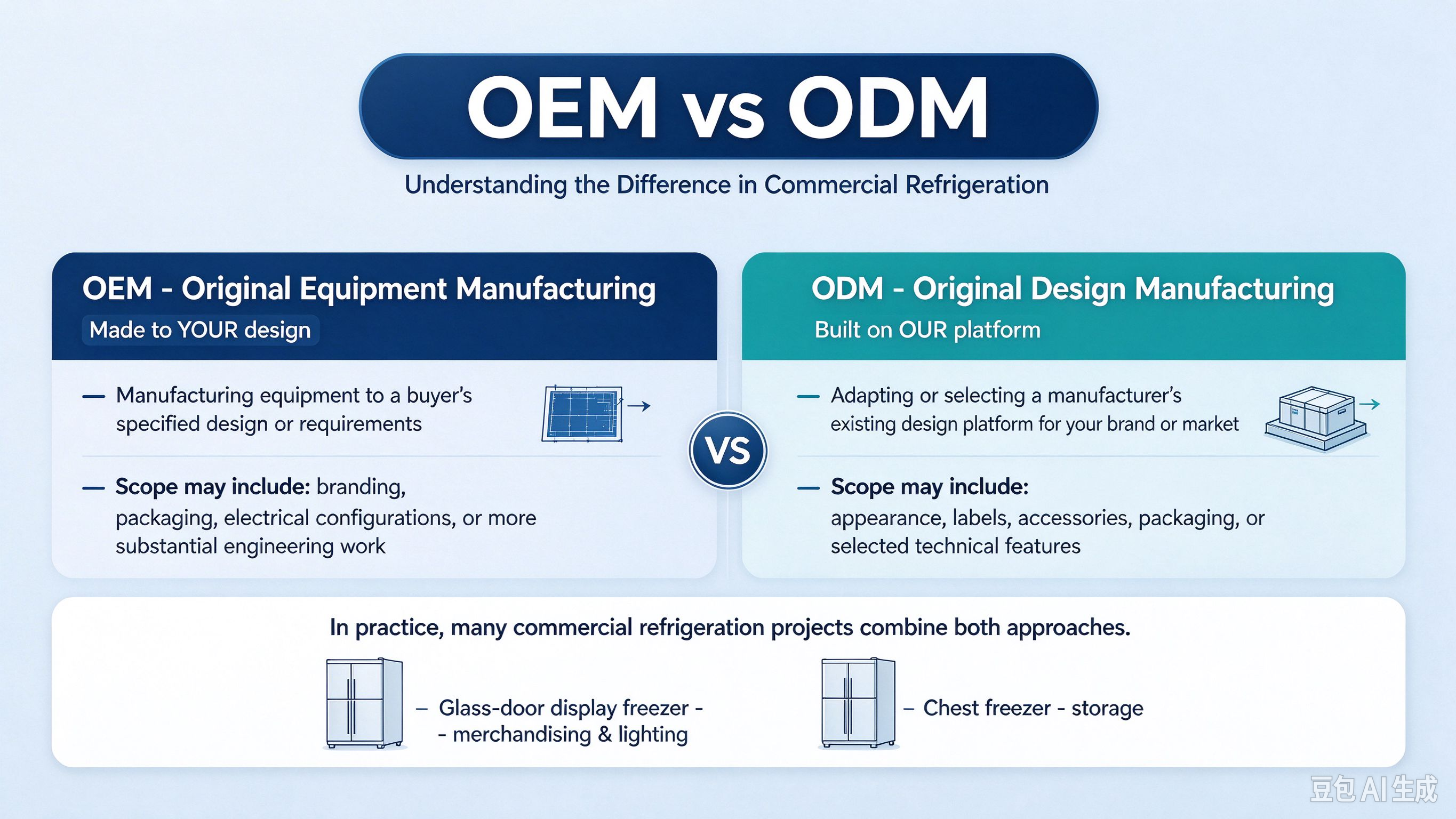
SNOWSEA offers commercial freezer, chest freezer and ice cream freezer platforms together with OEM/ODM support for retail, distributor and project requirements. Food retailers planning a new frozen category, store rollout or equipment standardization program can submit store formats, merchandise data, package dimensions, replenishment plans and expected quantities through SNOWSEA Contact Us to evaluate an appropriate freezer mix before bulk purchasing.