 What Is the Difference Between OEM and ODM?
OEM and ODM are widely used terms in international manufacturing, but their exact meaning can vary between suppliers. Buyers should therefore agree on the project scope in writing.
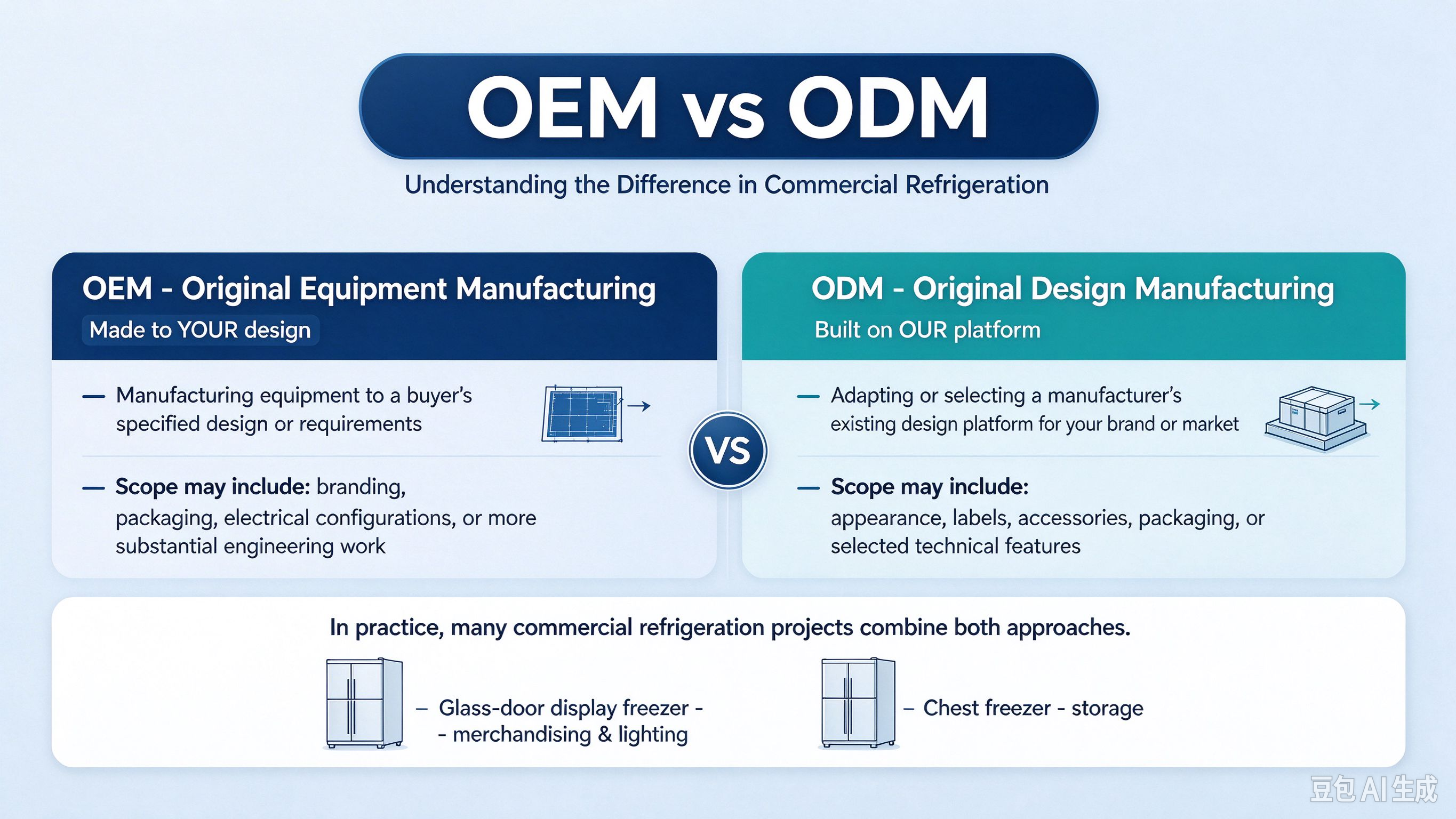
OEM (Original Equipment Manufacturing) commonly refers to manufacturing equipment according to a buyer's specified product design or requirements. The scope may include branding, packaging, electrical configurations, or more substantial engineering work.
ODM (Original Design Manufacturing) commonly refers to adapting or selecting a manufacturer's existing design platform for a buyer's brand or market. Depending on the agreement, this may involve changes to appearance, labels, accessories, packaging, or selected technical features.
In practice, many commercial refrigeration projects combine elements of both approaches.
1. Start with the Actual Market Requirement
Before requesting a quotation, define what the product needs to achieve.
Consider the intended application, target customers, storage capacity, temperature range, cabinet format, ambient conditions, and destination-market requirements.
Also decide which features are essential and which are optional. A glass-door display freezer, for example, may have different merchandising and lighting requirements from a chest freezer designed for storage.
A clear specification reduces misunderstandings and makes supplier quotations easier to compare.
2. When ODM May Be the Better Option
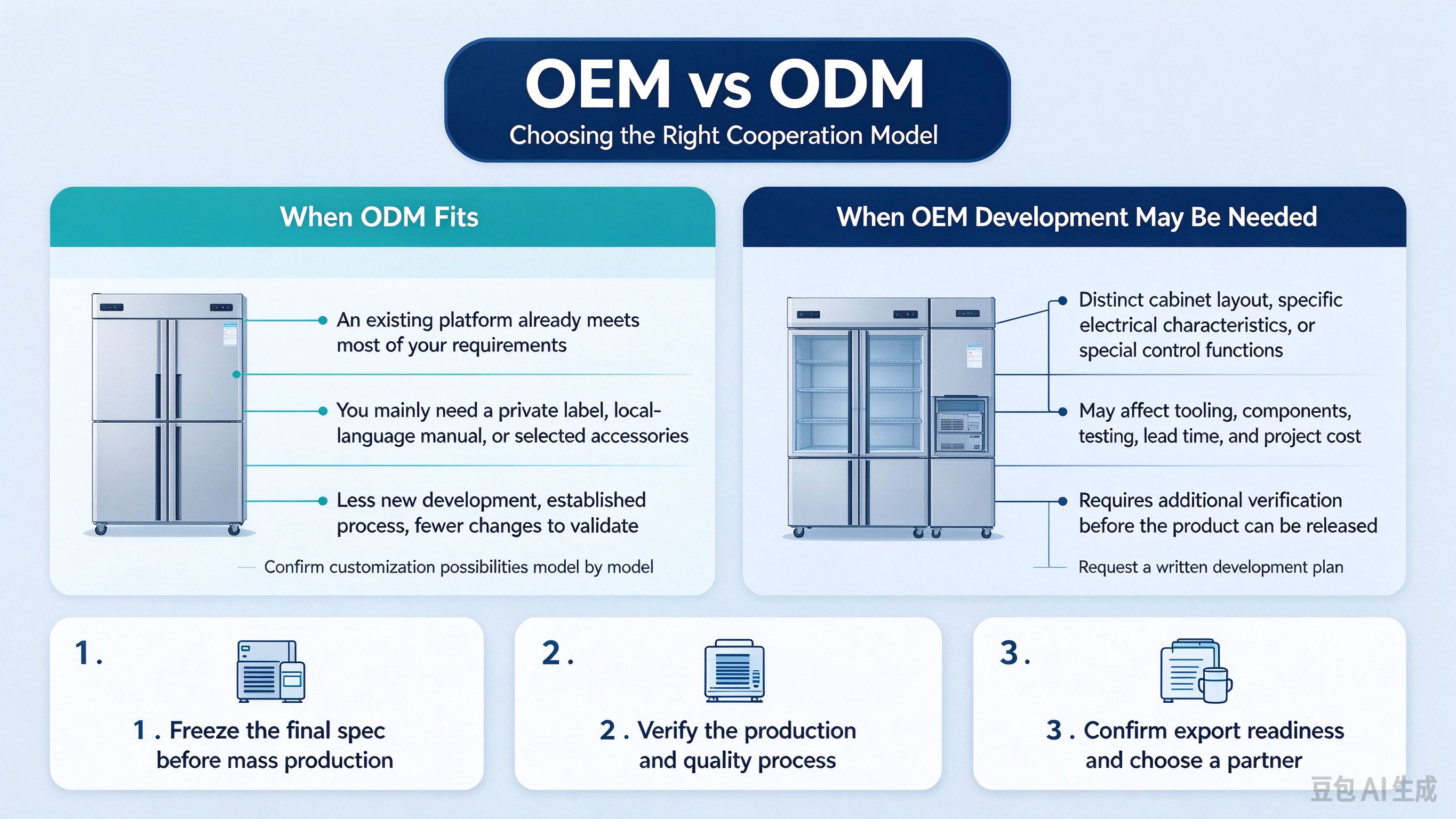
ODM can be suitable when an existing platform already meets most of the buyer's requirements.
Potential advantages include less need for new product development, a more established manufacturing process, and fewer changes to validate before production.
A buyer may need only a private label, customized carton artwork, a manual in the local language, or selected accessories.
However, customization possibilities should be confirmed model by model. Buyers should not assume that every platform can support every requested change.
3. When OEM Development May Be Necessary
OEM-oriented projects may be appropriate when the buyer requires a distinct cabinet layout, specific electrical characteristics, special control functions, or other technical differences that an existing platform cannot accommodate.
More substantial engineering changes may affect tooling, component selection, testing, lead time, and project cost.
They may also require additional verification before the modified product can be released for sale.
A buyer should request a written development plan that identifies responsibilities, design approvals, validation requirements, and ownership of any custom tooling or intellectual property.
4. Assess the Manufacturer's Production and Quality Process
A capable supplier should be able to explain how the product moves through production, from incoming materials and component preparation to assembly, insulation foaming where applicable, refrigeration-system installation, electrical checks, temperature testing, final inspection, and packing.
Not every factory uses the same process or performs the same tests. Buyers should verify which steps apply to the proposed model.
Useful questions include: How are product specifications controlled? Which components are approved for the model? What checks are performed during production? How are defects recorded and addressed? Can finished products be traced to a production batch? What documents are supplied with each shipment?
A factory visit or independent audit may help verify the answers for larger or recurring orders.
5. Confirm Changes Before Mass Production
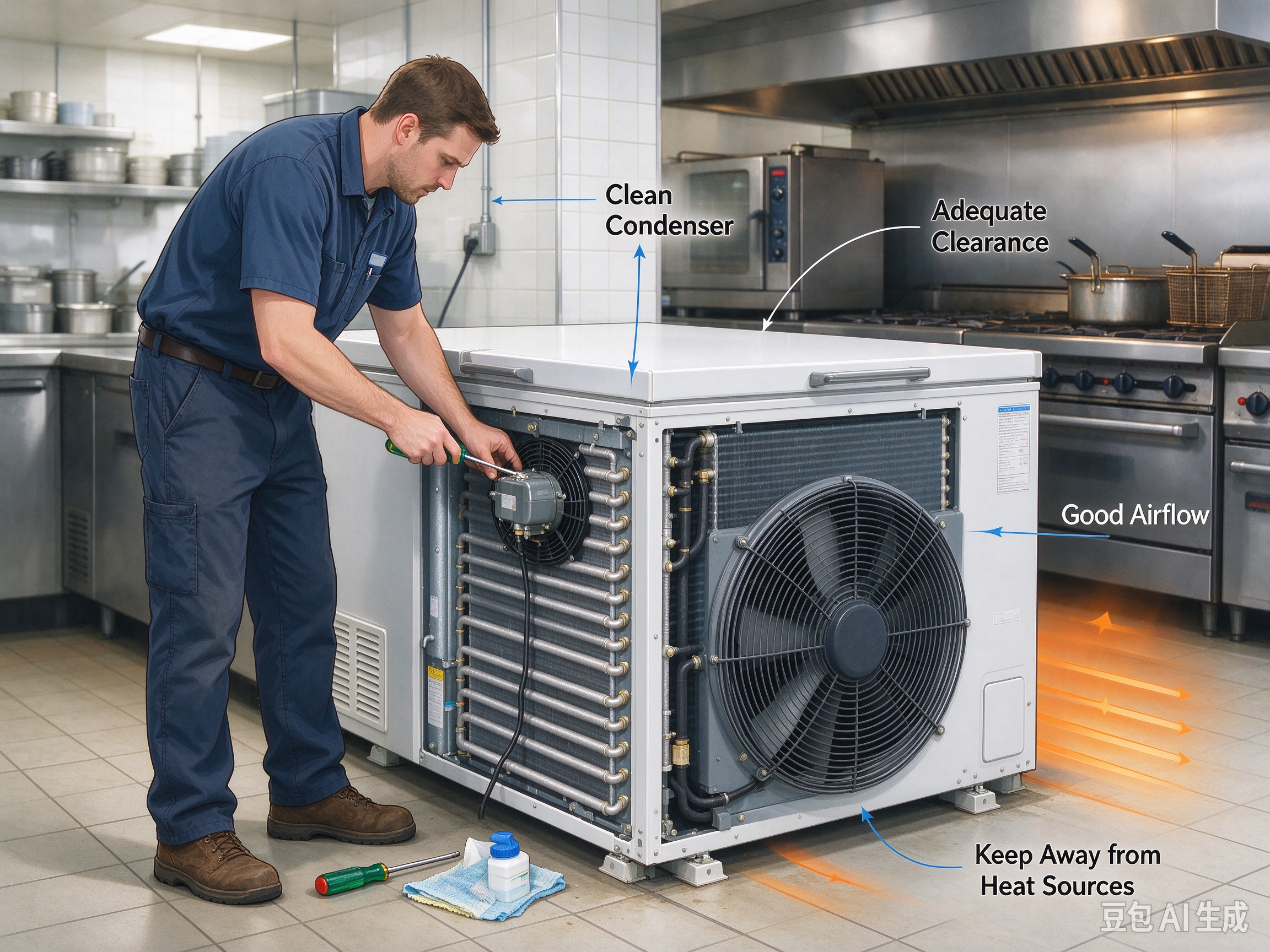
Changes to components such as compressors, controllers, sensors, fans, condensers, evaporators, doors, or cabinet structures can affect product performance.
A modification that seems minor from a branding perspective may have technical implications if it changes airflow, electrical compatibility, heat exchange, or cabinet sealing.
Agree on a final approved specification before mass production. If a change is introduced later, define who reviews it and whether additional testing is needed.
6. Review Export Readiness
For international orders, product quality is only part of the purchasing decision.
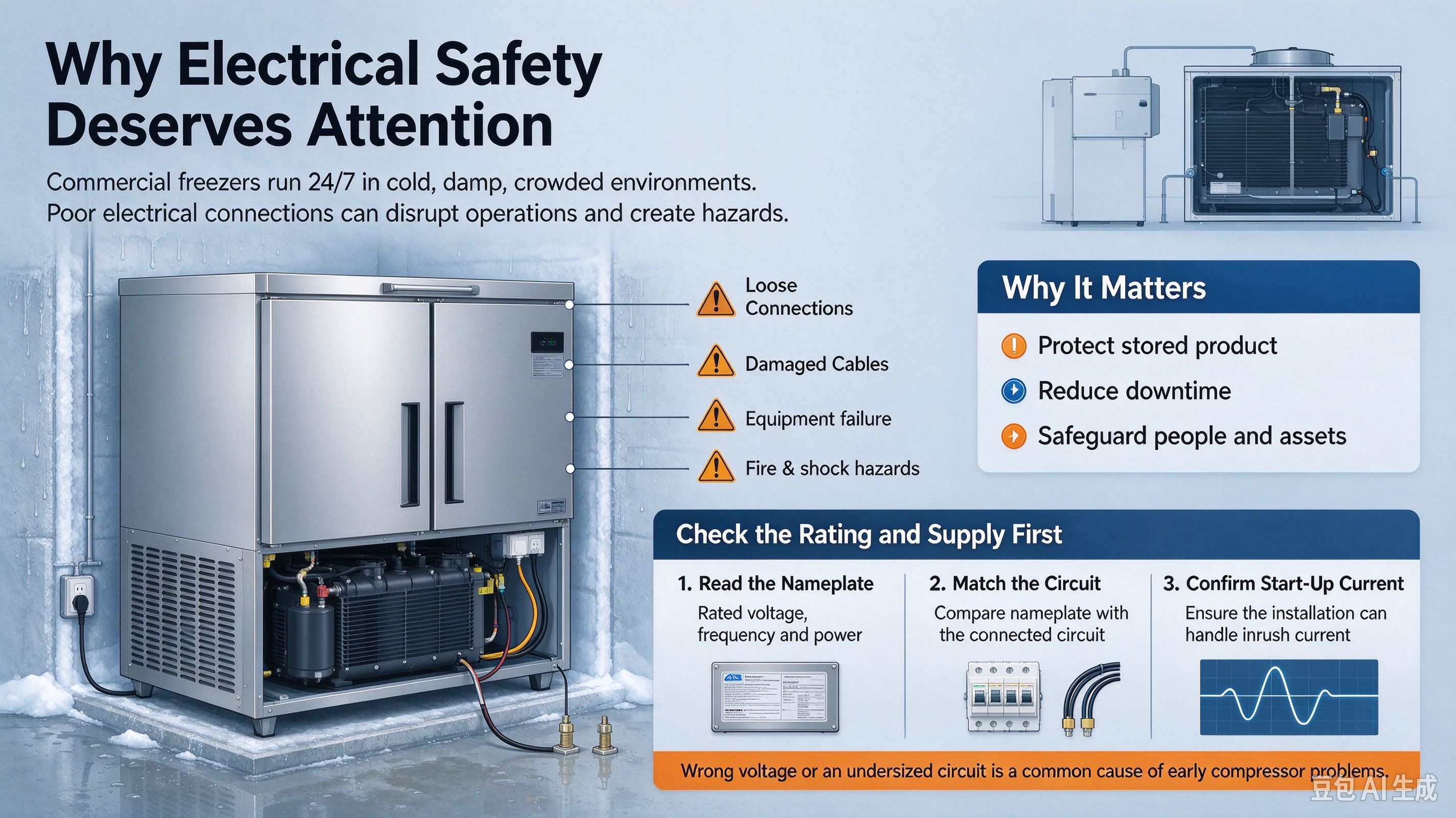
Buyers should also confirm voltage, frequency, plug, and labeling requirements; applicable product safety and market regulations; carton specifications and protective packaging; manuals, product labels, and shipping documentation; minimum order quantities and production lead times; spare-parts support, warranty handling, and communication procedures.
Packaging should be suitable for the expected transport and handling conditions, and shipping responsibilities should be clear in the purchase agreement.
7. Choose a Partner, Not Just a Quotation
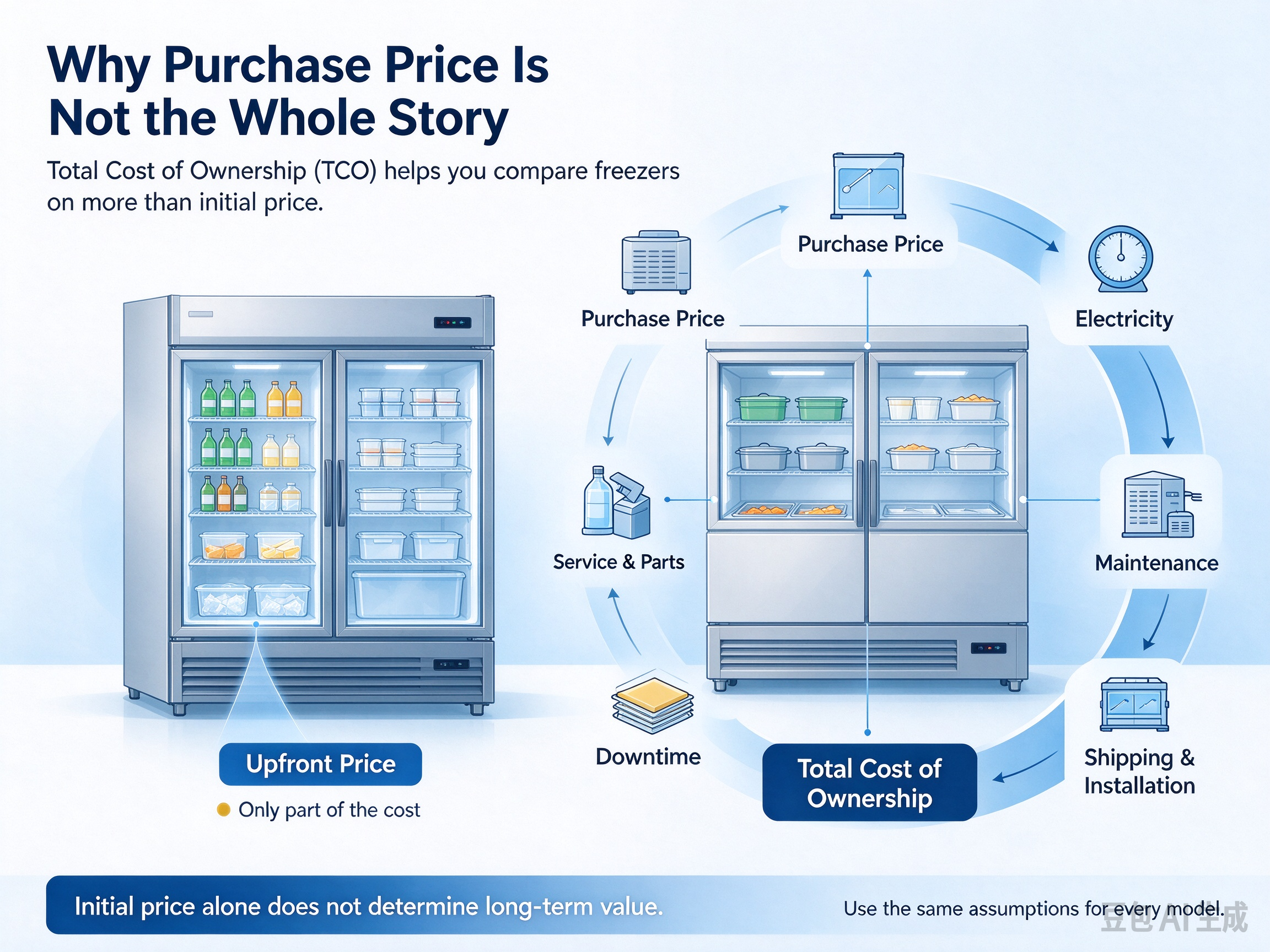
The lowest unit price does not necessarily provide the best commercial outcome.
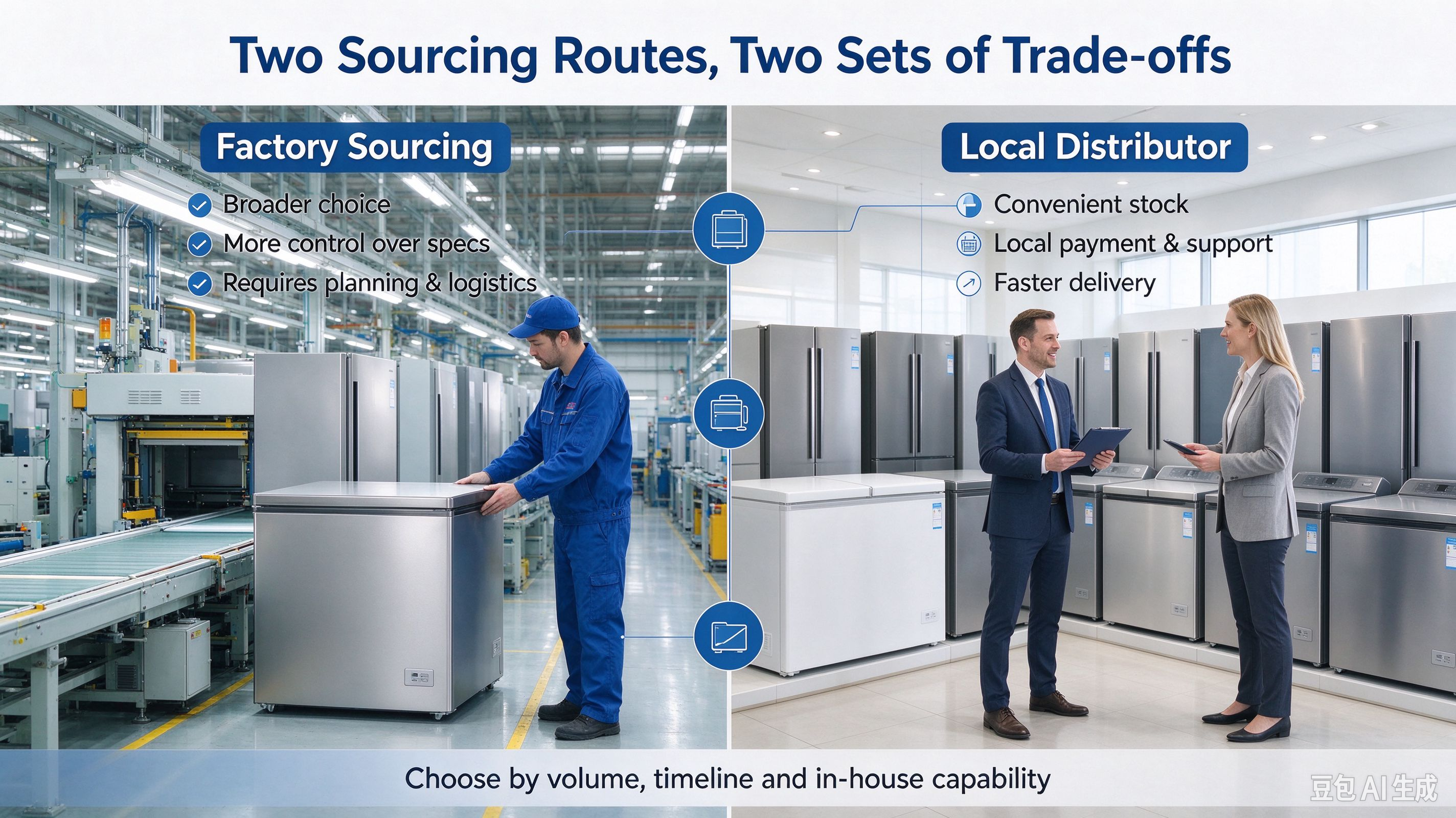
Compare suppliers using the same product specification, customization scope, packaging assumptions, and delivery terms. Evaluate their technical communication, sample approval process, quality documentation, and ability to manage changes.
For repeat business, consistent configuration control and dependable communication are especially important.
 Conclusion
OEM and ODM are sourcing approaches rather than guarantees of quality. ODM can be effective when an established platform fits the market, while OEM-oriented development may be needed for more specific product requirements.
SNOWSEA provides commercial refrigeration product platforms and OEM/ODM options for international buyers. The appropriate cooperation model depends on the product specification, customization scope, target market, and required validation. Buyers should confirm these details with the manufacturer before committing to mass production.
SNOWSEA offers commercial freezer, chest freezer and ice cream freezer platforms together with OEM/ODM support for retail, distributor and project requirements. Food retailers planning a new frozen category, store rollout or equipment standardization program can submit store formats, merchandise data, package dimensions, replenishment plans and expected quantities through SNOWSEA Contact Us to evaluate an appropriate freezer mix before bulk purchasing.