 Why Ambient Temperature Matters
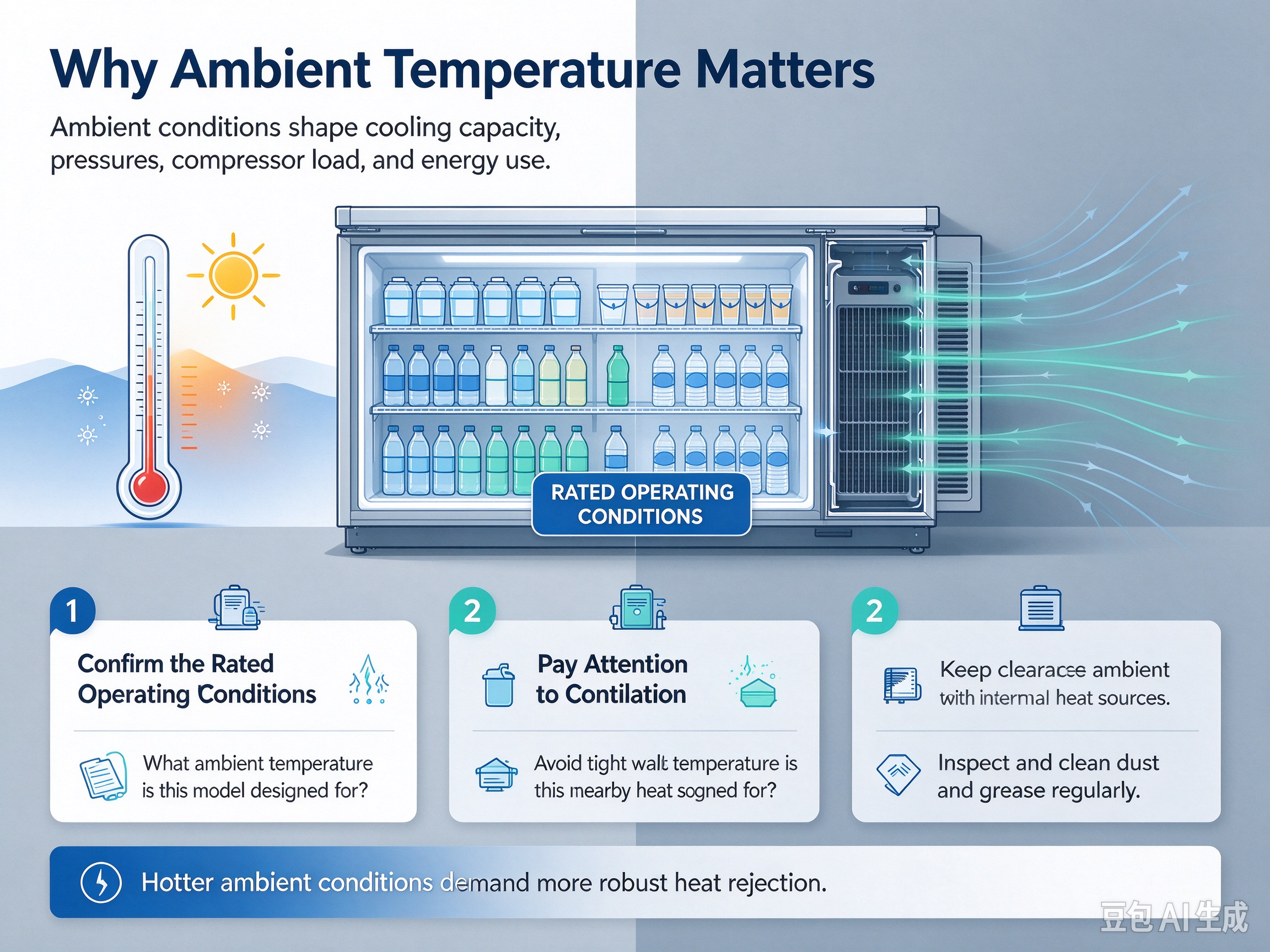
A freezer does not operate in isolation. It exchanges heat with its surroundings, and the refrigeration system must remove heat entering through the cabinet, doors, stored products, and other sources.
When ambient temperature rises, the condenser may have to reject heat under more demanding conditions. Depending on the equipment design, this can affect cooling capacity, operating pressures, compressor workload, and energy consumption.
A model that performs well in a moderate climate should not automatically be assumed suitable for a hot region.
1. Confirm the Rated Operating Conditions
One of the first questions buyers should ask is: What ambient temperature is this model designed and tested for?
A supplier should be able to provide the relevant operating specifications and explain the conditions under which performance claims were established.
Do not confuse the ambient temperature rating with the freezer's internal storage temperature. They describe two different conditions.
If equipment will be used in outdoor-adjacent retail areas, hot kitchens, or poorly air-conditioned shops, confirm that the intended environment falls within the manufacturer's approved operating range.
2. Pay Attention to Condenser Ventilation
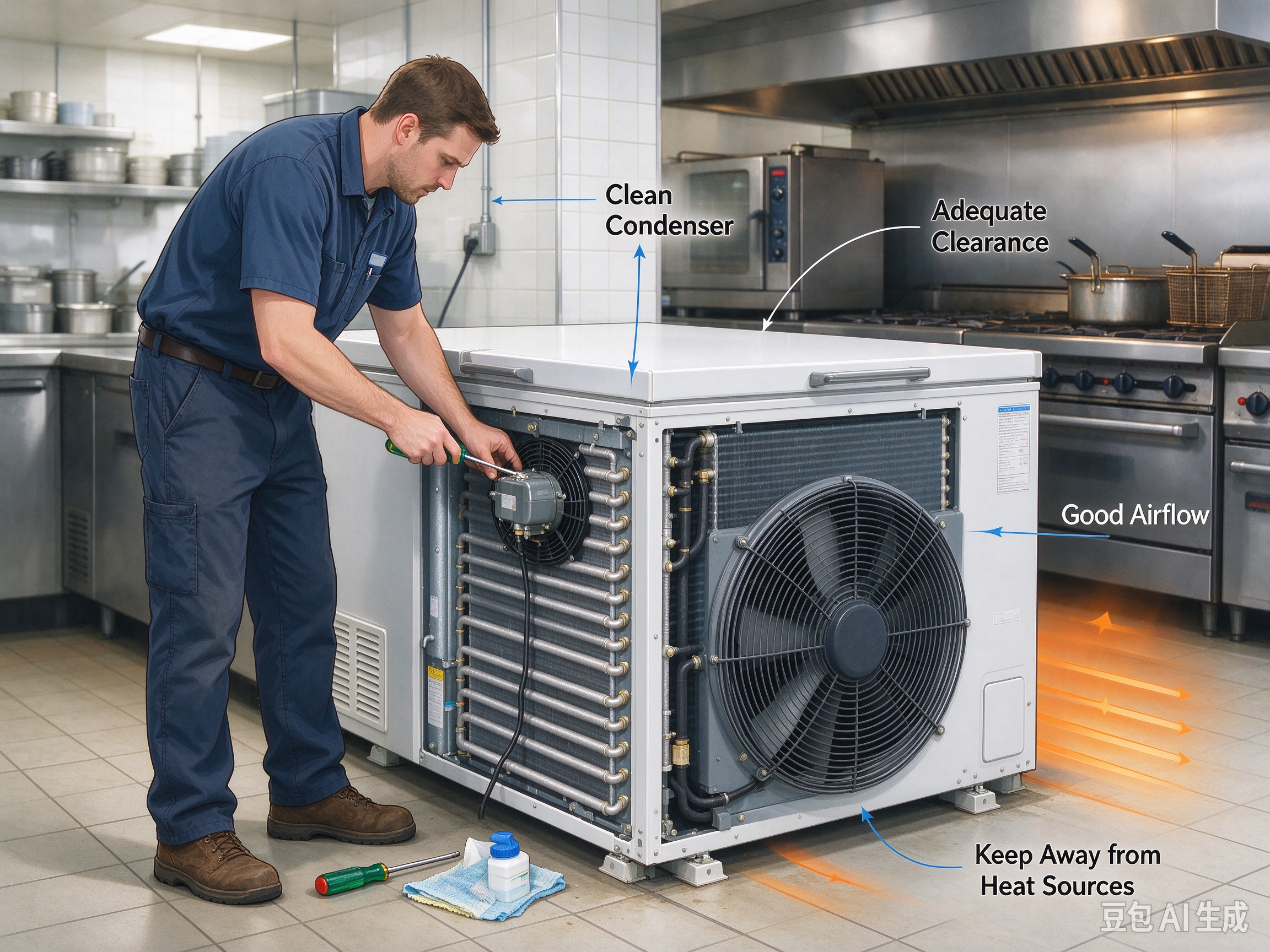
The condenser releases heat from the refrigeration system into the surrounding air. Restricted airflow around the condenser can make heat rejection more difficult.
During installation, businesses should follow the manufacturer's clearance requirements and avoid placing the unit tightly against walls or other heat-producing equipment unless the design specifically allows it.
Dust and grease can also interfere with heat transfer, particularly in commercial kitchens. A practical maintenance plan should include inspection and cleaning according to the manufacturer's guidance.
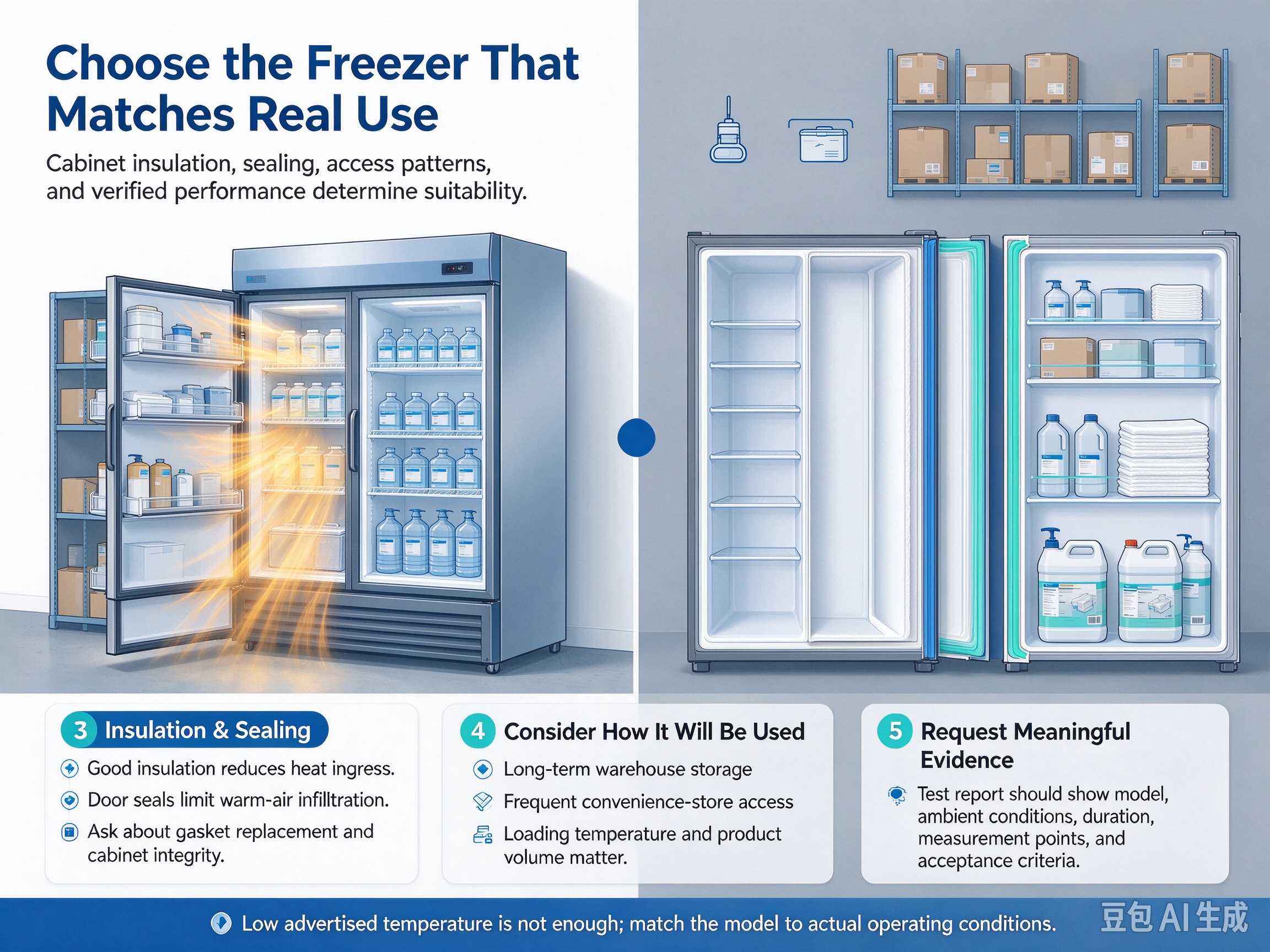
3. Evaluate Cabinet Insulation and Sealing
Good insulation helps reduce the amount of heat entering the cabinet. Door or lid seals help limit warm-air infiltration and moisture entry.
These factors are especially important where the freezer is opened frequently or exposed to a warm, humid environment.
Buyers should ask about insulation construction, gasket design, cabinet integrity, and serviceable replacement parts. A lower initial purchase price may not be attractive if the product is poorly matched to the local operating environment.
4. Consider How the Freezer Will Be Used
Ambient conditions are only one part of the picture.
A freezer used for long-term storage in a warehouse may face a different load profile from a display freezer opened repeatedly in a busy convenience store. Frequent access, product temperature at loading, cabinet capacity, and airflow restrictions all influence real-world performance.
Before requesting a quotation, define the expected ambient temperature range, target internal storage temperature, typical product types and loading volume, daily access frequency, available ventilation space, and electrical supply conditions.
This information helps the supplier recommend an appropriate model rather than a generic product.
5. Request Meaningful Performance Evidence
A useful test report should clearly identify the model and configuration tested, ambient conditions, test duration, measurement points, and acceptance criteria.
Ask whether the test evaluates empty or loaded operation and whether it includes temperature recovery after access or loading.
Performance data from one model should not automatically be applied to another model with a different compressor, condenser, controller, cabinet, or refrigeration circuit.
6. Prepare for Export-Market Requirements
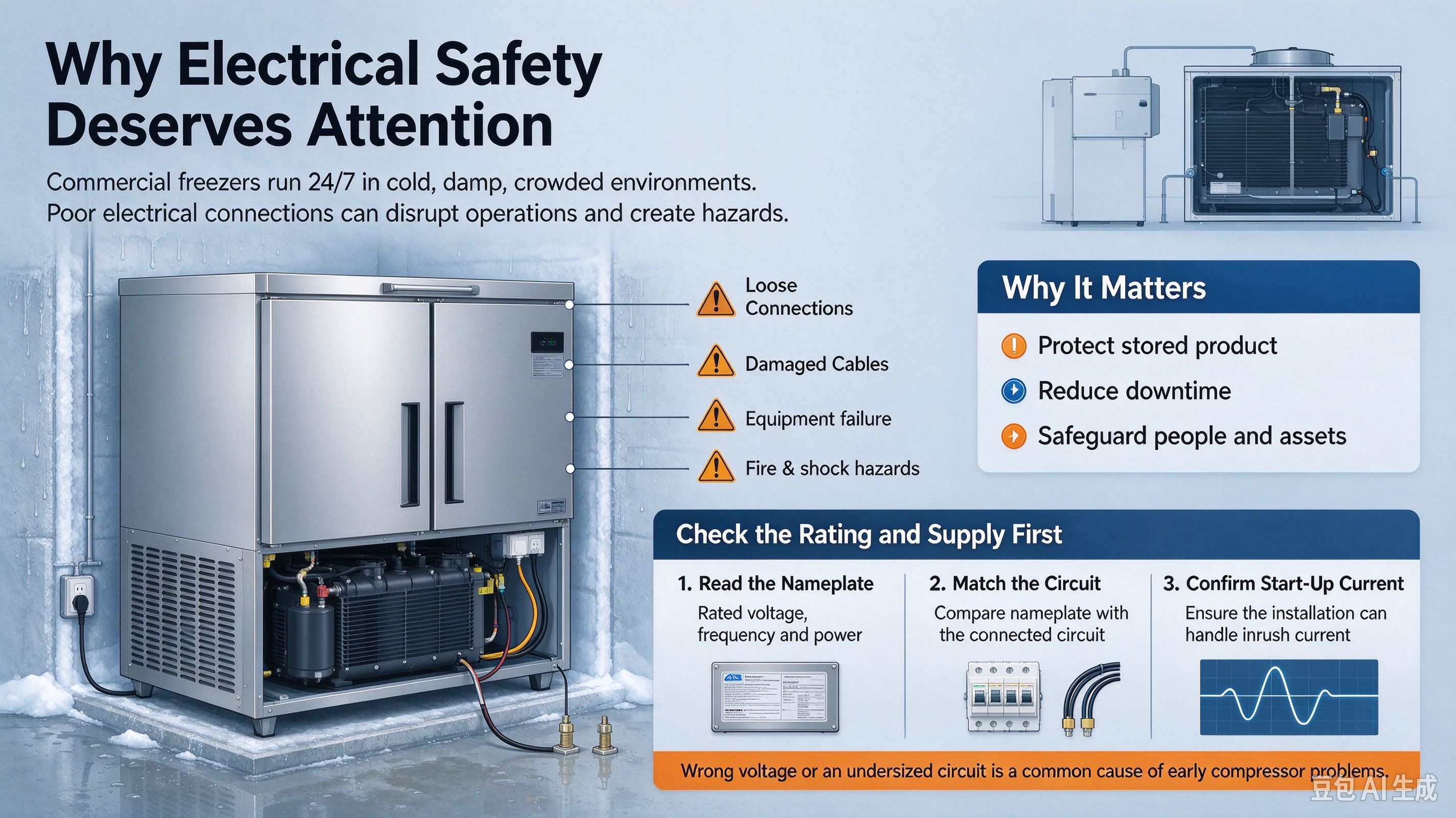
International buyers should verify voltage and frequency compatibility, plug configuration, labeling, packaging, documentation, and local safety or regulatory requirements.
Service support is equally important. Confirm spare-parts availability, warranty coverage, technical documentation, and the process for handling claims in the destination market.
 Conclusion
Choosing a freezer for a tropical market requires more than selecting a model with a low advertised temperature. Ambient ratings, condenser ventilation, insulation, use patterns, and documented testing all deserve attention.
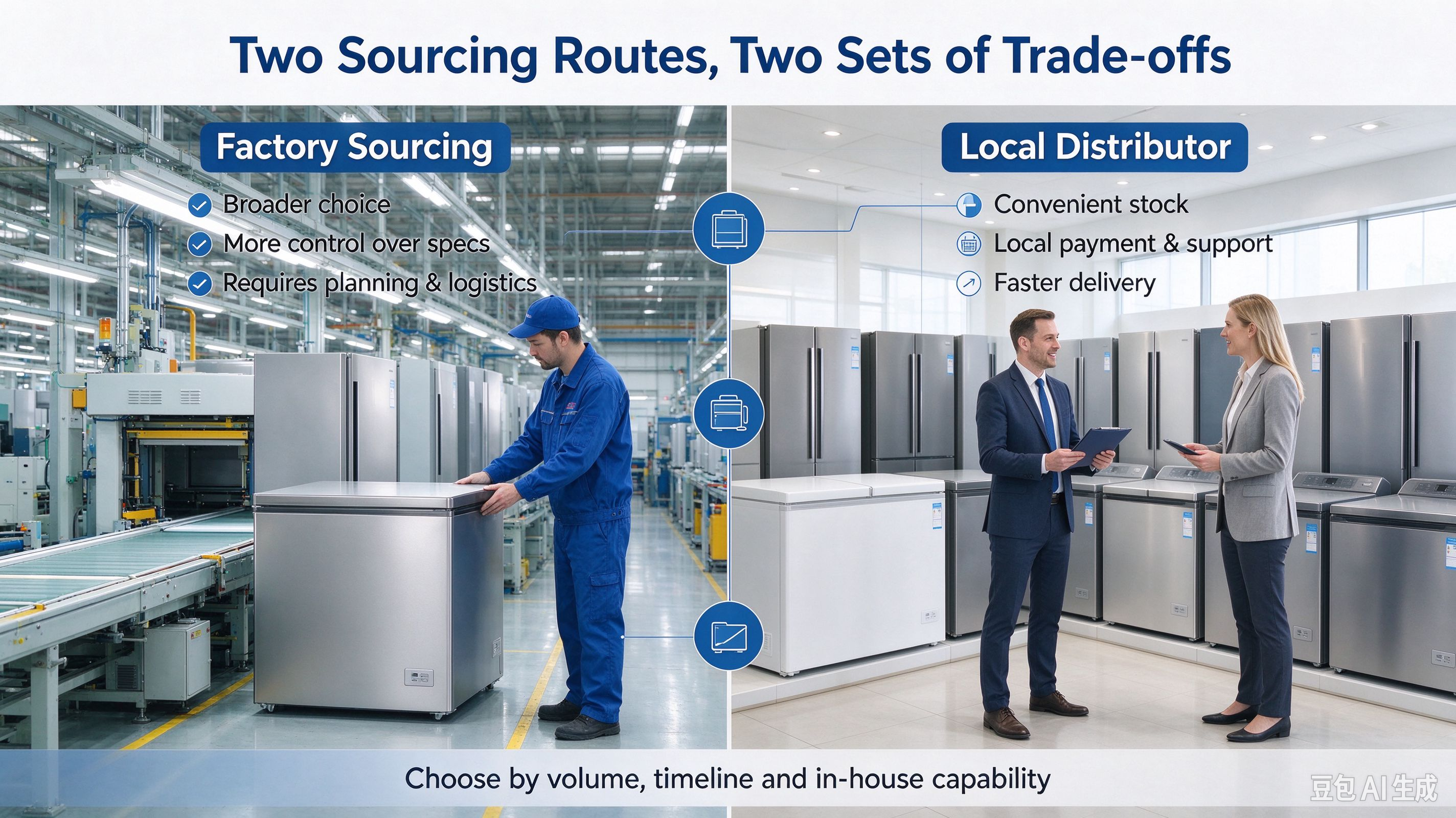
For importers and distributors, the best approach is to share actual market conditions with the manufacturer early in the purchasing process. SNOWSEA's commercial refrigeration solutions can be evaluated against those requirements so that buyers can identify a suitable model and confirm its specifications before ordering.
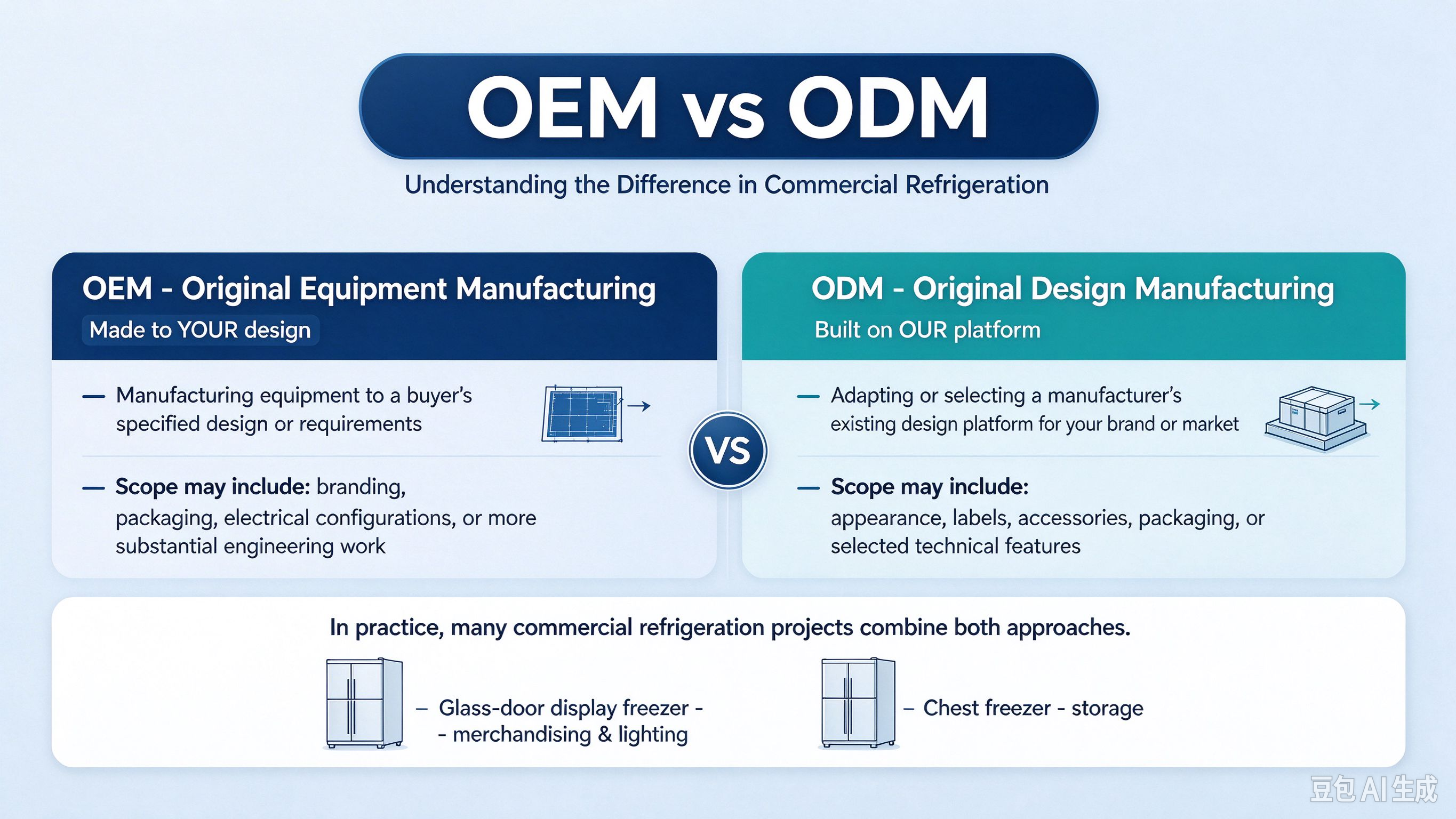
SNOWSEA offers commercial freezer, chest freezer and ice cream freezer platforms together with OEM/ODM support for retail, distributor and project requirements. Food retailers planning a new frozen category, store rollout or equipment standardization program can submit store formats, merchandise data, package dimensions, replenishment plans and expected quantities through SNOWSEA Contact Us to evaluate an appropriate freezer mix before bulk purchasing.