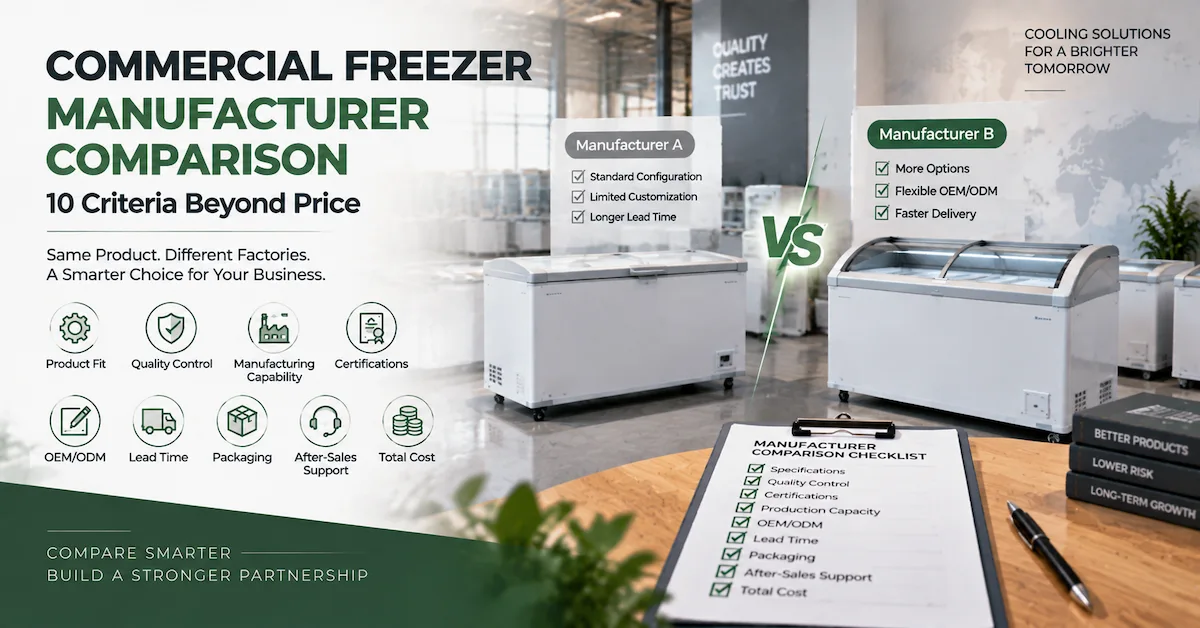
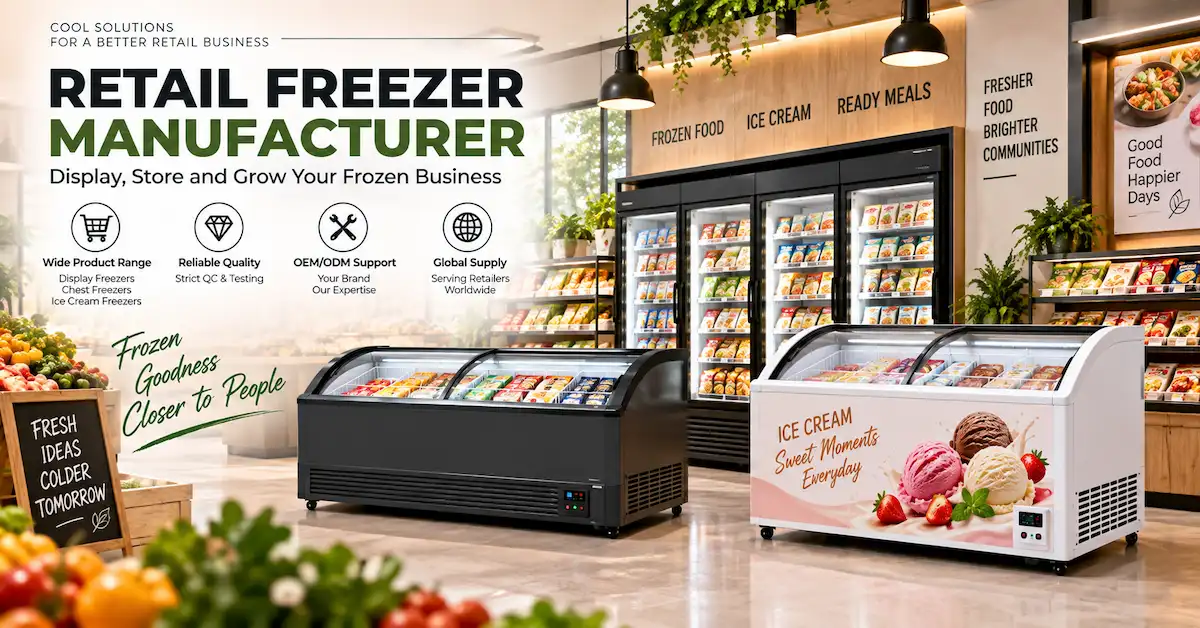
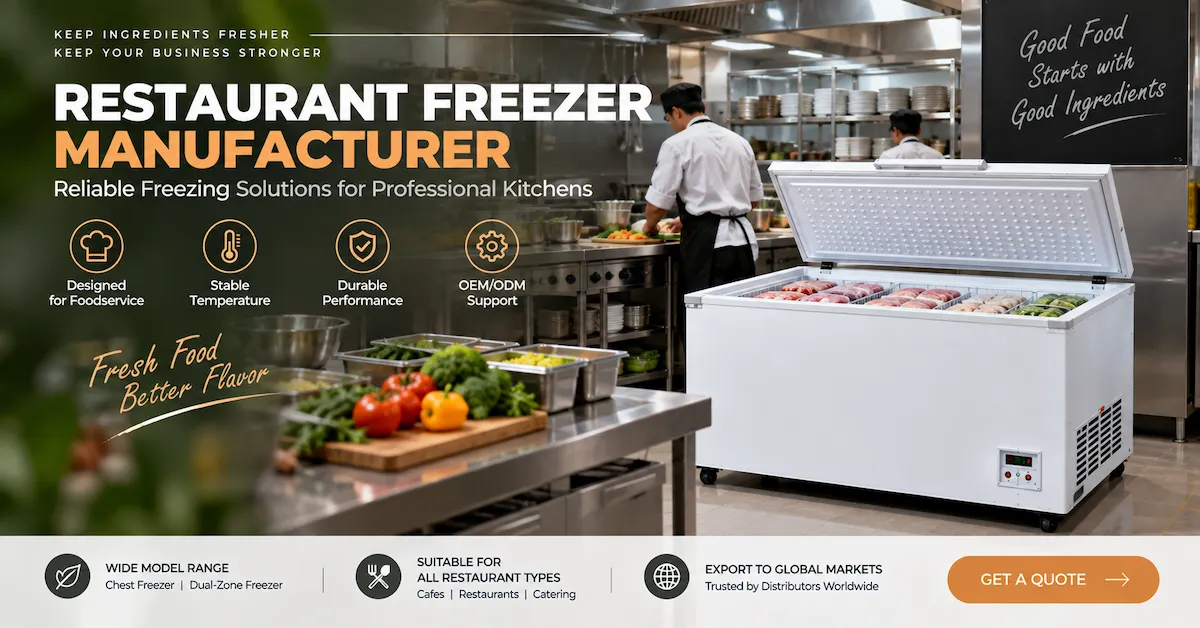
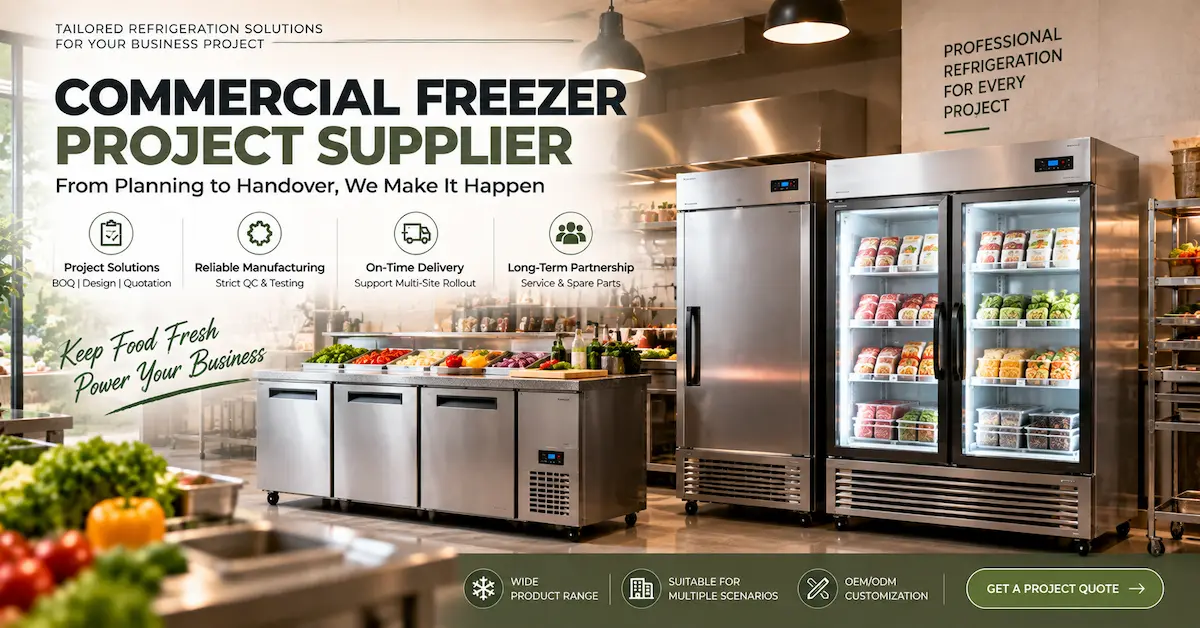
A commercial freezer project supplier becomes valuable when the buyer needs more than several cabinets delivered to one address. Multi-store rollouts, supermarket renovations, restaurant-chain openings, frozen-food retail projects and distributor programs involve repeated specifications, several model types, site-by-site quantities, approval documents and delivery milestones. A project can therefore fail even when every individual freezer looks acceptable: the wrong electrical version may reach one site, a display model may arrive before its location is ready, or a late specification change may affect several batches. SNOWSEA already distinguishes formal tender procurement from ordinary freezer buying, noting that large projects require technical communication, documentation, manufacturing coordination, delivery planning and after-sales support. This article focuses on the post-selection project workflow—from BOQ and technical approval through phased delivery and handover rather than repeating the broader supplier-selection process.
When Do You Need a Commercial Freezer Project Supplier Instead of a Normal Product Supplier?
A normal purchase can often be managed as one model, one quantity and one delivery. Project supply becomes more complex when several sites, equipment roles or approval parties are involved. A supermarket group may combine frozen-display cabinets with backroom chest freezers. A restaurant chain may standardize one freezer package for compact kitchens and another for high-volume locations. A contractor may need equipment to match drawings, electrical schedules and a construction program. A refrigeration distributor may be responsible for local installation and warranty while purchasing equipment centrally. SNOWSEA’s existing tender guidance identifies supermarkets, retail-chain expansion, hotels, food-service facilities, catering and institutional procurement as project-type applications where documents, production capability, delivery and service require greater coordination.
For an urgent single-unit replacement, project-style procurement may add unnecessary complexity. Likewise, laboratory, medical, blast-freezing or other specialist applications should not be automatically grouped with standard food-storage freezers without separate technical review.The role of the project supplier is not to make every freezer project complicated; it is to control complexity when multiple products, locations and stakeholders make a simple purchase order insufficient.
Start With the Project BOQ Before Discussing the Final Price
The BOQ—Bill of Quantities—should become the commercial and technical backbone of the project. It should identify more than a total freezer count. Each line should state the equipment role, proposed model, quantity, site or store type, electrical version, accessories, branding requirement and approval status. If one line says only “commercial freezer, 50 units,” purchasing cannot tell whether all 50 units are interchangeable or whether several configurations are hidden inside the quantity.
A useful BOQ separates confirmed items, supplier proposals and open technical decisions. This matters because early project estimates often change after store measurements, product-loading reviews or sample testing. If the BOQ is updated without revision control, procurement, factory production and site teams can end up working from different versions.For formal procurement, SNOWSEA’s tender guidance similarly emphasizes product specifications, quantities, customization, delivery schedule and documentation requirements before production planning begins.
| BOQ field | What the project buyer should record | Why it matters |
|---|---|---|
| Project/site code | Store, restaurant, warehouse or package reference | Connects equipment to destination |
| Equipment role | Display, reserve storage, ice cream display, no-frost storage | Prevents model misuse |
| Model | Approved supplier model | Links quotation,sample and shipment |
| Quantity | Units required by site or phase | Supports production and delivery planning |
| Electrical version | Voltage, frequency and plug | Prevents regional configuration errors |
| Accessories | Baskets, dividers, locks or selected options | Avoids hidden quotation differences |
| OEM requirement | Logo, labels, cabinet graphics or packaging | Connects branding to the correct version |
| Approval status | Proposed,sample approved or released for production | Stops unresolved units entering production |
| Required-on-site date | Project milestone, not merely shipment date | Supports phased logistics |
Create a Site Matrix Alongside the BOQ
A BOQ tells you what is being purchased; a site matrix explains where and why it is needed. For each site format, record available dimensions, frozen-product categories, operating environment, opening frequency, delivery route and expected installation date. This is particularly important when a chain has several store concepts. A compact retail site may not accept the same cabinet width as a large supermarket, even if both sell similar products.
SNOWSEA’s store-dimension guidance treats width, depth and height together with door-opening space, service clearance, customer movement, electrical connections and delivery access rather than treating cabinet dimensions in isolation. A project buyer can turn those considerations into a reusable site template, then determine which differences justify another freezer SKU and which can be handled by placement or accessories.
A project becomes easier when sites are grouped into approved formats rather than specified independently. Instead of 25 stores with 25 freezer plans, a retailer may eventually have Compact Store Package A, Standard Store Package B and Large Store Package C. The actual quantities still vary, but the underlying equipment definition is controlled.
Select Models by Project Role, Not Just Nominal Capacity
SNOWSEA’s published range provides several platforms that can occupy different roles in a commercial freezer project. The table below uses catalog information as a starting point; buyers should reconfirm final usable capacity, options and operating conditions in the project submittal.
| Model | Published information | Potential project role | Project item to confirm |
|---|---|---|---|
| BD-308 chest freezer | 308L; adjustable control,removable basket and defrost drain listed | Medium reserve frozen storage | Loading arrangement and included options |
| BD-500 chest freezer | 500L; double-lid format, removable basket, drain and lock; R290 listed | Larger reserve-stock requirement | Footprint, package loading and site access |
| BD/BC-227WA no-frost freezer | 227L; air-cooled no-frost configuration with electronic control | Project sites prioritizing the defrost routine | Controller,defrost behavior and operating data |
| SD/SC-268PM ice cream freezer | 268L flat sliding-glass display platform | Packaged ice cream retail display | Product fit, basket layout and access |
| SD/SC-368Y ice cream freezer | 368L curved-glass format with baskets and divider listed | Larger frozen-dessert display | Store footprint and usable merchandising layout |
SNOWSEA’s published buyer guide lists BD-308 at 308L, BD-500 at 500L, BD/BC-227WA at 227L, SD/SC-268PM at 268L and SD/SC-368Y at 368L,while also warning buyers to confirm usable loading and final configuration rather than assuming catalog capacity alone determines suitability.
Require a Technical Submittal for Every Project Model
A project quotation should eventually become a technical submittal that the buyer can approve. This is especially important when an architect, contractor, retailer, consultant and importer all need to work from the same information. A good submittal should identify the exact model and revision rather than combine information from several product brochures.
| Technical item | Buyer requirement | Supplier confirmation |
|---|---|---|
| Application | Products and intended storage/display function | Recommended configuration |
| Dimensions | Site limits and access route | Cabinet and packed dimensions |
| Usable arrangement | Product/package sizes | Basket or loading proposal |
| Temperature | Required holding conditions | Agreed test basis |
| Environment | Ambient temperature/humidity and opening routine | Supported operating conditions |
| Refrigeration | Required cooling/defrost approach | Final refrigerant, controller and system configuration |
| Electrical | Destination voltage, frequency and plug | Correct electrical version/nameplate |
| Materials/accessories | Required liner, baskets, locks,glass or options | Standard and optional items |
| Documentation | Drawings, manuals, labels and market documents | Model-specific document package |
| Packaging | Handling and project logistics | Approved protection and shipping configuration |
The purpose is not to fill a technical folder with documents. The submittal should answer a project question: what exact product has been approved for this BOQ line?
Approve Samples Against Project Conditions, Not Only Appearance
For a large project, a sample or pre-production unit should represent the configuration expected in volume. Load it with representative products, confirm dimensions and clearances, check accessories and verify electrical identification. For customer-facing display equipment, examine product visibility and actual package access.For storage equipment, check organization, replenishment and cleaning.
Performance approval should be handled separately. SNOWSEA’s published guidance recommends identifying the exact model, electrical configuration, ambient conditions, load, measurement positions and test duration when reviewing temperature performance. If opening or replenishment behavior is important to the project, include it in the agreed test plan. A sample that looks correct should not automatically pass a technical requirement that has not been tested.
For projects with many locations, keep a retained reference sample or a documented sample package containing photographs, configuration, labels, accessories and test records. This gives procurement and factory QC a common reference when the project moves into later phases.
Treat Design Freeze as a Formal Project Milestone
One of the largest risks in commercial freezer project delivery is allowing production to begin while requirements are still changing. Establish a “design freeze” or “specification freeze” milestone. Before that point, technical questions can remain open and drawings can be revised. After that point, changes should follow a controlled approval process because they may affect price, documentation, production scheduling and delivery.
This becomes especially important with OEM work.Logo or artwork changes are mainly branding decisions; changes to cabinet dimensions, insulation, controls, refrigeration configuration or components may require technical review. SNOWSEA’s published OEM material separates branding work from deeper product changes and advises buyers to confirm model-specific feasibility.
A project supplier should clearly state what happens when the buyer requests a change after design freeze: which units are affected, whether materials have already been committed, whether another sample is needed, and how the delivery schedule changes.
Connect Project Approval to Factory Production
SNOWSEA’s published manufacturing process covers material processing, cabinet and structural assembly, insulation foaming, refrigeration-system installation, main assembly, performance/temperature testing, final inspection, packing, storage and shipment. For project buyers, the important issue is how the approved BOQ and technical submittal connect to these production stages.
Ask how different electrical versions are identified. Ask how optional baskets or project-specific accessories are checked. Ask how branded cabinets are separated from standard models. Ask what identifies the production batch and how the factory handles a unit that fails a required check.A commercial freezer project supplier should be able to describe these controls without implying that manufacturing never encounters a nonconforming unit.
The goal is traceability: the freezer leaving the packing station should be identifiable against the same approved specification that purchasing signed earlier.
Define Project Quality Control Before the Final Inspection
Large orders often fail when “QC” is discussed only after production is complete. Define inspection criteria while the product specification is being approved. Separate three types of control: sample validation, production checks and pre-shipment inspection.
Sample validation establishes what the product should be. Production checks confirm that manufacturing follows the approved configuration. Pre-shipment inspection verifies that the completed shipment meets agreed acceptance items such as model, quantity, electrical version, accessories, visible workmanship, identification and packaging. SNOWSEA’s tender guidance also separates incoming materials, production inspection and final testing as distinct quality stages.
If a buyer uses an independent inspector, agree the inspection scope and sampling method early enough for the factory to prepare the required units and documentation. Do not wait until the container booking is confirmed to decide what constitutes a pass.
Match Project Documentation to the Exact Product Version
A project supplier may need to provide specifications, technical proposals, quality information, product documentation, warranty terms and other market-specific files. SNOWSEA’s tender guide lists product specifications, technical proposals, quality/compliance information, manufacturing capability, delivery plans and service terms as typical project documentation.
Buyers should still verify coverage. A document for another model or another electrical configuration should not automatically be attached to the project simply because it belongs to the same product family. If an OEM change modifies controlled components or identification, confirm whether the document package needs updating.
Create a project document register showing each required file, responsible party, revision and approval status. This prevents project teams from discovering missing paperwork only when goods are already waiting for shipment.
Plan Production by Project Phase Instead of One Headline Lead Time
“Lead time: 30 days” is not enough for a complex project. Break the schedule into approval and execution milestones: requirement confirmation, sample approval, design freeze, material preparation, production, QC, packing and shipment readiness. Keep international transit and destination delivery separate from factory production.
For example, a rollout can be divided into Phase 1 pilot stores, Phase 2 standard stores and Phase 3 expansion locations. Production quantities can follow those phases if MOQ, factory scheduling and logistics make the arrangement feasible. SNOWSEA’s project/tender information specifically treats production planning, packaging and shipment coordination as parts of project delivery rather than one simple purchasing step.
A realistic schedule should also show buyer-dependent actions. If artwork, store drawings or electrical requirements are late, the project plan should identify that dependency instead of hiding it inside a revised factory delivery date.
Allocate Shipments to Sites Before the Container Is Loaded
For multi-site projects, the warehouse should know which units belong to which phase or store format before the shipment arrives. Use project codes, carton markings or an internal allocation list. Different electrical versions or branded configurations should be clearly distinguishable without unpacking every freezer.
A useful packing list can include project code, model, quantity, electrical version, package number and destination group. Where several freezer types form one complete site package, track them together. Twenty-five cabinets in a warehouse do not mean five stores are ready if the display models or accessories needed for those stores are missing.
SNOWSEA’s tender content highlights export packaging, container loading and shipment coordination as project-delivery concerns. Project logistics should therefore be planned around complete site needs, not only maximum container utilization.
Use a Change-Order Process to Protect Cost and Schedule
Project changes are normal; undocumented changes are the problem. Create a change-order record for requests made after the agreed specification.It should state the requested change, affected models/quantities, technical impact, cost impact, schedule impact and approval decision.
Suppose a project switches the plug standard for 40 units after materials have been prepared. The important question is not merely whether the factory “can change it.” Purchasing needs to know which units are affected, whether existing materials can be reused, whether labels or documents change, and whether the scheduled shipment is still achievable.
This prevents the unit quotation from becoming misleading. A project budget should distinguish the original approved scope from later additions instead of treating every new request as part of the initial price.
Compare Project Cost Using the Complete Delivery Scope
A commercial freezer project supplier should be compared on equivalent scope. The project cost may include equipment, model-specific accessories, samples, OEM artwork, packaging changes, project inspection, initial spare parts and the agreed trade/delivery responsibilities. Depending on the commercial arrangement, destination freight, duties, local delivery, installation or commissioning may remain with the buyer or another contractor.
Build a cost comparison that separates included, optional, buyer-arranged and not yet confirmed items. This is more reliable than selecting the lowest equipment subtotal and discovering later that several project requirements were never priced.
Project buyers should also calculate cost by store, kitchen or project package where appropriate. This helps management understand whether one standardized package is actually more expensive because it requires additional cabinets or site work.
Use OEM/ODM to Standardize the Project, Not Create Unnecessary Variations
OEM/ODM can add value when a chain wants consistent branding, model identification, packaging or market-specific configuration. It can also create unnecessary complexity when every site requests a slightly different product. SNOWSEA presents its OEM/ODM program for distributors, retailers and project buyers needing customization and project-specific refrigeration solutions.
Review SNOWSEA OEM/ODM solutions before finalizing project customization. Try to standardize artwork, electrical versions and technical options by region or store type. If one store requires a genuine engineering difference, make it an identifiable project variant rather than quietly changing the standard freezer specification.
Prepare Handover and Spare Parts Before the Last Shipment
Project delivery is not finished when the container leaves the factory. Before the final phase, prepare a handover package that can include model references, manuals, approved specifications, applicable project documents, warranty procedure and spare-parts references.
For a multi-site operation, service teams need to know which production version is installed at each location. Do not assume similar-looking controllers, gaskets, baskets or glass components are interchangeable. Keep model and batch information linked to the site asset record.
SNOWSEA’s tender guidance identifies warranty, spare-parts availability, technical support and service communication as important parts of project supplier evaluation.Confirm the order-specific support terms rather than assuming company-level service statements automatically define labor, freight or local response obligations.
What Should You Send a Commercial Freezer Project Supplier for a Proposal?
A strong project inquiry should provide enough information for the supplier to build a solution rather than return a catalog price list. Send the project background, application, number of sites, store or kitchen formats, required freezer roles, initial BOQ, installation dimensions, frozen-product/package information, electrical requirements, target market, branding requirements, document list and required-on-site schedule.
If some details remain unfinished, mark them provisional. The supplier can then identify which information must be frozen before samples, production or final pricing.
SNOWSEA’s formal tender guide similarly recommends project background, freezer types, quantities, technical requirements, destination market, electrical requirements, branding, packaging, schedule and service expectations in an RFQ.Buyers can begin the project discussion through the SNOWSEA project inquiry page and request a BOQ-based proposal rather than a general product quotation.
Frequently Asked Questions
1. What is a commercial freezer project supplier?
A commercial freezer project supplier provides equipment together with project-oriented support such as model selection, technical confirmation, documentation, production coordination, phased delivery and after-sales planning. The exact scope should be defined in the quotation and project agreement.
2. How is a project supplier different from a normal freezer supplier?
A normal supplier may quote a model and quantity for one order. A project supplier is expected to coordinate multiple requirements—such as several sites, model variants, approvals, documents and delivery phases—against a controlled project schedule.
3. What is the difference between a tender supplier and a project supplier?
Tender supplier evaluation usually focuses heavily on the formal procurement and supplier-selection stage. Project supply continues into technical approval, production coordination, delivery and handover. Buyers still at the supplier-selection stage can review SNOWSEA’s commercial freezer tender supplier guide.
4. What should be included in a commercial freezer project BOQ?
Include site/project code, equipment role, proposed model, quantity, electrical version, accessories, branding or customization requirements, approval status and required delivery phase. Add pricing and document references according to your internal procurement system.
5. Should every location use the same freezer model?
Not necessarily.Standardize by recurring site format or application rather than forcing one cabinet into every location. Different store sizes or storage tasks may justify different approved models.
6. When should project samples be approved?
Approve a representative configuration before releasing affected volume production. Check technical specification and appearance separately, and define any model-specific performance test requirements before declaring the sample approved.
7. Can SNOWSEA support OEM commercial freezer projects?
SNOWSEA presents OEM/ODM support for distributors, retailers and project buyers. Final branding, configuration and engineering feasibility should be confirmed for the specific model and project through its OEM/ODM service.
8.How should a multi-site freezer delivery schedule be planned?
Work backward from site-required dates and separate specification approval, sample approval, production, inspection, shipment readiness, international transport and local delivery. Where possible, group sites into rollout phases with complete equipment packages.
9. What are the biggest risks in a commercial freezer project?
Common risks include unclear specifications, different document revisions, late design changes, incomplete site information, wrong electrical versions, mismatched project quantities, delayed approvals, missing accessories and inadequate after-sales planning. Control these through BOQ revision, technical submittals and milestone approval.
10. What information should I send SNOWSEA for a project quotation?
Provide the project type, destination, number of locations, equipment roles, estimated quantities, product/loading requirements, installation dimensions, electrical configuration, branding needs, documentation requirements and target delivery schedule.Submit them through SNOWSEA Contact Us and request a project proposal showing models, approval requirements, production phases and commercial scope.
Conclusion
Choosing a commercial freezer project supplier should be based on the supplier’s ability to convert a large purchasing requirement into controlled models, documents, production batches and site deliveries—not only its ability to offer an attractive unit price. Build the project around a revision-controlled BOQ, group locations into repeatable site formats, approve technical submittals and samples, freeze specifications before production, and connect QC, packaging, site allocation and spare parts to the same project references. SNOWSEA provides commercial freezer and ice cream freezer platforms together with OEM/ODM and large-project support for B2B buyers.If you are planning a supermarket rollout, restaurant-chain expansion, distributor project or multi-location frozen-food program, send SNOWSEA your BOQ, site formats, technical requirements and delivery schedule and request a project-specific proposal covering model selection, approvals, production phases, logistics and handover support.