What Should a Custom Refrigeration Equipment Manufacturer Actually Deliver?
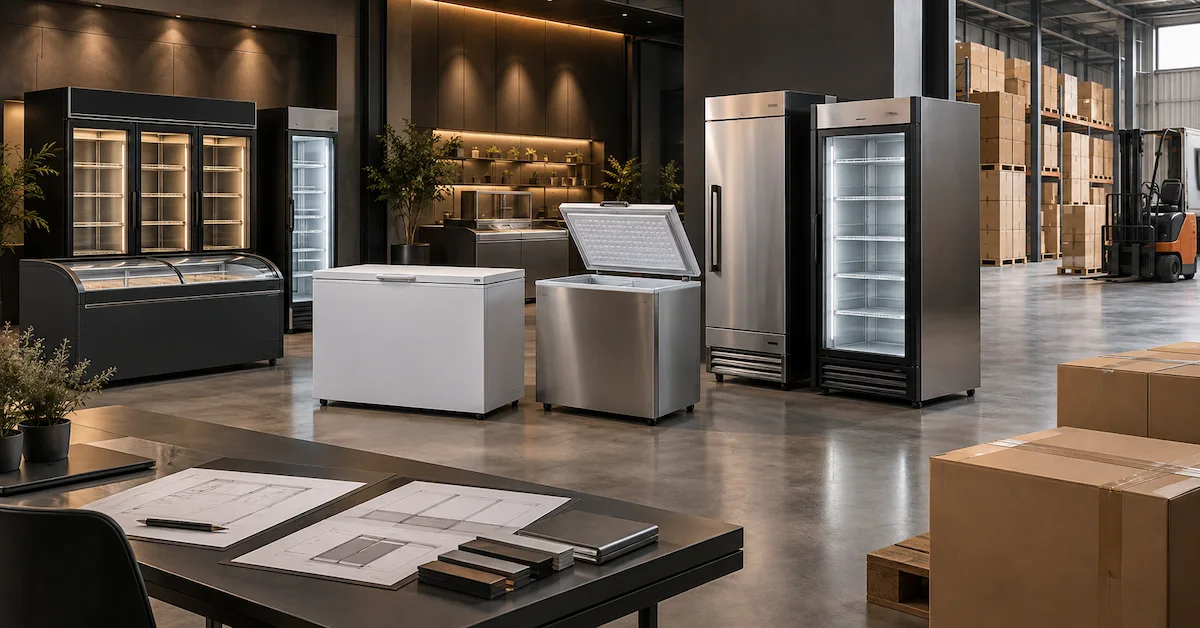
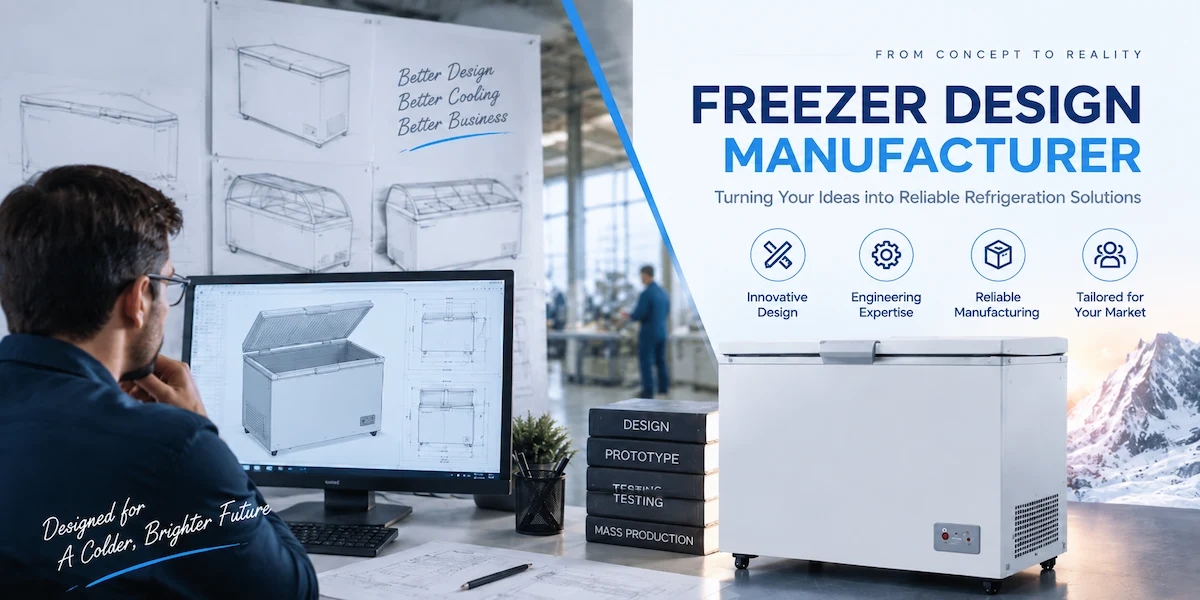
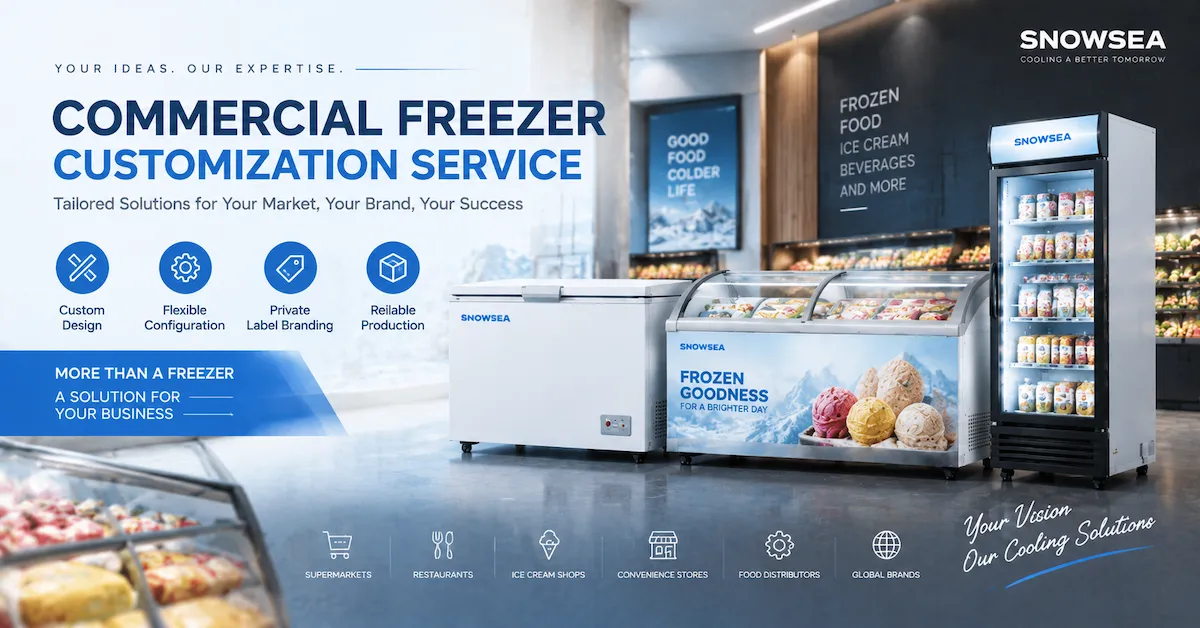
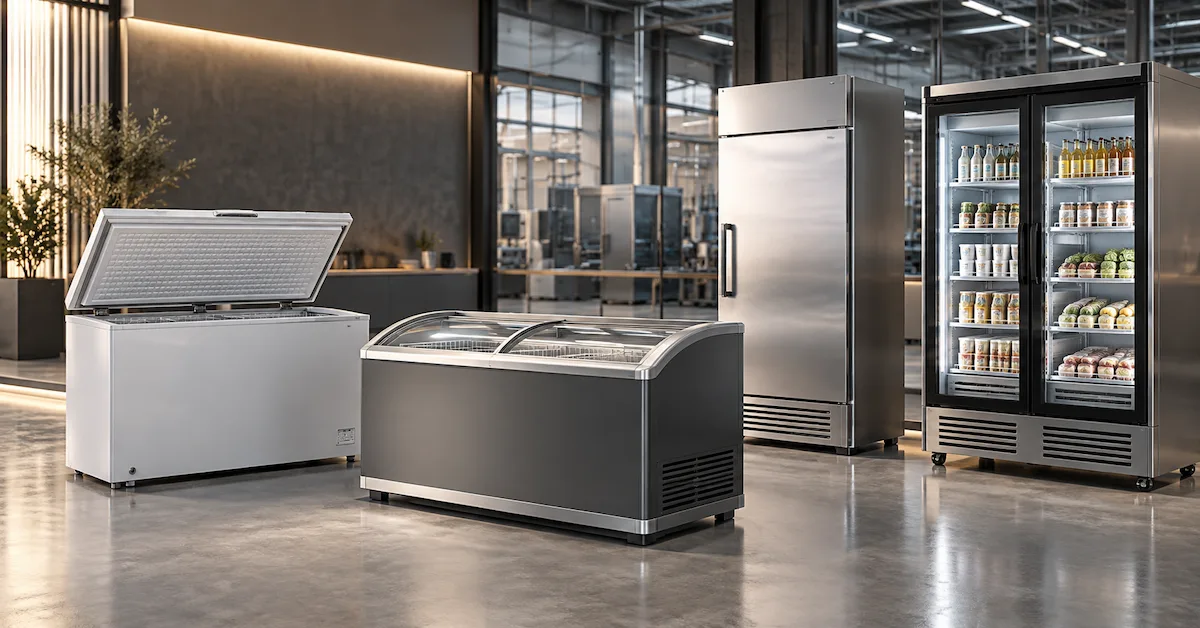
A custom refrigeration equipment manufacturer should do more than present a long catalog and ask which cabinet you want modified. For a distributor, supermarket group, foodservice supplier or private-label refrigeration brand, the real requirement is usually broader: identify the correct existing product platform, define which changes are commercially necessary, evaluate the technical effect of those changes, validate the customized version, transfer it into controlled production and support the same configuration after shipment. SNOWSEA currently organizes its refrigeration range across Freezer, Ice Cream Freezer, Refrigerator and Showcase, while its OEM/ODM service supports project-specific configuration and customization. The purchasing challenge is therefore not simply “Can this factory customize refrigeration equipment?” but “Can it manage different refrigeration categories without losing model-level technical control?” SNOWSEA itself presents a multi-category OEM/ODM portfolio for freezers, ice cream freezers, refrigerators and showcases.
Who Needs Custom Refrigeration Equipment Instead of Standard Products?
Customization is most valuable when a standard product leaves a measurable requirement unresolved. A frozen-food distributor may need a chest freezer that fits a particular loading pattern; an ice cream brand may need different glass, baskets and exterior branding; a beverage supplier may need shelf spacing, lighting and a branded lightbox; a retailer may require different equipment packages for compact and large-format stores. By contrast, customization is usually unnecessary when the existing product already satisfies the application and the buyer only wants a different appearance for the sake of being “unique.” The first job of a custom refrigeration equipment manufacturer should therefore be to distinguish a real product gap from optional decoration. SNOWSEA’s existing customization content similarly treats cabinet size, temperature range, glass structure, shelf or basket layout, electrical version and branding as application-driven decisions rather than automatically necessary changes.
Start With the Application Portfolio, Not the Product Catalog
If your business sells several refrigeration categories, define the customer role of each product before you request engineering changes. Frozen storage, ice cream display, general refrigeration and chilled merchandising solve different commercial tasks. Trying to force them into one generic “custom refrigerator” specification can create weak product decisions.
| Product Role | Typical Buyer/Application | SNOWSEA Category | Main Customization Question |
|---|---|---|---|
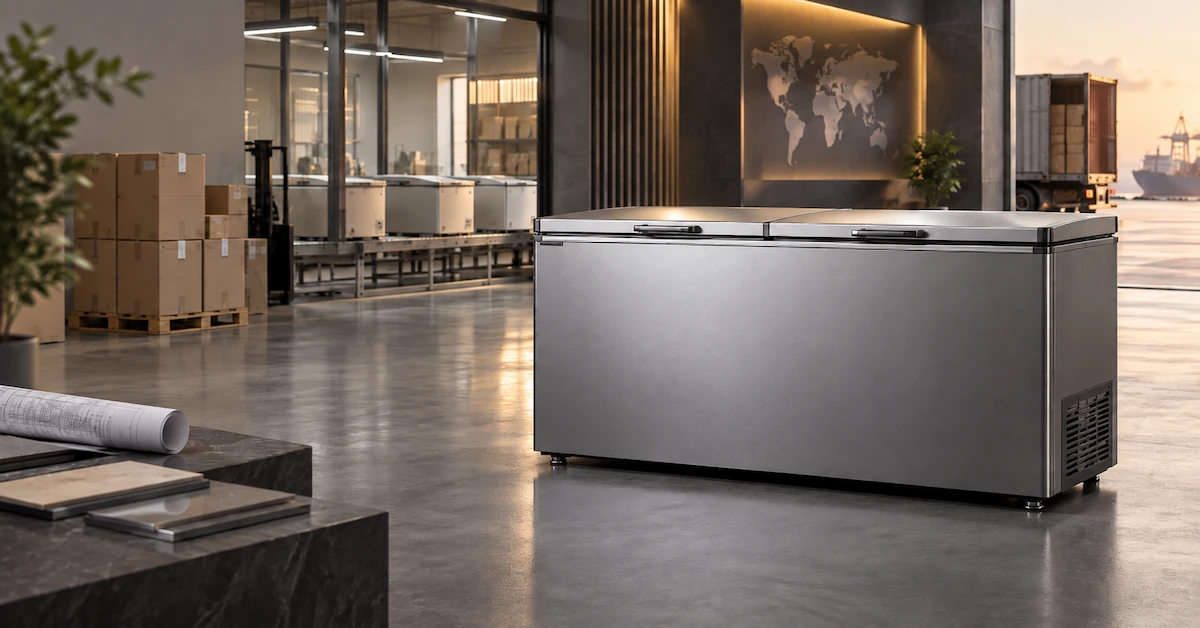
| Frozen reserve storage | Restaurants, food retailers, distributors | Freezer | Does the cabinet/loading arrangement fit real frozen-stock handling? |
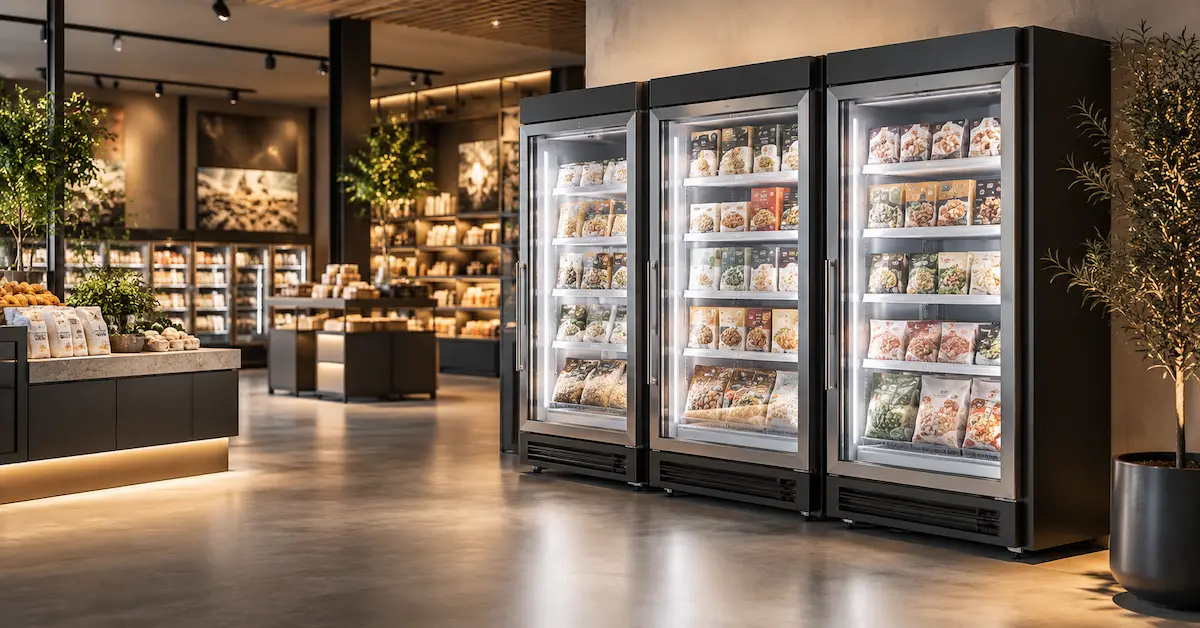
| Frozen retail display | Ice cream brands, convenience stores | Ice Cream Freezer | Do glass, baskets and branding support merchandising and frozen holding? |
| General refrigeration | Appliance/distribution channels | Refrigerator | Does the internal configuration and electrical version fit the market? |
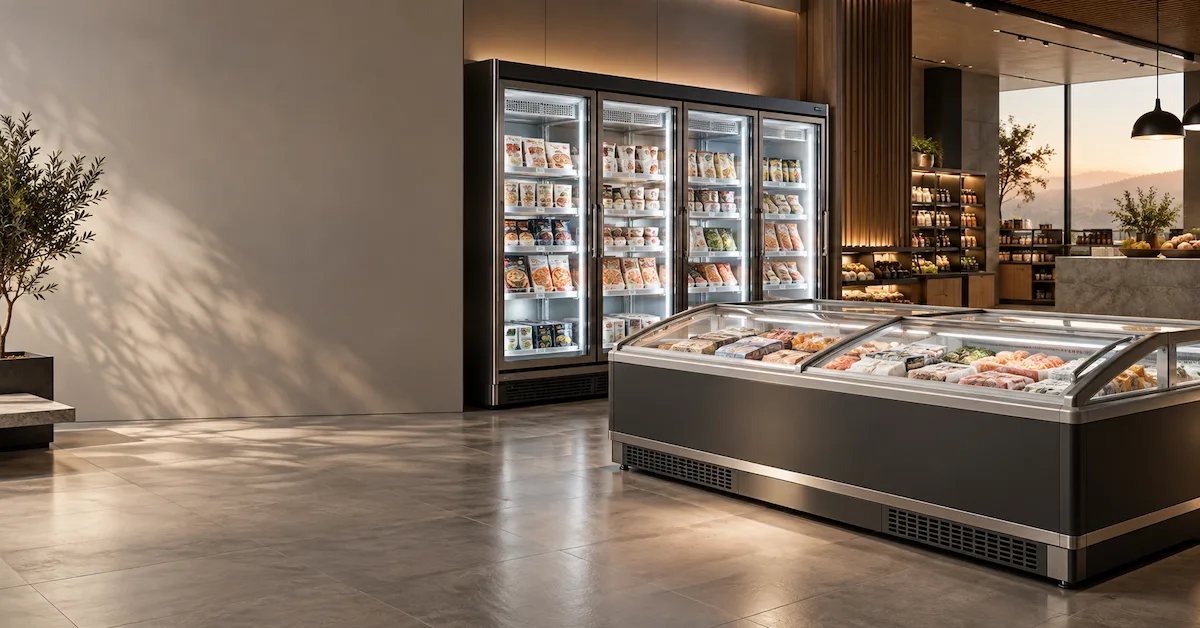
| Chilled merchandising | Beverage brands, supermarkets, convenience stores | Showcase | Do door structure, shelving, visibility and lighting fit the retail assortment? |
A good multi-category program should not make every product look technically identical. It should create one coherent commercial range while preserving the different operating requirements of each category.
Choose the Closest Existing Platform Before Requesting a New Design
Custom projects generally become easier to control when an existing platform already solves most of the application. SNOWSEA’s current range provides examples across several categories. The table below uses published starting points; final usable capacity, electrical configuration, options and market suitability still need order-specific confirmation.
| Model | Published Starting Point | Potential Custom Project Role | What Should Be Confirmed |
|---|---|---|---|
| BD-500 Chest Freezer | 500L double-lid chest freezer | Larger frozen-stock solution | Actual loading, cabinet fit, controls and market version |
| SD/SC-268PM Ice Cream Freezer | 268L flat sliding-glass freezer | Packaged ice cream display | Glass, baskets, package fit and artwork |
| BC-190 Refrigerator | 190L single-door refrigerator | Refrigerator-channel platform | Interior configuration, electrical specification and documents |
| LC-208 Display Refrigerator | 208L single-door display refrigerator | Compact chilled merchandising | Shelves, lighting, controller and operating requirement |
SNOWSEA’s own multi-category OEM article uses these four platforms to illustrate the different roles of storage, frozen display, refrigeration and chilled merchandising.
The useful sourcing question is not “Which product can be modified the most?” It is “Which platform already solves the largest percentage of our requirement with the least unnecessary engineering?”
Build One Custom Equipment Requirement Sheet
A multi-category custom program needs a requirement structure that purchasing, engineering and the manufacturer can all understand. The requirement sheet should distinguish buyer needs from supplier proposals and from items that are still unresolved.
| Requirement Area | Buyer Should Define | Manufacturer Should Confirm |
|---|---|---|
| Application | Product being frozen, refrigerated or displayed | Recommended platform |
| Merchandise | Package dimensions and quantity | Usable arrangement |
| Installation | Maximum W × D × H and access limitations | Final cabinet dimensions |
| Temperature | Required holding conditions | Supported operating specification |
| Environment | Ambient temperature/humidity where relevant | Applicable operating conditions |
| Cooling system | Application/maintenance requirement | Proposed refrigeration configuration |
| Electrical | Voltage, frequency and plug | Destination-market version |
| Controller | Required functions | Approved controller/settings |
| Interior | Shelves, baskets or dividers | Layout and load limitations |
| Doors/glass | Access and display requirement | Available structure |
| Branding | Logo, graphics, model identity | OEM execution method |
| Documents | Manuals, labels, market requirements | Model-specific document package |
| Packaging | Export and handling requirement | Final packed configuration |
| Service | Local support and spare-parts needs | Support scope |
An unfinished requirement should remain marked as provisional. Do not allow a supplier assumption from the first quotation to quietly become the production specification.
Divide Customization Into Three Levels
The word “custom” can describe changes with very different technical consequences. A disciplined project separates them.
Brand and market localization includes logo, cabinet graphics, private-label model number, manual language, carton and plug adaptation. These changes usually create less engineering risk.
Functional configuration includes shelves, baskets, locks, lighting, controllers and model-dependent options. These require compatibility and sample confirmation.
Engineering customization includes cabinet dimensions, insulation, glass structure, refrigeration-system configuration, airflow, compressor selection or control logic. These changes may influence performance and should be reviewed and validated technically.
A custom showcase refrigerator project, for example, may involve size, glass-door structure, shelf layout, LED lighting, cabinet color, logo, top lightbox, voltage and export packaging. SNOWSEA’s current custom showcase content lists these areas separately because their technical and commercial impact is not identical.
Standardize Across Categories Where It Creates Supply-Chain Value
A custom refrigeration equipment program becomes easier to sell and service when selected elements are standardized across product families. That does not mean forcing the same technical design onto every cabinet. Instead, look for commercial standardization opportunities such as model-number logic, logo placement rules, document format, carton identification, approved electrical versions, warranty language and parts-reference systems.
Where technically practical, shared controller families or service components may also reduce after-sales complexity, but such decisions should only be made after compatibility has been established. The goal is to reduce avoidable SKU and spare-parts fragmentation without compromising the specific refrigeration task each category needs to perform.
Customize Cabinet Size Only When Internal Layout Cannot Solve the Requirement
Cabinet dimensions are one of the most expensive areas to change unnecessarily. Before requesting a new external size, provide the manufacturer with actual product dimensions, required loading quantity and site limitations. A different shelf spacing, basket layout or existing base model may solve the problem with less engineering.
If dimensions do need to change, evaluate more than the exterior drawing. Confirm usable internal dimensions, insulation arrangement, refrigeration load, opening geometry, service access, packed size and transport implications. The same principle applies across freezers, refrigerators and showcases: size customization should solve a physical customer constraint, not merely create another catalog size.
Display Refrigeration Needs Merchandising Validation as Well as Cooling Validation
Customer-facing refrigeration has a second job: merchandise has to remain visible and accessible. A chilled showcase should therefore be tested with actual bottles, cans, dairy products or packaged chilled foods. An ice cream freezer should be reviewed with actual frozen-dessert packaging.
For a showcase project, buyers should check shelf spacing, front-facing quantity, door movement, lighting and product visibility. For an ice cream freezer, check basket allocation, glass access, package readability and replenishment. SNOWSEA’s existing ice cream customization guidance explicitly combines freezing performance with visibility, branding and package layout, while its showcase customization content takes a similar approach for beverages and chilled foods.
Nominal liters are useful for initial screening, but they do not tell you how many saleable products your actual retail arrangement can present.
Refrigeration and Temperature Changes Must Be Treated as Engineering Work
A requested temperature range should not be implemented by simply changing a controller parameter. Cabinet size, evaporator arrangement, compressor matching, condenser heat rejection, airflow, defrost and insulation can all influence whether the equipment can achieve the intended operating requirement.
The same is true across categories. A chest freezer and an LC-208-style chilled display cabinet serve different temperature applications, even if their controls look similar. SNOWSEA’s multi-category OEM guidance lists LC-208 as a chilled display platform with a published 0–10°C range, which is fundamentally different from a frozen-storage requirement.
Ask the manufacturer to define how the modified product will be tested instead of accepting phrases such as “stronger cooling” or “more powerful compressor.”
Controller Customization Should Start With Functions, Not Appearance
Electronic controls can be customized for branding or operation, but changing controller hardware or logic can also change how the refrigeration system behaves. Define the required functions first: setpoint range, sensor arrangement, compressor restart delay, fan control, defrost behavior, alarms, temperature units or parameter locking where relevant.
Then determine whether those functions can be implemented on the existing validated controller platform or require another control solution. If controller behavior changes, the complete cabinet should be validated with the new version. A customized display that looks better but creates different compressor or defrost behavior is an engineering change, not merely graphic design.
Prototype Validation Should Differ by Equipment Category
A freezer prototype, refrigerator prototype and display-showcase prototype should not all receive an identical sample checklist. The validation method should follow the product’s actual job.
| Product Type | Main Sample Validation |
|---|---|
| Chest freezer | Loading, cabinet fit, sealing, controls, frozen-storage performance |
| Ice cream freezer | Package fit, glass, baskets, customer access, frozen holding |
| Refrigerator | Internal arrangement, door operation, controls, refrigeration performance |
| Showcase | Shelf layout, lighting, visibility, door access, chilled performance |
Record the exact sample revision, configuration, electrical version and open issues. If the sample is corrected, do not keep referring to both versions as “the approved sample.”
Connect the Approved Product to Normal Factory Production
A manufacturer may produce an excellent development sample but still struggle to reproduce it consistently at scale. Buyers should therefore ask how the custom version enters the normal production system.
SNOWSEA states that its manufacturing operation includes integrated production lines, workshops and testing facilities, while its OEM/ODM process provides a route from product configuration through manufacturing and testing.
For each custom model, ask:
- Which specification revision controls production?
- Which drawing controls cabinet assembly?
- How are unique components identified?
- How are electrical versions separated?
- How are private-label labels and manuals issued?
- Which performance checks belong to the custom model?
- How is final packaging revision controlled?
The strongest custom manufacturer is not the one that can make the most unusual sample. It is the one that can reproduce the approved product without relying on informal instructions.
Use Three Levels of Quality Control
For custom refrigeration equipment, quality control should be separated into sample validation, production control and pre-shipment inspection.
Sample validation establishes whether the proposed configuration solves the requirement. Production control checks that the approved materials, configuration and process remain consistent. Pre-shipment inspection verifies that completed units match the purchase order before release.
SNOWSEA’s current commercial freezer quality guidance explicitly separates these three stages rather than treating them as one generic “QC passed” event.
For a multi-category project, the inspection criteria should also change with the equipment architecture. Glass, shelves and merchandising access matter more for a showcase; airflow and defrost may matter more for a no-frost freezer.
Manage Destination-Market Documents by Model, Not by Brand
A custom refrigeration equipment manufacturer may serve many international markets, but company-level documentation does not automatically apply to every model or customized version. Create a document register linking each private-label SKU to its electrical configuration and required destination-market files.
If a custom project changes significant components or product construction, ask whether existing documentation still represents the new version. Resolve that question before printing compliance-related artwork or committing to a launch date.
This is particularly important in multi-category private-label programs because a freezer, refrigerator and showcase should not share technical claims simply because they carry the same brand design.
MOQ Should Be Evaluated by Custom Item, Not Only by Total Order
A multi-category order can be large overall but commercially difficult at the individual SKU level. Each base model, electrical version, carton, cabinet color or custom component may create its own minimum.
For example, a distributor could order 300 pieces across four categories while one specialized display refrigerator only represents a small portion of the total. The manufacturer may still need to discuss its model-specific production or component constraints.
Ask which MOQ comes from:
- The equipment platform
- OEM artwork
- Custom cartons
- Color
- Unique glass
- Special shelves/baskets
- Controller
- Other project-specific components
This information can reveal whether an alternative design produces the same customer value with a more practical supply structure.
Break Lead Time Into Product Development and Production
Custom projects should not be managed through one vague delivery number. Separate requirement confirmation, engineering review, sample development, validation, correction, specification freeze, material preparation, production, inspection, packing and shipment readiness.
Different product categories may not reach these milestones at the same time. One chest freezer may already be ready for production while a custom showcase is still waiting for artwork or shelf validation. Ask whether completed models can proceed independently or whether the entire project must wait.
This creates a more realistic launch plan for distributors and retail groups.
Compare Cost Against the Closest Standard Product
Customization should have a commercial justification. Compare the custom configuration against the closest suitable standard platform instead of examining only the new quotation.
| Cost Area | Standard Equipment | Custom Equipment |
|---|---|---|
| Base unit | Reference price | Customized production price |
| Engineering | Limited | May be required |
| Prototype | Standard sample | Project sample/validation |
| Tooling | Existing | Possible where needed |
| Special components | Standard supply | May add MOQ |
| Packaging | Standard | Private-label/custom |
| Testing | Existing product scope | Additional where changes affect performance |
| Spare parts | Existing service system | Unique components may be required |
| Freight | Known packed size | Recalculate after dimensional changes |
The lowest initial customization cost is not automatically the best project. A small product change that creates a unique low-volume service part can become expensive later.
Build Spare-Parts Planning Into the Design Stage
A custom equipment program should be serviceable after launch. Before approving a unique controller, glass panel, gasket, shelf, basket or other specialized component, ask how that part will be identified and supplied later.
For distributors handling several refrigeration categories, create a cross-reference:
Private-label model → factory base model → approved revision → service parts
This reduces the chance that service teams order a visually similar but incompatible component. SNOWSEA presents technical support and long-term OEM/ODM cooperation as part of its manufacturer positioning; order-specific spare-parts arrangements should still be confirmed for the selected custom versions.
Use Engineering Change Control for Repeat Orders
The first custom order should establish how later changes are managed. If a controller, compressor, glass assembly, shelf, component, artwork or packaging material needs to change, require a documented review before the modification enters production.
A simple repeat-order instruction can state:
“Manufacture according to the approved custom refrigeration equipment specification revision and list every proposed technical, component, electrical, artwork or packaging deviation before implementation.”
This protects the brand from silent specification drift and gives the manufacturer a legitimate path to propose necessary changes.
What Should You Send a Custom Refrigeration Equipment Manufacturer?
A useful RFQ should describe the problem and application rather than provide a random list of custom features. Send the target market, customer type, required refrigeration categories, stored/displayed products, package dimensions, capacity requirements, installation limitations, temperature conditions, ambient environment, electrical version, branding needs, quantity by product category, documentation requirements, sample expectations, launch schedule and annual forecast where available.
Through the SNOWSEA contact page, ask for a proposal that separates:
- Recommended existing platforms
- Standard features
- Available configuration options
- OEM customization
- Engineering changes
- Sample/validation requirements
- MOQ impact
- Production timing
- Packaging
- Spare-parts implications
This gives your purchasing team a much stronger basis for approving a custom refrigeration program.
Frequently Asked Questions
1. What does a custom refrigeration equipment manufacturer do?
A custom refrigeration equipment manufacturer adapts or develops refrigeration equipment according to defined application, market, technical and branding requirements. The work can range from private-label localization to cabinet, control or refrigeration-system engineering.
2. What types of refrigeration equipment can be customized?
SNOWSEA currently offers freezers, ice cream freezers, refrigerators and showcase equipment as different product categories. Customization possibilities depend on the specific platform and project requirement.
3. Is customization the same as OEM?
Not always. OEM often adapts an established product platform with buyer-specific branding or configuration. More substantial engineering changes can move the project toward deeper ODM development.
4. Should I customize every product in my refrigeration range?
No. Keep proven standard components and structures where they already meet the market requirement. Customize when the change solves a measurable application, branding or commercial problem.
5. Can cabinet dimensions be customized?
Dimensions can be evaluated, but changing the cabinet can affect internal usable space, insulation, refrigeration load, packaging and transport. First confirm whether an existing size or internal-layout change can solve the requirement.
6. Can showcase refrigerators be customized for beverage brands?
SNOWSEA publishes custom showcase solutions involving door structure, shelves, LED lighting, cabinet color, logo, lightbox, voltage and packaging. Final options should be confirmed for the selected model.
7. Should a custom refrigeration product have a prototype?
For changes affecting fit, merchandising, controls, refrigeration performance or significant appearance requirements, a representative sample helps confirm that the customized version solves the intended requirement before bulk production.
8. Does customization increase MOQ and lead time?
It can. Custom components, packaging, color, glass, controllers or structural changes may introduce separate material minimums, engineering work or validation stages.
9. How can buyers keep repeat custom orders consistent?
Release a controlled model specification after sample approval and require later technical, component, electrical, artwork or packaging changes to be disclosed before production.
10. How do I request a custom refrigeration equipment proposal from SNOWSEA?
Provide the target market, required equipment categories, applications, product-loading information, installation constraints, electrical requirements, customization scope and quantities through SNOWSEA Contact Us, then request a platform-by-platform technical and commercial proposal.
Conclusion
Choosing a custom refrigeration equipment manufacturer should be treated as building a controlled multi-category product system rather than selecting a factory that simply offers many customization options. Start with the actual applications, choose the closest proven freezer, ice cream freezer, refrigerator or showcase platforms, and separate branding changes from functional configuration and engineering work. Validate each category according to its real operating job, link the approved sample to normal factory production, and evaluate MOQ, documentation, packaging, spare parts and repeat-order change control before the project becomes commercially locked. SNOWSEA provides freezer, ice cream freezer, refrigerator and showcase platforms together with OEM/ODM development support for B2B buyers. If your distribution range or project requires several customized refrigeration categories, send SNOWSEA your application matrix, product requirements, quantities and customization priorities and request a model-by-model proposal showing what can remain standard, what needs configuration, what requires engineering and how each customized version will be validated and controlled through mass production.