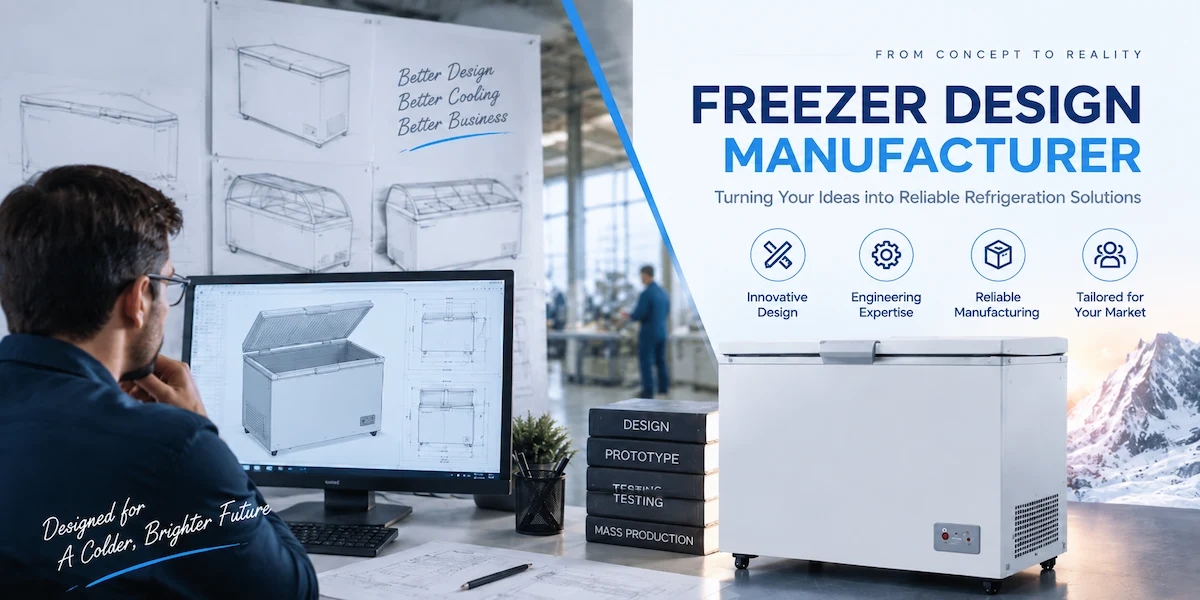
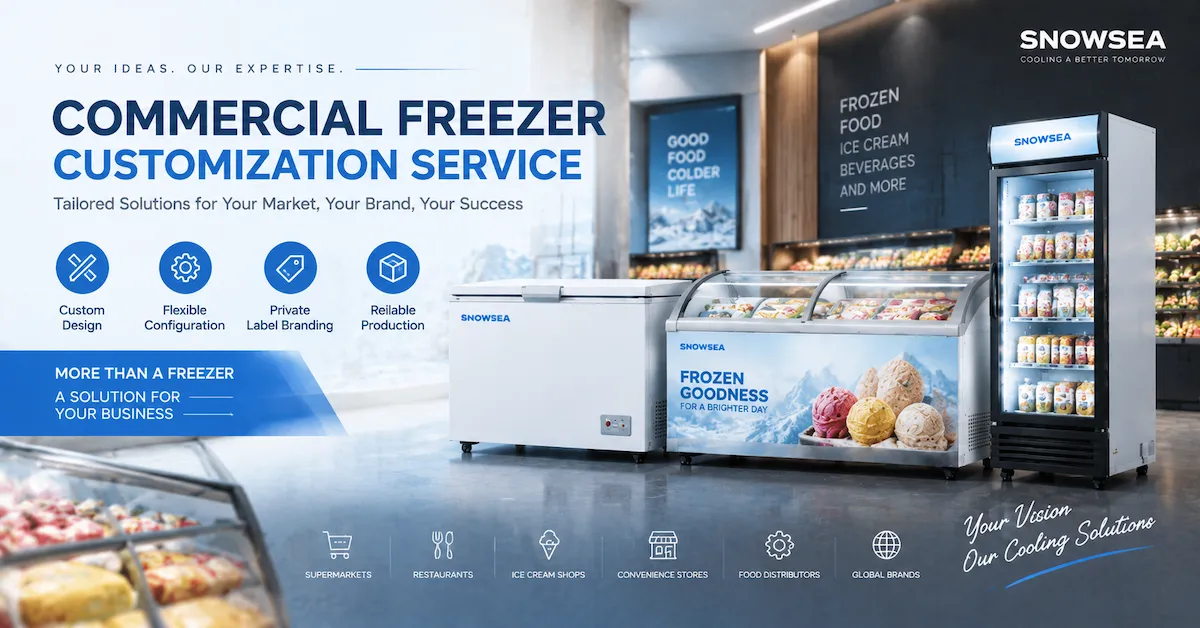
Why Custom Commercial Refrigeration Solutions Should Start With the Application
Custom commercial refrigeration solutions should begin with the commercial problem the buyer needs to solve, not with a catalog model or a long customization list. A supermarket may need customer-facing frozen display, reserve frozen storage and chilled merchandising in the same store. A restaurant distributor may care more about frozen-food storage, loading access and serviceability. An ice cream brand may prioritize package visibility, basket layout and branding. These are different refrigeration jobs, even though they may all be supplied by the same manufacturer.
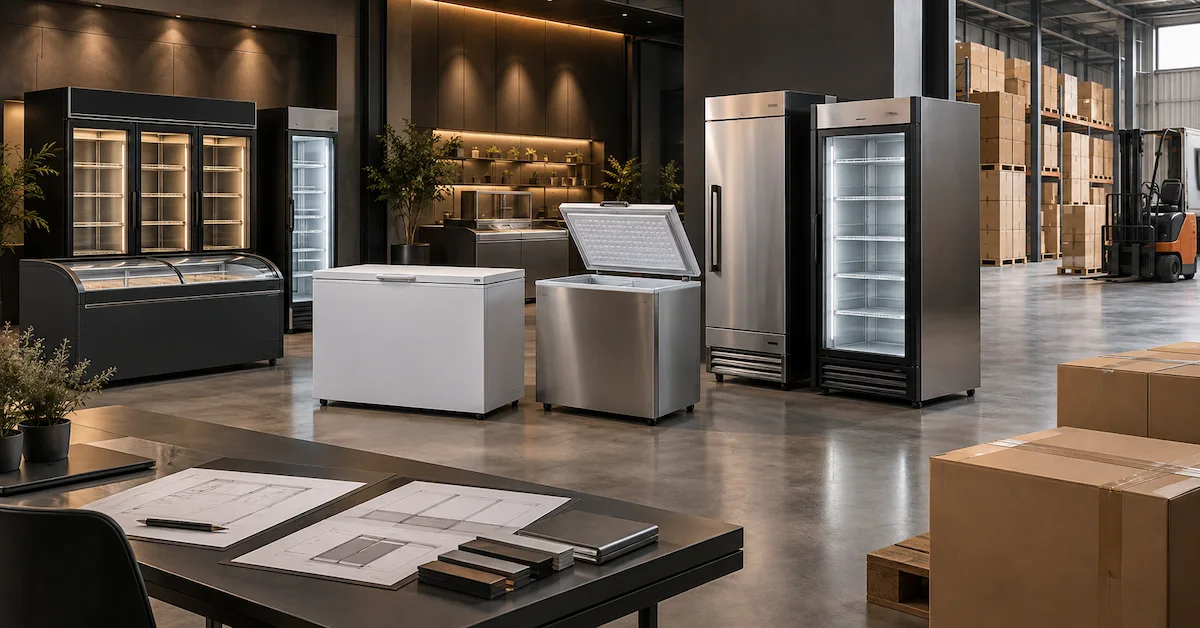
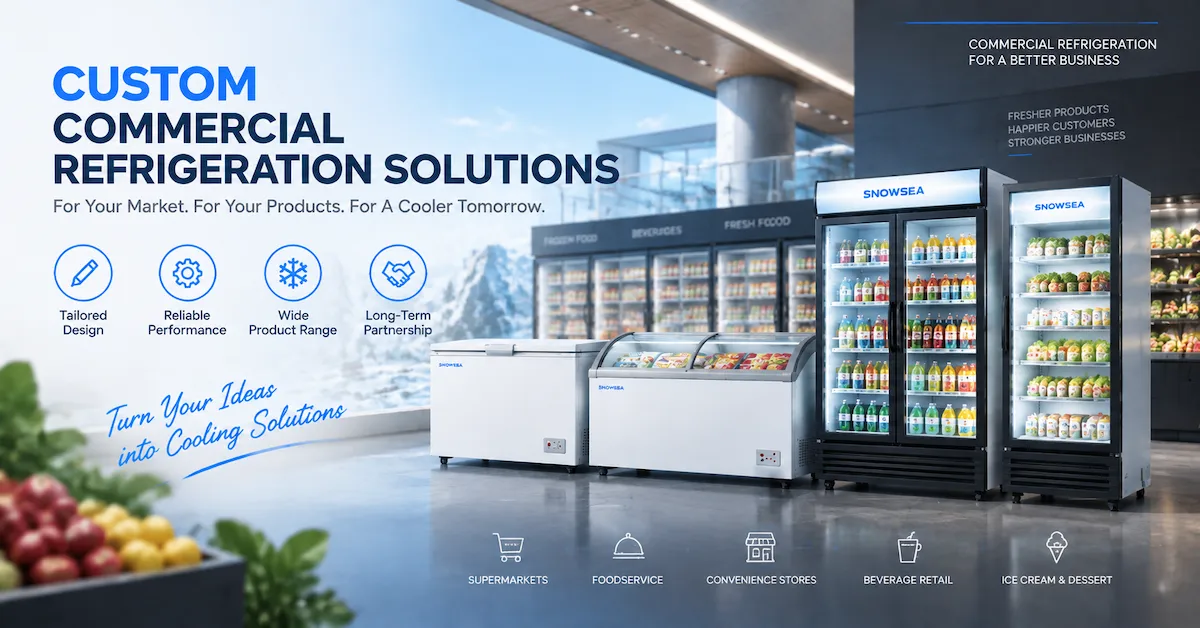
SNOWSEA currently organizes its commercial refrigeration range across Freezer, Ice Cream Freezer, Refrigerator and Showcase. For buyers planning a custom project, the strongest approach is to map each application to the closest proven product platform first, then decide which requirements genuinely need modification.
Who Needs a Custom Commercial Refrigeration Solution?
Custom solutions are most relevant to refrigeration distributors, supermarket groups, convenience-store operators, restaurant-equipment suppliers, frozen-food companies, beverage brands, ice cream brands and private-label refrigeration businesses that need repeatable equipment for defined markets or applications.
Customization may be justified when standard equipment cannot meet a store footprint, product-loading requirement, electrical configuration, merchandising need, temperature requirement, branding specification or project rollout standard. It is less valuable when the standard product already satisfies the application and the proposed modification has no measurable customer benefit.
Specialized applications such as medical, laboratory or other highly controlled refrigeration should also be evaluated separately rather than automatically treated as ordinary commercial food refrigeration.
Build an Application Matrix Before Selecting Equipment
A custom refrigeration project becomes easier when purchasing first divides the project by operating role.
| Application | Refrigeration Job | Main Buyer Concern | Product Direction |
|---|---|---|---|
| Restaurant / Foodservice | Frozen ingredient storage | Capacity, access, serviceability | Chest freezer |
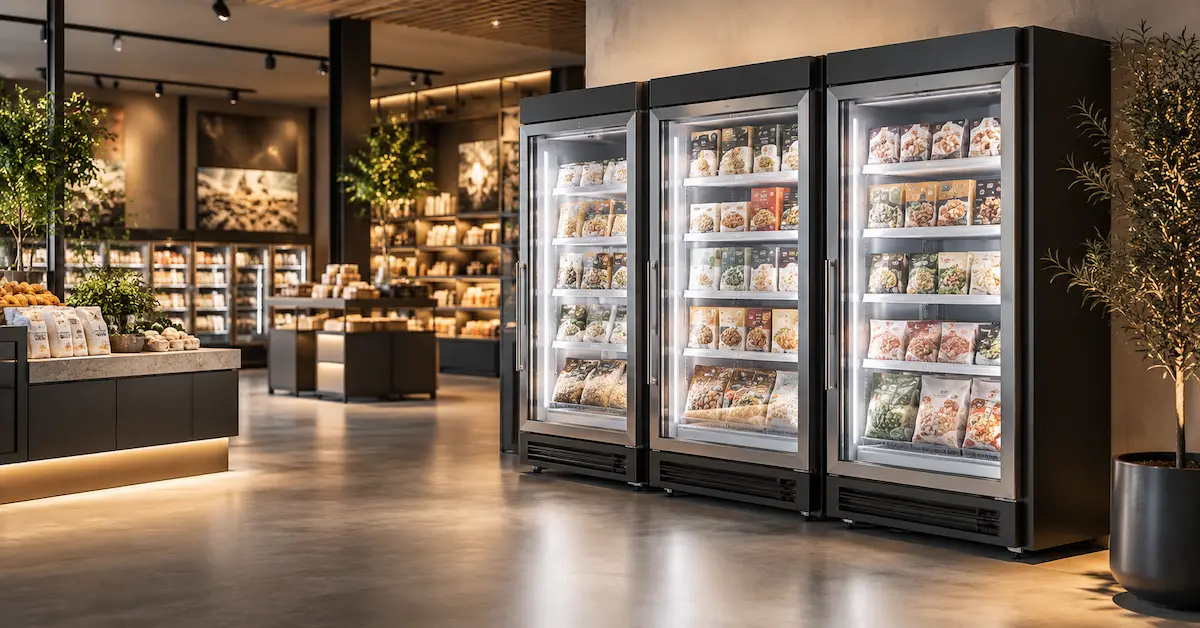
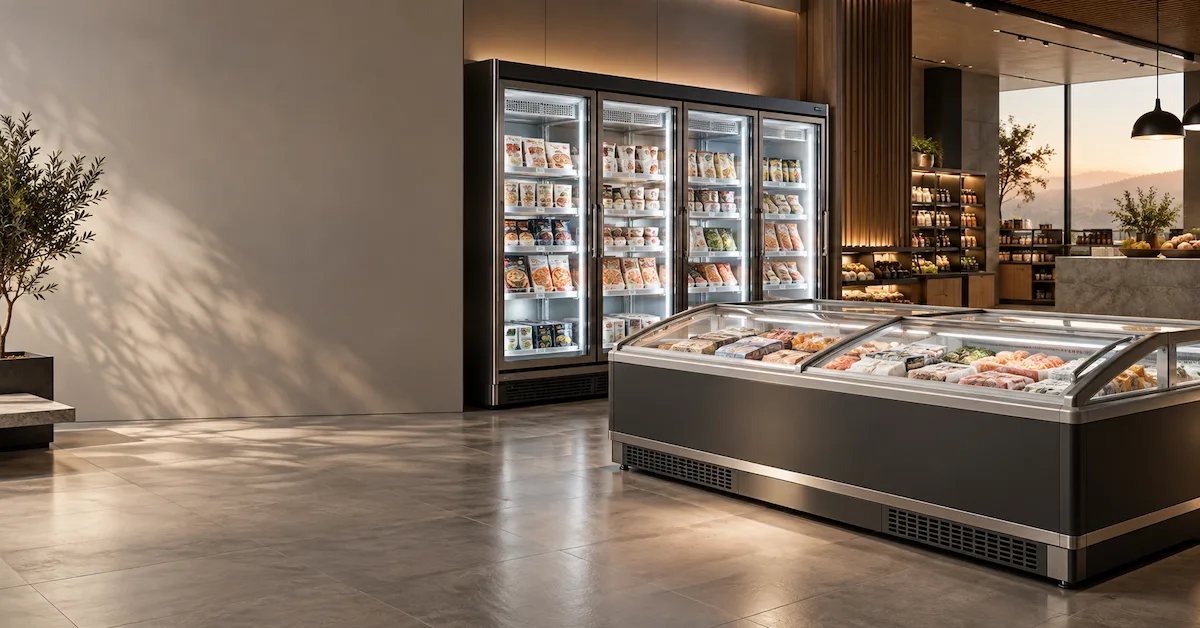
| Supermarket | Frozen display + reserve storage | Merchandising, store fit, repeatability | Display freezer + storage freezer |
| Ice Cream Retail | Frozen dessert merchandising | Visibility, baskets, customer access | Ice cream freezer |
| Convenience Store | Chilled/frozen retail | Compact footprint, display value | Showcase / display freezer |
| Beverage Retail | Chilled merchandising | Shelves, glass doors, lighting | Showcase refrigerator |
| Distributor Range | Multiple end-user segments | SKU control, MOQ, spare parts | Multi-category program |
The objective is to avoid selecting several cabinets first and trying to invent applications afterward. Every SKU should have a clear reason to exist.
Select the Closest Existing Refrigeration Platform
A good custom solution rarely needs every component redesigned. Start with a platform that already solves most of the requirement.
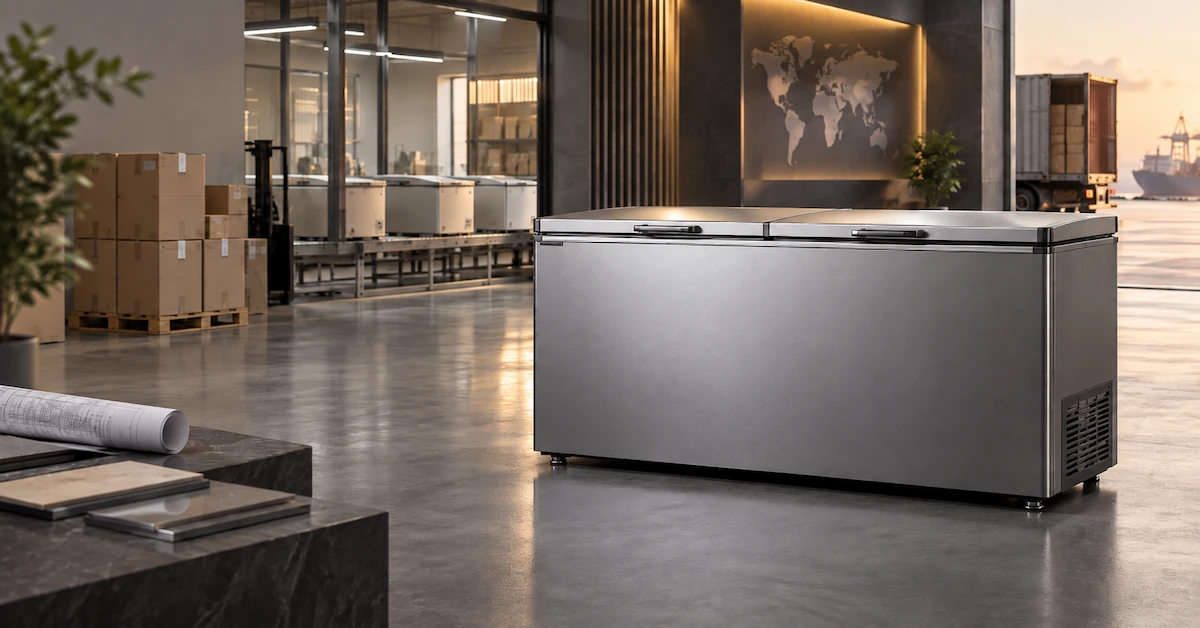
For larger frozen-storage projects, buyers can evaluate an existing platform such as the BD-500 chest freezer. For retail frozen-dessert merchandising, the SD/SC-268PM ice cream freezer provides a different starting architecture. A refrigerator project can begin with platforms such as the BC-190 single-door refrigerator, while chilled merchandising projects can evaluate products such as the LC-208 display refrigerator.
These models should not be compared simply by cabinet size. They perform different commercial functions.
| Platform | Main Function | Typical Custom Focus |
|---|---|---|
| Chest Freezer | Frozen storage | Loading, cabinet dimensions, controls, electrical version |
| Ice Cream Freezer | Frozen retail display | Glass, baskets, branding, merchandising |
| Refrigerator | Chilled storage | Interior layout, control, electrical configuration |
| Showcase | Chilled merchandising | Shelves, doors, lighting, graphics |
The purchasing question is: Which existing platform already satisfies the largest percentage of the requirement?
Create One Refrigeration Solution Specification
Once the platform is selected, convert the project into a controlled specification. This reduces misunderstandings between purchasing, engineering, the manufacturer and any installation or service partners.
| Requirement Area | Buyer Should Define | Supplier Should Confirm |
|---|---|---|
| Application | Products being stored/displayed | Suitable platform |
| Product loading | Package dimensions and quantities | Usable arrangement |
| Installation | Space and access limits | Final cabinet dimensions |
| Temperature | Required operating condition | Supported configuration |
| Ambient environment | Expected site conditions | Applicable operating range |
| Cooling system | Application/maintenance requirement | Refrigeration architecture |
| Electrical | Voltage, frequency, plug | Market-specific version |
| Controller | Required functions | Approved controller/settings |
| Interior | Baskets, shelves, dividers | Layout and load limits |
| Door/glass | Display/access requirement | Suitable construction |
| Branding | Logo, color, graphics | OEM scope |
| Packaging | Export and handling requirement | Final packed specification |
| Service | Parts and technical support | Support arrangement |
Unknown values should remain open rather than being silently filled with assumptions.
Decide What Should Stay Standard
One of the most important decisions in custom commercial refrigeration solutions is knowing what not to customize. Proven structures, components and manufacturing processes can reduce development work, simplify spare-parts management and make repeat ordering easier.
If an existing basket, controller, gasket, cabinet structure or refrigeration configuration already satisfies the application, changing it simply to make the product appear more unique may create little customer value.
A useful rule is:
Keep standard what customers do not need changed; customize what solves a measurable commercial or operating problem.
This helps buyers reduce unnecessary MOQ, tooling, validation and after-sales complexity.
Customize Cabinet Dimensions Only When the Application Requires It
Cabinet dimensions affect more than appearance. A dimensional change can alter usable storage, insulation geometry, heat load, internal airflow, opening clearance, packaging and freight.
Before requesting a custom cabinet, provide real product dimensions and installation restrictions. In many projects, a different existing model, basket layout or shelf arrangement can solve the requirement without redesigning the entire enclosure.
If a new dimension is necessary, approve both external and usable internal dimensions and request updated packaging information before final logistics planning.
Design Internal Layout Around Real Products
Nominal capacity is useful for screening equipment, but it does not tell buyers how efficiently their actual products will fit.
For chest freezers, load representative cartons and check whether frequently used products remain accessible. For ice cream freezers, use actual tubs, boxes or packaged products to evaluate visible assortment, basket allocation and customer reach. For showcases, test bottles, cans or chilled packages against real shelf spacing.
This is particularly important for retail equipment because merchandising value depends on what customers can actually see and access, not simply how many liters appear in the specification.
Treat Glass and Display Structure as Functional Components
Glass-top freezers and upright showcases require more than attractive presentation. Glass structure, sliding or hinged access, frame design and sealing can influence customer usability, heat transfer, condensation behavior and export protection.
If a buyer requests custom glass, define the business reason first. The objective might be better customer access, improved product visibility, store-fixture compatibility or another measurable requirement.
Then evaluate the complete cabinet rather than approving the glass appearance independently.
Define Temperature Requirements as Performance Requirements
A request for “colder temperature” should not be implemented simply by changing the thermostat or controller setpoint.
Temperature performance depends on the complete refrigeration system, cabinet, insulation, load, ambient environment and access pattern. Buyers should define the required storage condition, surrounding environment, typical product load and expected opening routine.
For projects where control strategy is important, SNOWSEA’s OEM/ODM service can be used to discuss model-specific controller, refrigeration and application requirements.
The objective is not to make the display show a colder number. It is to ensure the equipment maintains the required product conditions in the real application.
Include Ambient Conditions in the Solution Design
A refrigeration solution for an air-conditioned supermarket does not necessarily face the same thermal load as equipment operating in a hot restaurant kitchen or poorly ventilated warehouse.
When requesting custom commercial refrigeration solutions, provide expected ambient temperature, humidity where relevant, ventilation and nearby heat sources.
Hot-market applications may require additional attention to condenser heat rejection, insulation, refrigeration-system matching and recovery after loading or opening. Buyers should avoid requesting only a “tropical version” without defining the actual environment.
The more specific the operating conditions are, the more useful the engineering evaluation becomes.
Energy Efficiency Should Be Compared With Performance
Lower electricity consumption is valuable only if the equipment still performs the required refrigeration job.
Two products should be compared using similar:
- Application
- Cabinet size
- Temperature target
- Ambient environment
- Loading
- Door-opening conditions
- Test duration
Energy efficiency belongs inside total operating cost rather than being treated as an isolated marketing claim. A freezer using less electricity but failing to maintain the required storage condition is not an efficient solution for the buyer.
Separate OEM Localization From Engineering Customization
Not every customized refrigeration project requires deep engineering.
OEM Localization
This can include logo, model name, manuals, labels, cartons, plug types and selected options.
Functional Customization
This can include shelves, baskets, lighting, locks and approved controller functions.
Engineering Customization
This can include cabinet dimensions, refrigeration configuration, insulation, airflow, glass architecture and deeper control-system changes.
Separating these levels helps purchasing understand development risk, sample requirements and cost.
Prototype the Requirement, Not Just the Product Appearance
A sample should test the reason the customization exists.
If cabinet dimensions were changed, confirm the installation fit. If shelf spacing changed, load real products. If glass changed, test customer access and visibility. If refrigeration or control logic changed, verify the relevant performance.
A prototype that looks attractive but has not been evaluated against the actual application leaves the main project risk unresolved.
Technical approval and branding approval should also remain separate so an artwork correction does not become confused with a performance decision.
Use Category-Specific Validation
Different refrigeration products should be validated differently.
Chest Freezer Validation
Focus on frozen-storage performance, loading, lid operation, gasket fit, controller behavior and practical access.
Ice Cream Freezer Validation
Focus on frozen holding, product visibility, basket arrangement, glass movement, customer access and replenishment.
Refrigerator Validation
Focus on internal organization, doors, controls and required chilled-storage conditions.
Showcase Validation
Focus on merchandising visibility, shelf configuration, lighting, door access and chilled performance.
A one-page generic checklist is usually not sufficient for a multi-category custom refrigeration project.
Connect Custom Products to Normal Manufacturing
The development team can build one excellent sample, but B2B buyers need repeatable production.
SNOWSEA’s OEM/ODM manufacturing route provides the framework for moving customized products through manufacturing and testing. Before approving production, buyers should know which specification revision controls the cabinet, electrical version, controller, artwork, accessories and packaging.
Ask how the custom product is identified during production and final inspection. If a component changes, there should be a defined review process.
The objective is to ensure that the production freezer or refrigerator is still the same approved commercial product.
Define Quality Control at Three Levels
Custom projects benefit from three distinct QC stages.
Sample validation confirms that the product design meets the application.
Production control confirms that manufacturing follows the approved configuration.
Pre-shipment inspection confirms that completed goods match the purchase order before shipment.
A unit can perform correctly while carrying the wrong private-label artwork or electrical version. Likewise, a visually correct product may fail the required refrigeration performance. QC needs to cover both technical and commercial requirements.
Manage MOQ by Product Version
A project may contain enough total units while one customized SKU still falls below a practical production quantity.
MOQ can be influenced by:
- Base model
- Electrical version
- Cabinet color
- Custom glass
- Controller
- Artwork
- Packaging
- Special baskets or shelves
Ask the supplier which customization actually creates the MOQ rather than accepting one unexplained number.
If a low-value custom component creates a disproportionately high minimum, consider keeping that item standard.
Break Lead Time Into Real Project Milestones
Custom refrigeration lead time should be separated into:
Requirement confirmation → engineering evaluation → sample → testing → corrections → specification freeze → materials → production → inspection → packaging → shipment readiness
This makes project planning more transparent.
A delayed buyer artwork approval and a delayed factory production batch are not the same problem. Clear milestones help both parties identify responsibility and protect launch planning.
Compare Total Project Cost Instead of the Unit Price Alone
A custom refrigeration project may include more than the base equipment quotation.
| Cost Area | Purchasing Consideration |
|---|---|
| Base equipment | Standard equipment price |
| Custom components | Recurring additional cost |
| Engineering | Possible development cost |
| Prototype | Sample and freight |
| Tooling | Where applicable |
| Validation | Additional test requirements |
| Packaging | Custom protection and branding |
| Freight | May change after cabinet modification |
| Inventory | MOQ and working capital |
| Spare parts | Local service stock |
| Warranty | Service exposure |
A custom solution should create enough customer or operating value to justify its additional lifecycle cost.
Plan Spare Parts During Product Development
Unique components should not become an after-sales problem later.
Before approving custom controllers, glass panels, gaskets, shelves, baskets or other parts, ask how replacements will be identified, whether they have a separate MOQ and whether the distributor should stock them locally.
SNOWSEA’s About Us page can provide buyers with company and support context, while order-specific spare-parts arrangements should be defined during the project.
Serviceability should be part of the product design decision, not an afterthought.
Build Solutions for Multi-Site Rollouts, Not Just Individual Cabinets
Supermarket groups and other chain customers often need refrigeration packages rather than isolated units. A compact store may require one freezer and one chilled display, while a larger store format may need several frozen and refrigerated positions.
Instead of specifying every store independently, group sites into repeatable formats. A standardized equipment package can simplify purchasing, installation, training, replacement and spare-parts support.
This is where custom commercial refrigeration solutions provide more value than simply ordering individually customized products: the project becomes a controlled system that can be reproduced across multiple locations.
What Should You Send SNOWSEA for a Custom Refrigeration Project?
A useful inquiry should explain the application before requesting customization. Send the target market, customer type, required refrigeration categories, products being stored or displayed, package dimensions, required loading, installation space, temperature requirements, ambient conditions, electrical version, customization priorities, quantity by category, branding requirements, expected launch schedule and service needs.
Use SNOWSEA Contact Us and request a proposal that separates the closest standard platforms, available options, OEM localization, engineering customization, sample requirements, MOQ and production timing.
That produces a much stronger project discussion than simply asking:
“Can you customize commercial refrigeration equipment?”
Frequently Asked Questions
1. What are custom commercial refrigeration solutions?
Custom commercial refrigeration solutions combine suitable freezer, refrigerator or display platforms with application-specific configurations, branding or engineering changes to solve defined B2B storage and merchandising requirements.
2. Which businesses need custom refrigeration solutions?
Distributors, supermarkets, convenience stores, restaurant-equipment suppliers, beverage brands, ice cream brands and private-label refrigeration companies commonly need customized commercial refrigeration programs.
3. What types of refrigeration equipment can SNOWSEA provide?
SNOWSEA currently provides freezer, ice cream freezer, refrigerator and showcase product categories.
4. Should every refrigeration project use custom equipment?
No. If an existing platform already meets the application, keeping the product standard can reduce development, MOQ, spare-parts and repeat-order complexity.
5. Can cabinet dimensions be customized?
Dimension changes can be evaluated, but they may affect usable capacity, refrigeration load, insulation, packaging and logistics. First confirm whether an existing platform or internal-layout change solves the requirement.
6. Can temperature ranges and controllers be customized?
They can be evaluated as part of an OEM/ODM project, but temperature and controller changes should be reviewed as part of the complete refrigeration system rather than as isolated settings.
7. How should a custom refrigeration sample be approved?
Test the requirement that justified the customization, using real products and realistic operating conditions where practical. Keep technical performance approval separate from branding and appearance approval.
8. Does customization increase MOQ?
It can. Custom glass, colors, packaging, controllers and other unique components may have their own minimum quantities. Ask which part of the project is driving the MOQ.
9. How can buyers control repeat custom orders?
Use a controlled specification revision linked to the approved sample and require later component, electrical, artwork or packaging changes to be reviewed before production.
10. How do I request custom commercial refrigeration solutions from SNOWSEA?
Provide your applications, equipment categories, product-loading requirements, installation conditions, target market, quantities and customization priorities through SNOWSEA Contact Us for a project-specific evaluation.
Conclusion
Custom commercial refrigeration solutions should be built around the buyer’s real storage, merchandising and operating requirements rather than around the maximum number of available customization options. Start by mapping applications, choose the closest proven commercial refrigeration platforms, keep suitable standard elements wherever they already create value, and apply engineering customization only where a measurable customer requirement remains unresolved. Then connect the customized version to realistic loading tests, refrigeration performance, manufacturing control, MOQ, packaging, spare parts and repeat-order specifications. SNOWSEA provides multiple commercial refrigeration categories together with OEM/ODM support for distributors, brands and project buyers. If you are planning a supermarket package, foodservice range, private-label refrigeration line or multi-site project, send SNOWSEA your applications, installation limits, product-loading data, target market and expected quantities and request a structured solution showing which products can remain standard, which should be configured and which requirements need deeper engineering development.