What Does an ODM Refrigeration Manufacturer Actually Do?
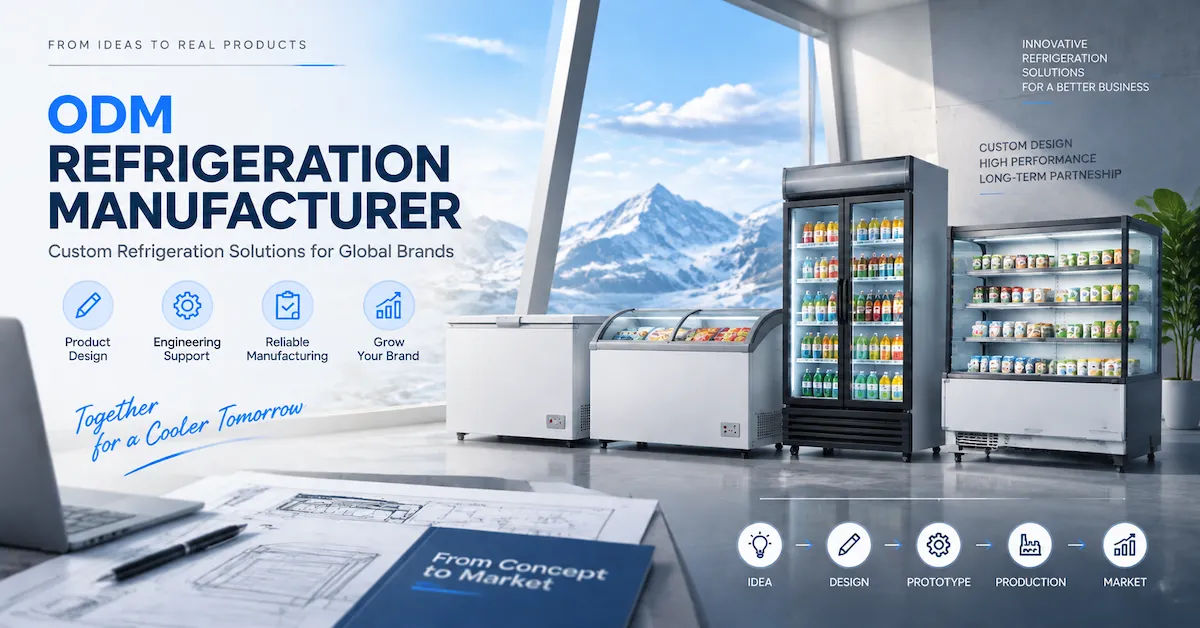
An ODM refrigeration manufacturer should help transform a defined market requirement into refrigeration equipment that can be engineered, validated, produced and supported consistently. This goes beyond changing logos or cartons. In a genuine ODM project, the buyer may begin with a store-layout constraint, an unusual product-loading requirement, a target temperature application, a new merchandising concept or a product gap that existing equipment cannot solve.
The manufacturer then contributes engineering work needed to convert that requirement into a manufacturable product. Depending on project depth, this can involve cabinet design, refrigeration-system matching, controls, airflow, glass or door structure, internal layout, prototyping, performance testing, production preparation and mass-production control.
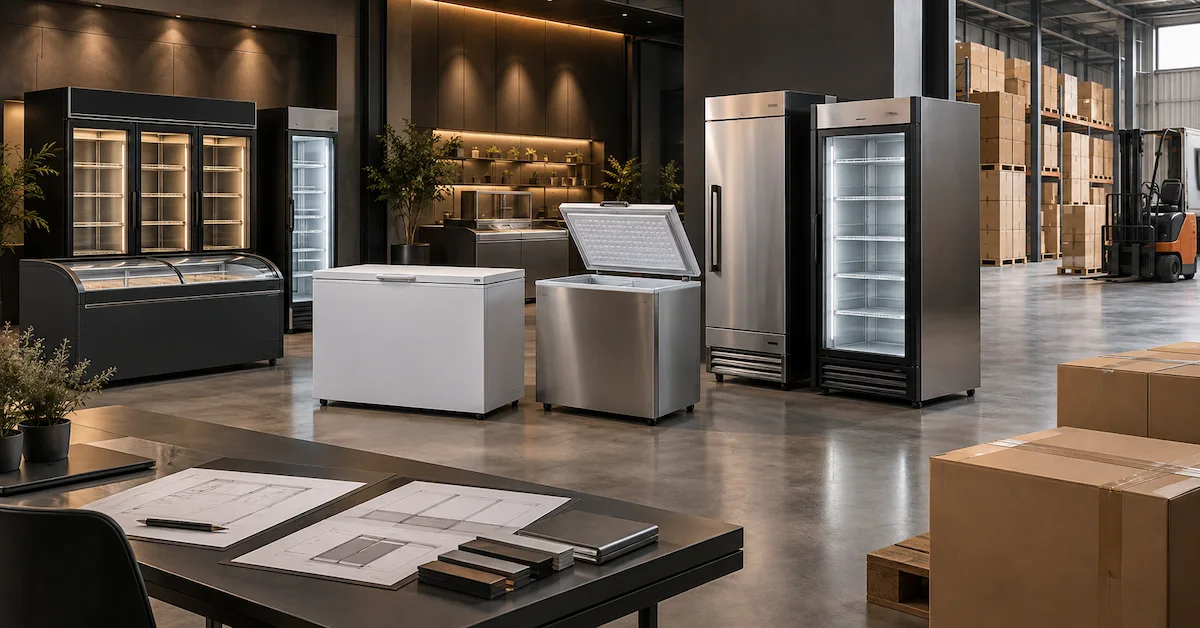
SNOWSEA currently organizes its commercial refrigeration product range across Freezer, Ice Cream Freezer, Refrigerator and Showcase, while its OEM/ODM service provides an engineering and manufacturing route for B2B customization projects.
The real question for a buyer is therefore not simply, “Can you design custom refrigeration equipment?” It is: Can the manufacturer turn our requirement into a controlled product that works technically, makes commercial sense and can still be reproduced two years later?
When Do You Need ODM Instead of OEM Refrigeration?
OEM and ODM overlap in everyday sourcing conversations, but the difference becomes important when engineering responsibilities, development cost and timing are discussed.
OEM Usually Starts From an Existing Product Definition
An OEM project normally keeps much of the base refrigeration platform unchanged. Branding, labels, electrical configuration, packaging, selected accessories or approved component options may be adapted for the buyer.
ODM Begins When the Product Itself Needs Development
ODM becomes more appropriate when the standard equipment cannot satisfy the requirement without meaningful engineering work. Examples include changing cabinet architecture, redesigning internal storage, developing a different display structure, creating another control strategy or adapting the refrigeration system for a significantly different application.
A practical rule is:
Use OEM when the product is already substantially correct. Use ODM when the product problem still requires engineering to solve.
Starting an ODM project unnecessarily can increase development cost, sample revisions, MOQ, testing and after-sales complexity.
Who Should Work With an ODM Refrigeration Manufacturer?
ODM is most useful for refrigeration brands, appliance distributors, supermarket-equipment companies, frozen-food brands and commercial refrigeration companies that need differentiated products rather than another standard catalog model.
A retailer may need an equipment family that fits several standardized store formats. A beverage supplier may want a chilled display cabinet optimized around its package mix. An ice cream brand may need a freezer with a specific visible assortment and access arrangement. A regional distributor may need several related products designed around its service system and target market.
ODM is less useful when the buyer cannot yet define:
- The application
- Customer type
- Products being stored
- Required capacity
- Installation limits
- Temperature requirement
- Destination market
- Expected volume
- Why current equipment is unsuitable
Without these inputs, engineering is being asked to solve an undefined problem.
Start With a Product Requirement Document Before Discussing Design
A serious ODM project should begin with a requirement specification rather than a sketch of a preferred cabinet.
The requirement describes what the product must accomplish. Engineering then decides how to accomplish it.
| Requirement Area | Buyer Should Define | ODM Manufacturer Should Determine or Confirm |
|---|---|---|
| Target customer | Distributor, supermarket, foodservice, brand | Product positioning |
| Application | Frozen storage, chilled display, ice cream display | Appropriate refrigeration platform |
| Merchandise | Product/package dimensions | Internal-layout feasibility |
| Capacity | Required usable loading | Cabinet volume/layout |
| Installation | Maximum W × D × H | Structural feasibility |
| Temperature | Required operating condition | Refrigeration configuration |
| Ambient environment | Expected temperature/humidity | System design requirement |
| Access | Door/lid opening routine | Door, glass and recovery design |
| Electrical | Voltage, frequency, plug | Market configuration |
| Controls | Required functions | Controller/sensor architecture |
| Branding | Exterior/brand requirements | Industrial-design execution |
| Commercial volume | Sample, pilot, annual forecast | Development practicality |
| Service | Spare-parts expectations | Component strategy |
A requirement that is not yet decided should remain marked as open or provisional. Early assumptions should not silently become production specifications.
Choose the Closest Existing Platform Before Designing From Zero
A capable ODM refrigeration manufacturer should not redesign everything merely because the customer requested ODM.
Existing platforms can reduce development risk and allow proven structures, production processes and service components to remain in use.
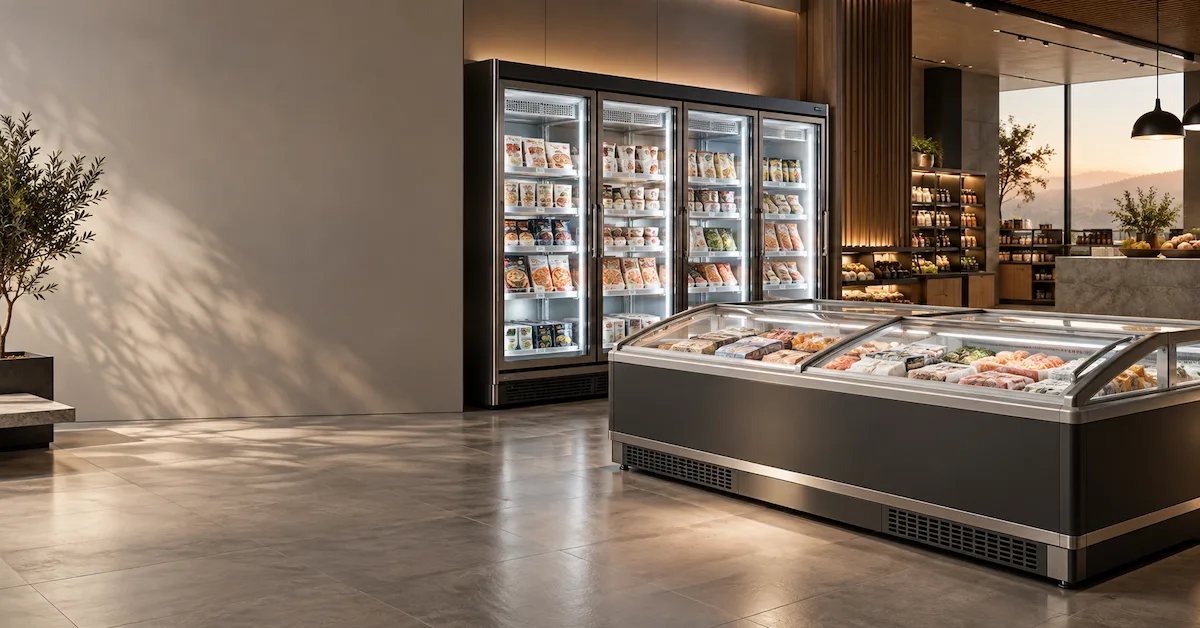
For example, a buyer can first review SNOWSEA’s Freezer, Ice Cream Freezer, Refrigerator and Showcase categories and identify which platform already solves most of the requirement.
| Existing Platform | Good Starting Point For | Possible ODM Gap |
|---|---|---|
| Chest freezer | Frozen reserve storage | Different loading, dimensions or controls |
| Ice cream freezer | Frozen retail merchandising | Glass, baskets, display layout |
| Upright refrigerator | Chilled storage | Interior, door or controls |
| Showcase | Beverage/food display | Shelves, lighting, glass and merchandising |
The best development question is:
Which part of the existing platform prevents it from meeting the target application?
That question keeps engineering focused.
Multi-Category ODM Requires Product Architecture, Not Random Customization
When a buyer develops several refrigeration categories under one brand, the product line needs a consistent architecture.
The goal is not to make a chest freezer technically identical to a showcase refrigerator. Their refrigeration tasks are different.
Instead, standardize commercial elements where it creates value:
- Model-number logic
- Branding rules
- Label structure
- Documentation format
- Electrical-market codes
- Packaging identification
- Warranty structure
- Spare-parts reference system
Meanwhile, keep the actual refrigeration design appropriate to each category.
This allows the range to look and operate as one commercial family without forcing unsuitable technical commonality.
Cabinet Development Should Begin With Real Product Loading
ODM buyers often request a cabinet size before testing the merchandise that will actually be stored.
That can create unnecessary engineering.
For Frozen Storage
Provide carton dimensions, typical quantities and access requirements. Check whether the lower part of the cabinet remains practical to reach.
For Ice Cream Displays
Use actual tubs or packages to verify basket layout, visible SKU quantity, glass access and replenishment.
For Showcases
Evaluate bottle, can or package heights against shelf spacing and front-facing requirements.
Nominal liters alone do not tell you whether the equipment solves the customer’s storage or merchandising problem.
Refrigeration Design Must Follow the New Thermal Requirement
When an ODM project changes cabinet dimensions, insulation, glass, airflow or temperature requirements, the refrigeration load can also change.
The engineering team may need to review the complete system:
- Compressor
- Condenser
- Evaporator
- Refrigerant circuit
- Airflow
- Insulation
- Door sealing
- Controls
- Defrost where applicable
Avoid specifications such as “use a more powerful compressor.”
Instead define measurable performance:
- Required cabinet temperature
- Ambient test condition
- Product load
- Pull-down requirement
- Stable operating condition
- Recovery requirement
- Energy target where appropriate
The engineering solution should then be selected to meet those requirements.
Controls Should Be Designed Around Functions
Controller customization should begin with operating requirements, not display appearance.
Possible functions can include:
- Temperature setpoint range
- Sensors
- Compressor control
- Restart delay
- Fan logic
- Defrost control
- Alarms
- Fault display
- Parameter lock
- Temperature units
If the project only requires a branded interface, preserve proven control logic wherever possible. If the operating logic changes, validate the freezer again as a complete refrigeration system.
Prototype Development Needs Revision Control
An ODM prototype is not merely “the sample.”
Each prototype should represent a known technical revision.
Record:
- Prototype number
- Product specification revision
- Drawing revision
- Components
- Refrigeration configuration
- Controller version
- Electrical version
- Test conditions
- Test results
- Buyer comments
- Outstanding issues
If Prototype 02 corrects a problem found in Prototype 01, later documents should not simply say “follow approved sample.”
They should identify Prototype 02 / Revision B, or whichever controlled reference was approved.
Prototype Testing Should Reproduce the Commercial Application
The sample should be tested against the reason the ODM project exists.
If the goal is better loading, load the real products.
If the goal is store fit, test installation dimensions and clearances.
If the project is for a hot market, test under the agreed ambient condition.
If customer access is important, simulate opening behavior.
If energy performance is a project requirement, define the conditions under which energy will be evaluated.
The strongest prototype is not the one that photographs best. It is the one that provides evidence that the new design solves the defined buyer requirement.
Do Not Combine Technical and Appearance Approval
A custom refrigeration sample can succeed technically and fail commercially, or vice versa.
Technical Approval
Includes cabinet structure, refrigeration, loading, electrical version, controls and performance.
Commercial Approval
Includes color, logo, artwork, model name, labels, manuals and packaging.
Keeping them separate reduces confusion during revisions.
Evaluate Whether Pilot Production Is Necessary
A prototype may be built carefully by engineering staff. Mass production is different.
Pilot production can help verify whether the design works using normal production:
- Materials
- Components
- Workers
- Jigs
- Processes
- Inspection methods
- Packaging
Pilot production can reveal dimensional variation, difficult assembly steps or unclear work instructions that a single prototype does not expose.
Not every ODM project requires the same pilot quantity. The correct question is:
What production risk is the pilot intended to verify?
The ODM Design Must Be Transferred Into the Manufacturing System
A good engineering team can build one excellent cabinet. A strong manufacturer must reproduce it.
SNOWSEA’s OEM/ODM process provides the manufacturing route that custom products eventually need to enter.
Before mass production, confirm how the custom model is controlled during:
- Cabinet fabrication
- Insulation
- Refrigeration-system installation
- Electrical assembly
- Final assembly
- Testing
- Final inspection
- Packaging
Ask which drawings, specifications and work instructions each stage uses.
A product is not production-ready if the factory still needs the development engineer to verbally explain critical details for every unit.
Create a Formal Engineering Release Before Mass Production
A product should move from development to production only after the required technical information is closed.
| Release Item | Production-Ready Requirement |
|---|---|
| Product specification | Approved |
| Cabinet drawing | Approved |
| Internal layout | Approved |
| Refrigeration system | Approved |
| Controlled components | Approved |
| Controller/parameters | Approved |
| Electrical version | Approved |
| Prototype validation | Passed/accepted |
| Destination documents | Reviewed |
| Branding | Approved |
| Labels/manuals | Approved |
| Packaging | Approved |
| QC criteria | Approved |
| Reference sample | Identified |
A useful test is:
Could normal factory production build this product correctly without relying on undocumented knowledge?
If not, the engineering release is incomplete.
Destination-Market Requirements Should Enter the Project Early
Market requirements should not be added after the finished prototype has already been approved.
The buyer should provide the destination market during product definition.
If the ODM project changes construction, electrical configuration, refrigeration components or other relevant technical features, ask whether existing product documentation can still be used.
This reduces late redesign and avoids printing unsupported technical information on the final product or packaging.
Tooling and Ownership Should Be Discussed Before Investment
Some projects may require dedicated tooling, fixtures or custom parts.
Before approving costs, clarify:
- Tooling price
- Ownership
- Storage
- Maintenance
- Replacement
- Expected lifetime
- Permitted use
- Responsibility after cooperation ends
Paying for tooling should not automatically be interpreted as granting product exclusivity unless that is separately agreed.
Where design rights are commercially important, the parties should define them clearly in their project agreements.
Separate Development Cost From Recurring Production Cost
A good ODM quotation lets purchasing understand which expenses recur.
| Cost | Development Stage | Mass Production |
|---|---|---|
| Engineering | Possible one-time expense | Normally not recurring |
| Prototype | Development cost | No |
| Tooling | Where required | Maintenance may remain |
| Validation | Project-specific | Routine QC differs |
| Custom components | Prototype quantity | Recurring |
| Product materials | Prototype | Recurring |
| Branding | Setup | Application may recur |
| Packaging | Trial | Recurring |
| Spare parts | Planning | Ongoing replenishment |
This allows management to evaluate the business case rather than comparing only the first unit quotation.
ODM MOQ Should Be Evaluated After the Design Is Defined
A project can appear commercially viable until one custom component introduces an unexpectedly high minimum order quantity.
Possible MOQ drivers include:
- Cabinet tooling
- Custom glass
- Unique shelves/baskets
- Controller hardware
- Molded plastic components
- Special colors
- Customized cartons
If one feature creates an excessive MOQ but delivers little customer value, ask engineering whether the same requirement can be solved differently.
Good ODM development balances engineering ambition with purchasing reality.
Lead Time Should Be Broken Into Development Gates
“ODM lead time” is not one period.
A project may include:
Requirement confirmation → engineering → concept approval → prototype → testing → corrections → design freeze → pilot production → production release → materials → mass production → inspection → shipment
Each step may depend on buyer approval.
This is why a realistic project schedule should identify responsibilities rather than promise one headline number before the product definition exists.
Spare-Parts Planning Should Begin During Development
Unique design decisions create service consequences.
Before approving custom controllers, glass, gaskets, shelves, baskets or other parts, ask:
- How is the part identified?
- Is it stocked?
- What is its MOQ?
- Is an alternative available?
- Can the distributor hold local inventory?
- Does replacement require programming?
- Will the part remain available during the expected product life?
A product that cannot be serviced conveniently can become commercially difficult even if its initial design performs well.
Engineering Change Control Must Continue After Product Launch
Mass production does not mean the product stops changing forever.
Components can become unavailable, supply chains change and engineering improvements may be proposed.
Use a formal change process covering:
- Change description
- Reason
- Affected models
- Affected components
- Performance impact
- Documentation impact
- Required testing
- Buyer approval
- Effective batch
This prevents the same private-label model number from representing several technically different products over time.
How Should Buyers Evaluate an ODM Refrigeration Manufacturer?
A useful selection framework goes beyond factory equipment and product photos.
| Evaluation Area | Key Buyer Question |
|---|---|
| Product portfolio | Are relevant existing platforms available? |
| Requirement analysis | Does engineering understand the application problem? |
| Design capability | Can the team explain proposed changes technically? |
| Prototyping | Are samples controlled by revision? |
| Testing | Are acceptance conditions defined? |
| Manufacturing transfer | Can normal production reproduce the sample? |
| QC | Are model-specific controls established? |
| Documents | Are destination requirements considered early? |
| Tooling | Are ownership and maintenance clear? |
| MOQ | Does the design fit commercial volume? |
| Spare parts | Is the custom product serviceable? |
| Change control | Are later technical changes managed? |
A strong ODM refrigeration manufacturer should connect engineering decisions with commercial supply realities.
What Should You Send SNOWSEA for an ODM Refrigeration Project?
For a productive engineering review, provide:
- Target market
- Customer type
- Product category
- Application
- Closest existing product if known
- Problem with the current solution
- Product/package dimensions
- Required loading
- Installation dimensions
- Temperature requirement
- Ambient conditions
- Door/glass preference
- Controller functions
- Electrical requirement
- Branding
- Documentation requirements
- Expected sample quantity
- First production quantity
- Annual volume forecast
- Launch schedule
- Service/spare-parts requirements
Use SNOWSEA Contact Us and request a development proposal separating the closest existing platform, ODM engineering requirements, prototype scope, validation plan, tooling where relevant, production-release conditions and expected commercial constraints.
Frequently Asked Questions
1. What is an ODM refrigeration manufacturer?
An ODM refrigeration manufacturer participates in product development as well as manufacturing, helping translate buyer requirements into a refrigeration product that can be prototyped, validated and manufactured at scale.
2. What is the difference between OEM and ODM refrigeration?
OEM normally starts from an existing defined platform and applies buyer-specific configurations. ODM involves deeper engineering when the product itself needs to be developed or significantly modified.
3. Which refrigeration products can be developed through ODM?
Depending on engineering capability and project requirements, ODM development can involve freezers, ice cream freezers, refrigerators, showcases and related commercial refrigeration products.
4. Do I need ODM if only the logo and packaging change?
Usually not. Branding and packaging can normally be handled through OEM or private-label cooperation without unnecessary product engineering.
5. Should an ODM project start from an existing product?
Often yes. Using the closest proven platform can reduce development variables, cost, testing requirements and production risk while still allowing meaningful differentiation.
6. Does every ODM refrigeration project require tooling?
No. Tooling depends on the depth of structural changes and unique components. Projects using existing structures may require little or no new major tooling.
7. Should an ODM refrigeration sample be tested in the real application?
Where practical, yes. Testing real products, installation conditions and intended operating scenarios provides stronger evidence than evaluating the prototype only in an unrelated showroom environment.
8. What affects ODM refrigeration MOQ?
MOQ can be influenced by the base product, custom components, glass, tooling, controller hardware, colors and packaging requirements.
9. How can buyers reduce repeat-order risk after ODM development?
Release a controlled production specification and require later component, drawing, controller or packaging changes to follow a documented engineering-review process.
10. How do I request an ODM refrigeration project from SNOWSEA?
Send your product category, application, existing problem, dimensions, loading requirements, operating conditions, target market and estimated volume through SNOWSEA Contact Us and request a project-specific engineering assessment.
Conclusion
Choosing an ODM refrigeration manufacturer should be treated as a product-development and long-term supply-chain decision rather than a request for a customized cabinet. Begin with a clearly defined market problem, identify the closest proven refrigeration platform, separate requirements from engineering solutions, validate prototypes under realistic operating conditions and establish a formal engineering release before mass production. Tooling, destination-market documentation, pilot production, MOQ, service parts and post-launch engineering changes should be considered while the product is still being developed—not after the first container ships. SNOWSEA provides commercial refrigeration products across several equipment categories together with OEM/ODM development support. If an existing freezer, refrigerator or showcase cannot meet your application, loading, store-layout or market requirements, send SNOWSEA your development brief and request a structured ODM proposal covering platform selection, engineering scope, prototype validation, production release and long-term product control.