What Should an OEM Freezer Manufacturer Actually Deliver?
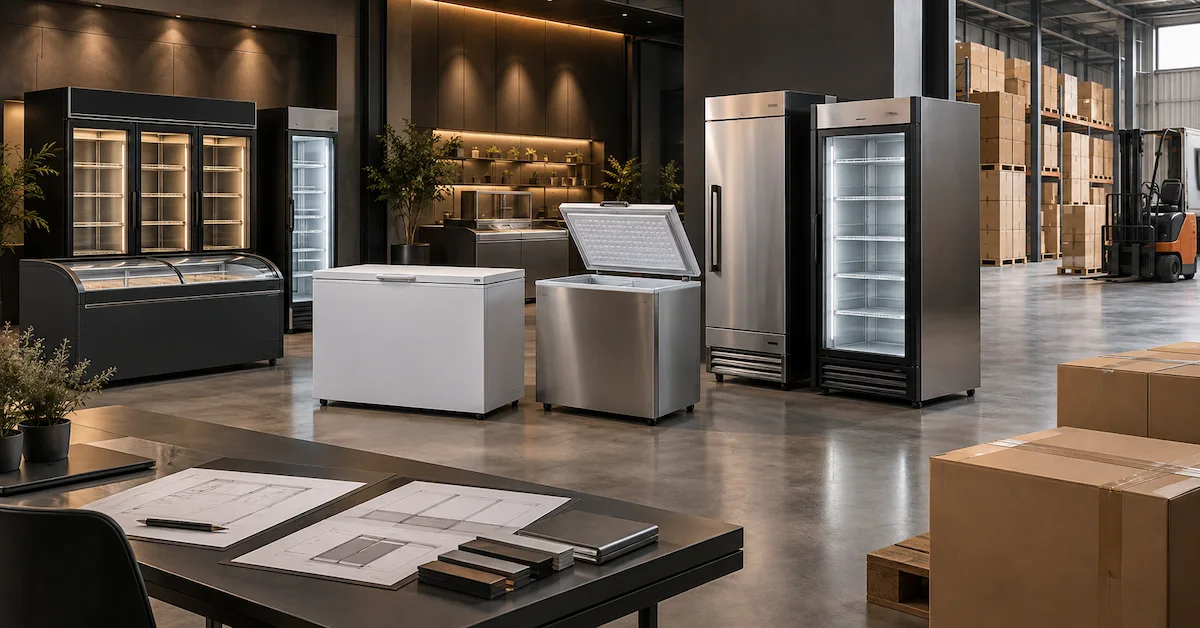
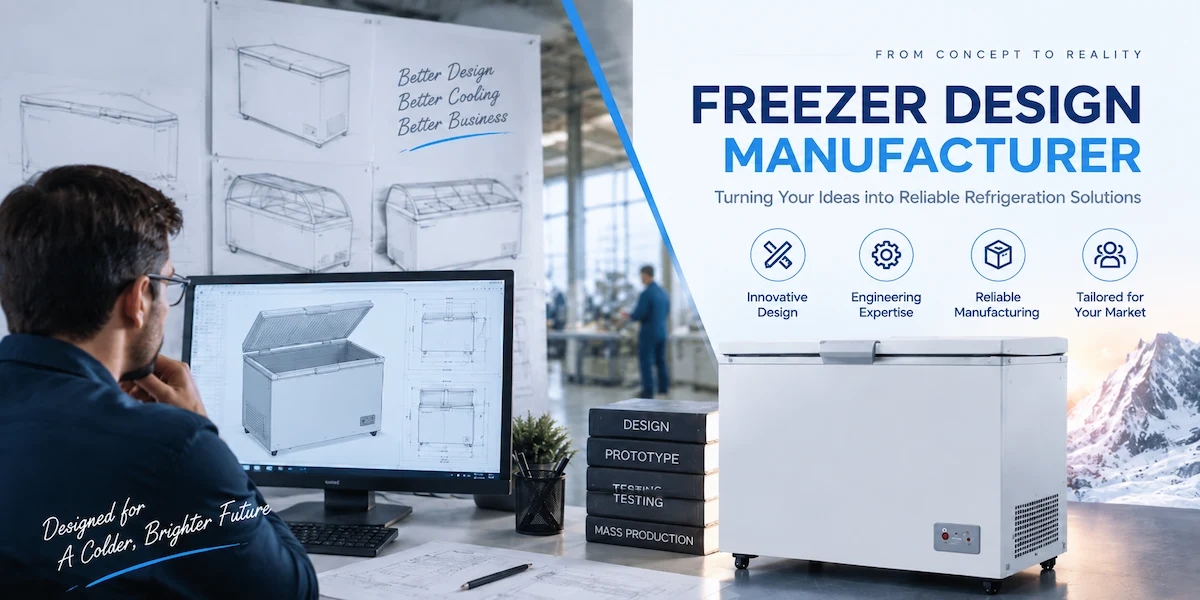
An OEM freezer manufacturer should deliver a controlled product version that your company can sell, reorder and support under its own commercial program. That can involve selecting an existing freezer platform, confirming the destination-market electrical version, approving branding and packaging, testing the agreed configuration, releasing the product into mass production and maintaining consistency across later orders. The value of OEM manufacturing is therefore not simply that a factory can print your logo on a freezer. The real value is that the approved cabinet remains technically identifiable after the sample leaves the meeting room and hundreds of units enter production. SNOWSEA already distinguishes standard supply from OEM cooperation through its OEM/ODM service, while its earlier OEM supplier guidance describes branding, packaging, electrical adaptation and product configuration as typical project requirements.
Who Should Work With an OEM Freezer Manufacturer?
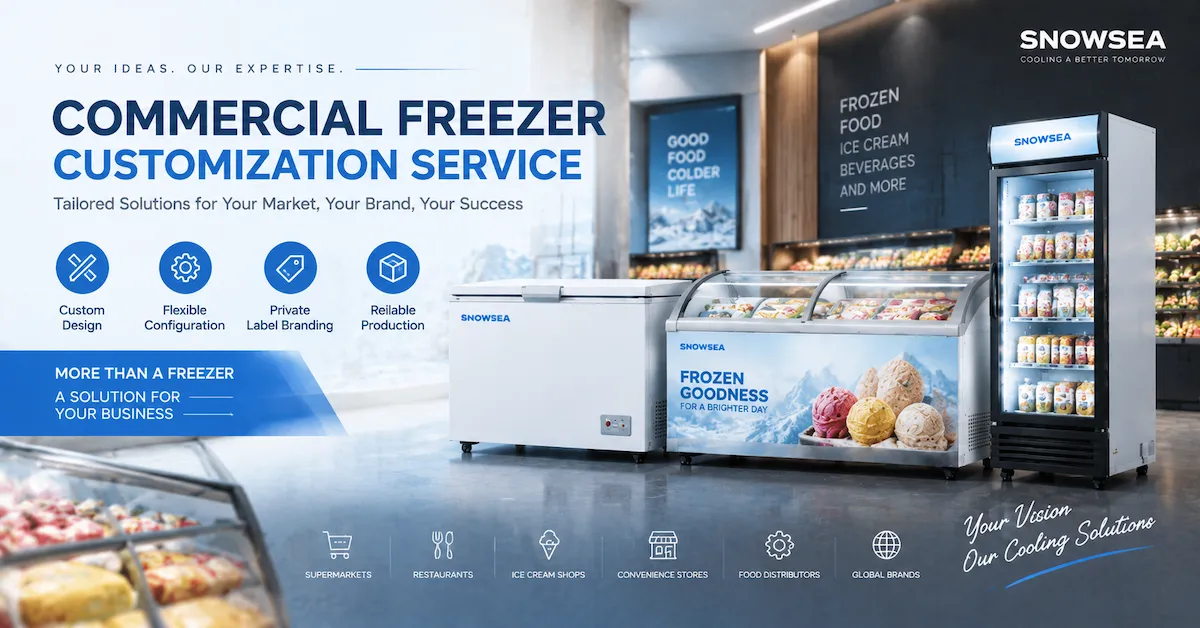
OEM manufacturing is most relevant to refrigeration distributors, appliance importers, frozen-food brands, supermarket-equipment suppliers, ice cream brands and private-label companies planning repeatable commercial sales. These buyers normally need more than one cabinet: they need a model that can be named, documented, stocked, marketed, serviced and ordered again. OEM may be unnecessary when the requirement is a one-time emergency replacement or when a standard freezer already satisfies the technical, electrical and commercial requirements. Deeper structural development may move the project toward ODM rather than ordinary OEM supply. SNOWSEA’s existing OEM guidance makes the same distinction: standard supply uses established models, OEM adapts an established platform to buyer requirements, while ODM involves deeper product-development work.
1. Choose the Base Freezer Platform Before Discussing Branding
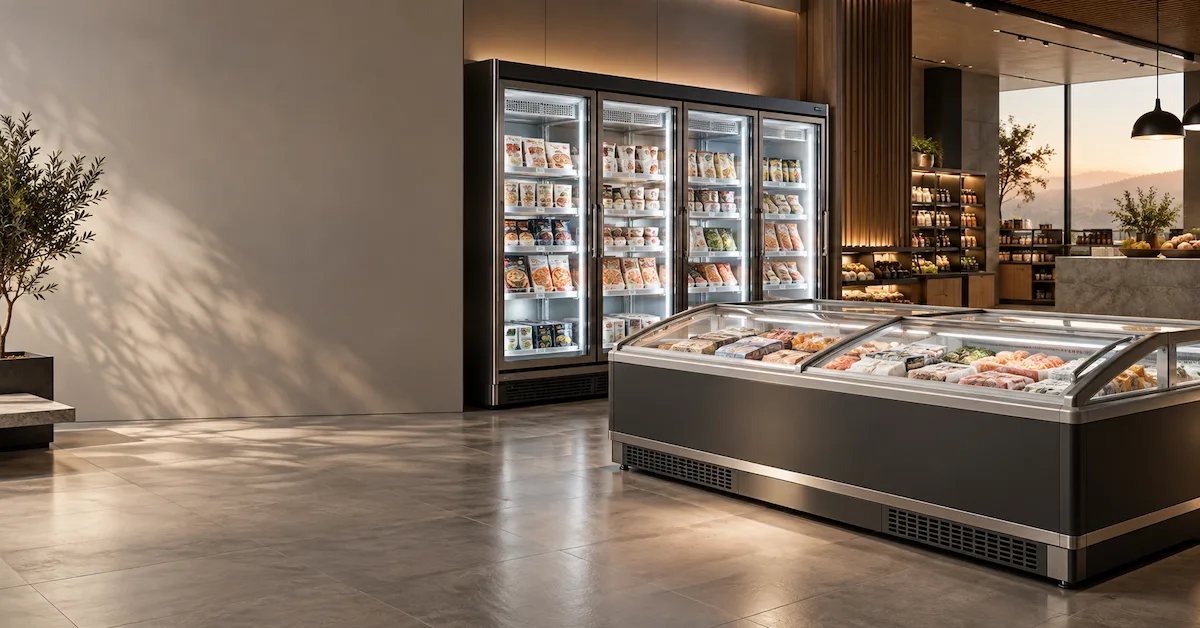
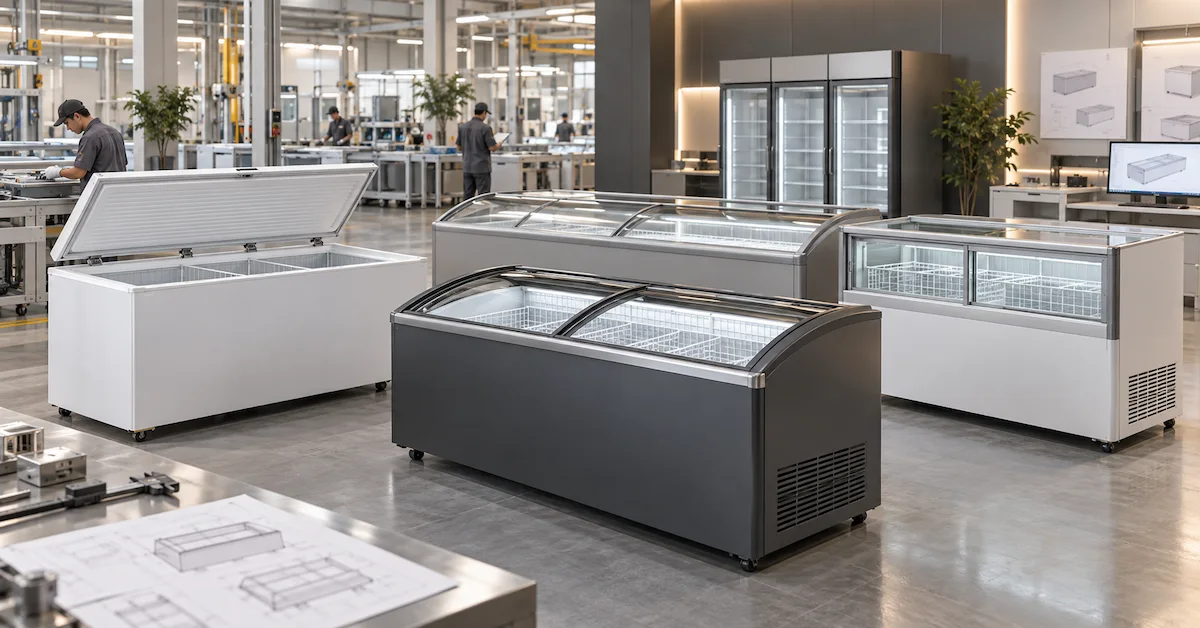
The first purchasing decision should be the freezer platform, not the logo position. Start with what the end customer actually needs to store or display. A restaurant distributor may need reserve frozen-food storage, an ice cream brand may need a sliding-glass merchandising cabinet, and a buyer prioritizing reduced manual-defrost work may need a no-frost design. SNOWSEA currently publishes multiple commercial freezer platforms, and its product range includes conventional chest freezers, no-frost models and separate ice cream display products.
| SNOWSEA Platform | Published Starting Point | Possible OEM Role | What Must Be Confirmed |
|---|---|---|---|
| BD-308 Chest Freezer | 308L chest freezer platform | Medium frozen-storage SKU | Loading arrangement, accessories, electrical version |
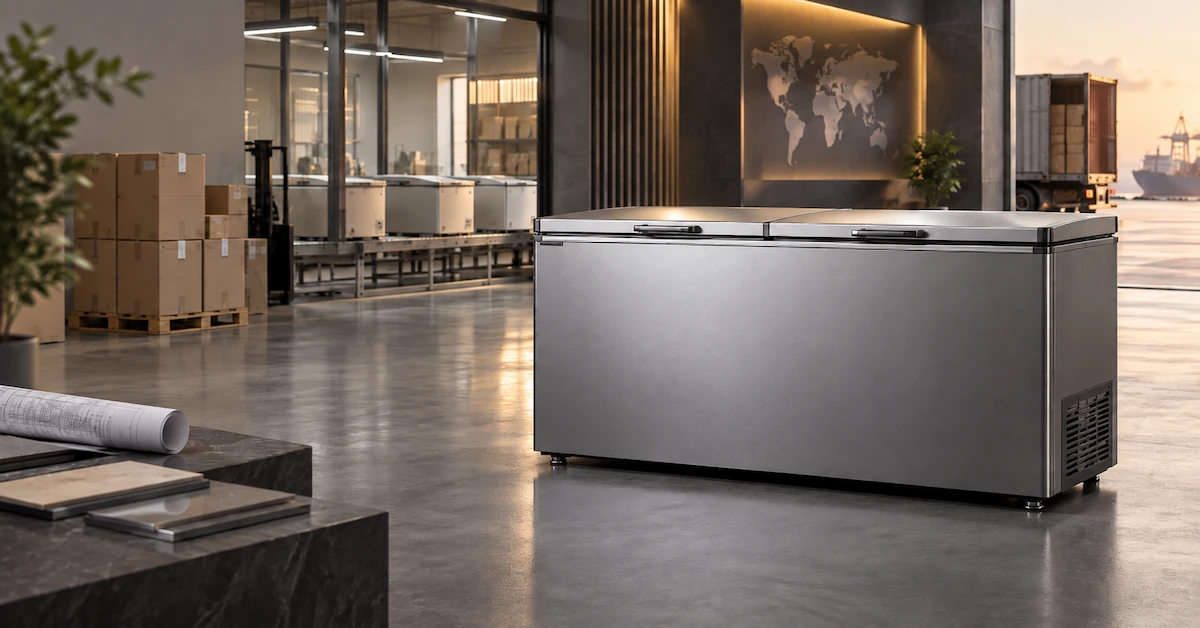
| BD-500 Chest Freezer | 500L, double-lid format, R290 listed | Larger storage SKU | Basket, controls, footprint, branding and market version |
| BD/BC-227WA No-Frost Freezer | 227L air-cooled no-frost platform | Differentiated maintenance-focused SKU | Controller, defrost configuration, electrical specification |
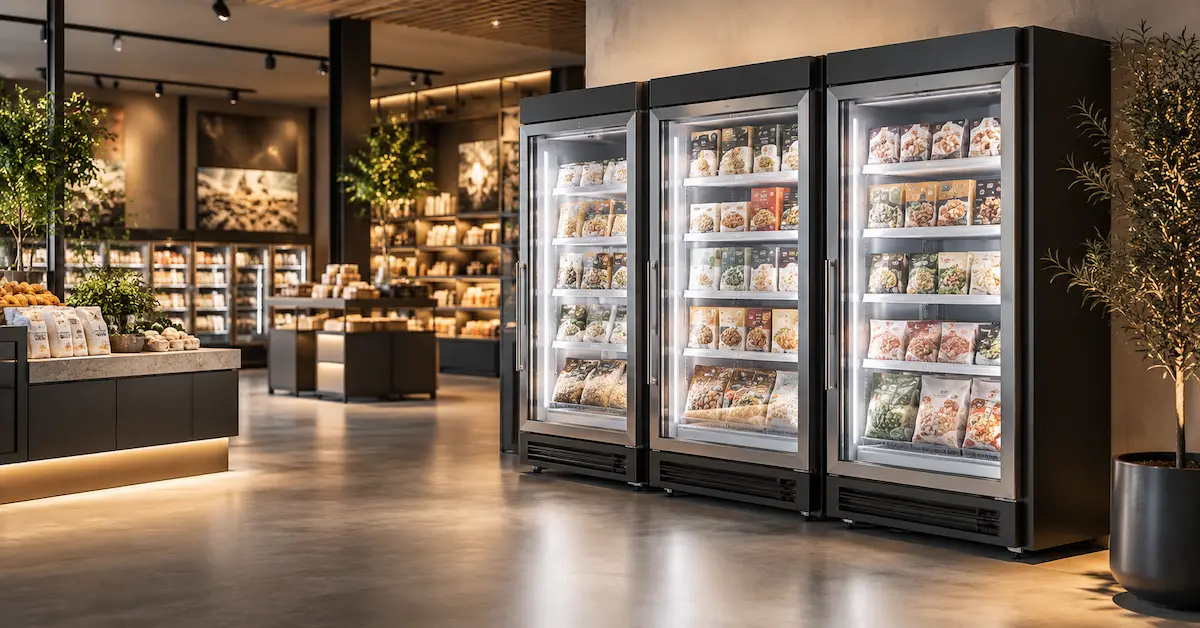
| SD/SC-268PM Ice Cream Freezer | 268L flat sliding-glass format | Branded packaged ice cream display | Basket layout, glass, package fit and artwork |
The BD-500 product page, for example, lists adjustable temperature control, removable basket, drain, lock, wide-voltage starting and R290 refrigerant, while also stating that cabinet dimensions, insulation, refrigeration configuration, compressor options and control panels can be evaluated for project requirements. Those published possibilities should be converted into an order-specific configuration before they become an OEM commitment.
2. Convert the Sales Discussion Into an OEM Specification
An OEM freezer project becomes risky when important requirements exist only in emails, chats or quotation notes. Create one controlled product specification that links your private-label model to the manufacturer’s base model and clearly separates standard features, optional items and custom requirements.
| Specification Area | Buyer Should Define | OEM Manufacturer Should Confirm |
|---|---|---|
| Private-label model | Your commercial model number | Corresponding factory model |
| Application | Frozen storage or display use | Suitable product platform |
| Capacity | Required loading requirement | Published and usable arrangement |
| Cabinet | Dimensions, lid/glass, liner | Final approved construction |
| Refrigeration | Cooling and defrost approach | Final system configuration |
| Controller | Required functions | Approved controller/version |
| Electrical | Voltage, frequency, plug | Destination-market version |
| Accessories | Basket, lock, lighting, wheels | Included vs. optional |
| Branding | Logo, color, graphics | Approved artwork |
| Rating label | Buyer model and technical data | Production label revision |
| Documents | Manual/language requirements | Approved document version |
| Packaging | Carton and protection | Final packaging specification |
| QC | Acceptance criteria | Production and final inspection plan |
Give the specification a revision number. When sample corrections occur, update the revision instead of relying on a message saying, “Please change this on the bulk order.”
3. Separate Branding Changes From Engineering Changes
An OEM freezer manufacturer should not treat every requested change as equivalent. Logo position, carton artwork, label language and manual design are mostly commercial-branding requirements. Baskets, plugs, locks or other model-dependent options are configuration changes. Cabinet dimensions, insulation, controller logic or refrigeration-system changes can affect technical performance and should receive engineering review. SNOWSEA’s BD-500 information explicitly lists cabinet dimensions, insulation thickness, refrigeration configuration, compressor options and control panels as areas that can be evaluated for project requirements, which is why buyers should not treat these changes like ordinary artwork edits.
A practical approval list should mark every request as Branding, Configuration, Engineering Review Required, or Not Confirmed. This prevents an approved logo proof from accidentally being interpreted as approval of unresolved technical work.
4. Check the Factory’s Manufacturing Control, Not Only Its OEM Brochure
An attractive OEM presentation does not prove that the customized version can be reproduced consistently. Buyers should understand how their specification reaches production. SNOWSEA’s OEM/ODM manufacturing process covers material processing, structural assembly, insulation foaming, refrigeration-system installation, main assembly, performance testing, final inspection, packing and shipment. Use those stages as an audit path. Ask where the private-label model number appears, how the correct electrical version is identified, where OEM labels and manuals are controlled, how optional accessories are checked and how a nonconforming unit is prevented from moving directly to packing. The objective is traceability: the cabinet being packed should still be identifiable against the same specification that purchasing approved.
5. Approve a Sample as a Product, Not as a Photo
The pre-production sample should be evaluated in two separate ways: technical approval and brand approval. Technical approval covers the cabinet, dimensions, refrigeration configuration, controller, electrical version, accessories, product loading and relevant performance requirements. Brand approval covers the logo, colors, model number, rating label, manual and carton artwork. A freezer can pass one and fail the other.
For a storage freezer, load the sample with representative cartons and check real access instead of assuming nominal liters predict usable inventory. For an ice cream freezer, use actual packages to review basket allocation, visibility and access through the glass. Photograph approved details and unresolved details separately. Record the sample revision. Avoid releasing volume production with a generic statement such as “sample looks fine.”
6. Define What Quality Testing Must Prove
“Strict QC” is not enough for B2B purchasing. Ask what is tested and which test belongs to your actual model. SNOWSEA’s BD-500 information states that model testing can include temperature uniformity, cooling efficiency and operating stability before shipment. The buyer should still ask what test basis applies to the quoted version.
A useful approval discussion can cover ambient conditions, loading, measurement positions, duration, temperature stability, recovery after loading or opening where relevant, controller behavior and defrost functions where applicable. Production testing and product-development validation should also be distinguished. A detailed model-validation test may not be repeated in full on every production unit.
For larger projects, agree which checks apply to every unit and which use an inspection sample before production begins.
7. Verify Destination-Market Documents by Model
Do not choose an OEM freezer manufacturer because a website displays many certification logos. Ask which documents apply to the exact freezer, electrical configuration and target market in your project. SNOWSEA’s BD-500 page states that certification support can be arranged according to destination-country requirements. That is a starting point for a model-specific document discussion, not evidence that every possible product variation already has every approval.
If an OEM project changes a controlled component, cabinet structure, controller or other relevant technical detail, ask whether existing documentation still applies. Do this before printing compliance-related marks onto your private-label carton or rating label.
8. Evaluate OEM Packaging as Both Branding and Protection
Private-label packaging does two jobs. It communicates your brand, and it protects the freezer during export transport. Approve the carton model number, brand graphics, handling marks, manual placement and accessories together with physical protection for the cabinet, controls, lid, corners and glass where applicable.
If OEM packaging changes the packed dimensions, request the final dimensions before confirming container quantities. Loading calculations based on the manufacturer’s standard carton may no longer be valid after private-label packaging is approved.
For distributors handling several electrical or model versions, carton identification should also help warehouse staff distinguish them without opening every box.
9. Confirm MOQ Only After the OEM Scope Is Clear
MOQ discussions are much more useful after the customization has been defined. A standard freezer with a custom logo may have a different commercial structure from a version requiring special components, unique artwork or structural modification. SNOWSEA’s recent OEM specification-control article also recommends asking whether MOQ applies by model, color, artwork, voltage configuration or custom component rather than assuming one minimum applies to the entire range.
For a new distributor, separate four questions: sample quantity, trial-order quantity, production MOQ and expected repeat-order quantity. Accepting a larger MOQ simply because it reduces the unit quotation can increase inventory risk if the product has not yet been proven in your channel.
10. Break Lead Time Into Approval and Production Stages
A useful OEM schedule should not be one line saying “lead time: 30 days.” Ask what starts the clock and what is included. A realistic project can involve specification confirmation, artwork approval, sample production, sample corrections, technical release, material preparation, mass production, inspection, packaging and shipment readiness.
This distinction matters because a late buyer artwork approval is different from a production delay. It also matters for repeat orders: once a controlled specification exists, later production can potentially follow a different workflow than the initial product launch.
Keep international transport separate from factory lead time unless the commercial quotation explicitly defines otherwise.
11. Compare OEM Cost Beyond the Unit Price
The cheapest OEM quotation is not automatically the lowest-cost project because buyers can carry expenses and risks outside the base cabinet price.
| Cost Area | First OEM Order | Repeat Order |
|---|---|---|
| Base freezer | Recurring | Recurring |
| Standard accessories | Recurring | Recurring |
| Branding application | Usually recurring | Usually recurring |
| Custom carton | Usually recurring | Usually recurring |
| Sample | Project-specific | Normally not repeated unless changed |
| Artwork/setup | May be one-time | Usually lower |
| Engineering | Depends on customization | Usually only when specification changes |
| Tooling | Where applicable | Depends on ownership/maintenance |
| Testing | Standard + project-specific | Depends on requirement |
| Initial spare parts | Service setup | Replenished as required |
The most expensive mistake can be an undefined product version. If the buyer thinks it purchased one specification while the factory manufactures another, the cost can appear later as rework, delayed sales, warranty disputes or replacement-parts confusion.
12. Require Change Control Before You Approve the Manufacturer
A strong OEM freezer manufacturer should have an answer to this question:
What happens if an approved component or specification needs to change after our sample is approved?
For important changes, the process should identify the proposed deviation, reason, affected models, technical impact and whether the buyer must approve it before production. SNOWSEA’s newer OEM content emphasizes this same requirement: the approved freezer should become a controlled production version rather than a sample that the factory merely remembers.
A practical repeat-order instruction is:
“Quote and manufacture according to the approved specification revision. Identify every proposed technical, component, artwork or packaging deviation separately before production.”
That one sentence can significantly improve repeat-order clarity.
How Does an OEM Freezer Manufacturer Differ From an ODM Manufacturer?
OEM and ODM overlap in practice, but the distinction is useful when defining responsibility. OEM normally starts with an existing product platform and creates an agreed buyer-specific version. ODM involves deeper participation by the manufacturer in defining or developing the product itself. SNOWSEA already publishes separate freezer OEM development content describing product planning, engineering, prototype work, testing and production support for projects requiring broader development.
If your requirement can be solved with an existing cabinet plus branding and selected configuration changes, avoid adding ODM complexity unnecessarily. If the standard platform cannot meet a measurable market requirement, deeper development may be justified.
What Should You Send an OEM Freezer Manufacturer for a Useful Quote?
A serious RFQ should give the manufacturer enough information to recommend a controlled solution rather than guess from the words “OEM freezer.”
Send:
- Target country and sales channel
- Buyer/end-customer type
- Freezer application
- Preferred cabinet format
- Required loading or capacity
- Package dimensions where relevant
- Installation limitations
- Required temperature conditions
- Expected ambient environment
- Voltage, frequency and plug
- Estimated quantity by model
- Logo and branding requirements
- Manual and carton requirements
- Required project documents
- Sample requirement
- Target shipment or arrival schedule
- Expected repeat-order volume where available
- Local after-sales and spare-parts expectations
Through the SNOWSEA contact page, ask for a proposal that separates the recommended standard platform, standard features, optional features, OEM requirements, engineering-review items, MOQ, sample scope and production milestones.
That gives purchasing something much more useful than a generic OEM price.
Frequently Asked Questions
1. What is an OEM freezer manufacturer?
An OEM freezer manufacturer produces freezer equipment according to an agreed buyer-specific configuration, often using an existing product platform with customized branding, labels, electrical specifications, packaging or selected product options.
2. Who should work with an OEM freezer manufacturer?
OEM manufacturing is most useful for distributors, importers, retail-equipment suppliers, ice cream brands and refrigeration companies planning branded or repeatable freezer product lines.
3. What should I check before choosing an OEM freezer manufacturer?
Check product-platform suitability, specification control, sample approval, manufacturing processes, quality testing, destination documentation, MOQ, production timing, packaging, after-sales support and change control.
4. Can SNOWSEA add my brand to a freezer?
SNOWSEA provides OEM/ODM services for distributors, brands and project buyers. Available branding and configuration options should be confirmed for the selected model and project requirements.
5. Can cabinet dimensions or refrigeration configuration be changed?
SNOWSEA’s BD-500 project information states that cabinet dimensions, insulation, refrigeration configuration, compressor options and control panels can be evaluated according to project requirements. Such changes should receive engineering review rather than being treated as simple branding changes.
6. Should I approve an OEM freezer sample before mass production?
For a new branded or technically modified product, a representative sample is useful for checking the approved specification, real loading, electrical version, accessories, appearance and relevant performance requirements before volume production.
7. What determines OEM freezer MOQ?
MOQ can depend on the base model, electrical version, branding, custom carton, color or special components. Ask for the minimum quantity of the exact quoted version rather than one company-wide MOQ.
8. How should OEM freezer quality control be managed?
Link the approved sample to a controlled product specification and define relevant production checks and final inspection criteria. Require important changes to be reviewed before they enter mass production.
9. How can I keep repeat OEM orders consistent?
Give every approved product a revision reference and use it on future purchase orders. Require proposed component, controller, artwork or packaging changes to be disclosed before production.
10. How do I request an OEM freezer quotation from SNOWSEA?
Send your destination, application, product format, capacity/loading needs, electrical requirements, estimated quantity and customization scope through SNOWSEA Contact Us. Ask for the recommended platform, OEM scope, sample plan, MOQ and production schedule.
Conclusion
Choosing an OEM freezer manufacturer should be treated as approval of a repeatable manufacturing system, not simply approval of a logo and unit price. Start with a suitable freezer platform, convert buyer requirements into a controlled specification, separate branding from engineering changes, validate a representative sample, verify manufacturing and QC controls, confirm destination-market documentation, and settle MOQ, packaging, spare parts and change control before releasing mass production. SNOWSEA currently offers multiple commercial freezer platforms together with OEM/ODM manufacturing support for distributors, brands and project buyers. If you are preparing a private-label freezer line or recurring OEM program, send SNOWSEA your application, target market, product requirements and expected quantity and request a model-specific proposal showing the base freezer, customization scope, sample requirements, quality-control plan, production milestones and repeat-order controls.