Why Choosing the Right Chest Freezer Wholesale Manufacturer Matters
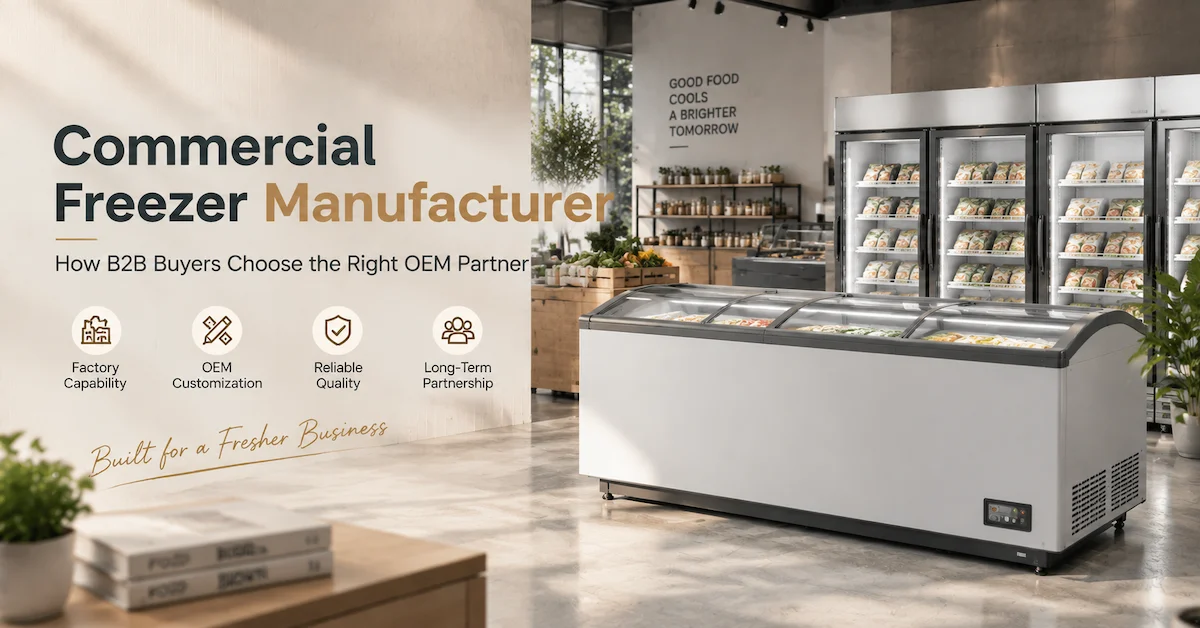
A reliable Chest Freezer Wholesale Manufacturer should provide more than a competitive factory quotation.
For importers, distributors, supermarkets, frozen-food retailers, food-service businesses, and private-label brands, chest freezers are expected to deliver stable low-temperature storage while operating reliably under repeated opening, heavy loading, and different ambient conditions.
Before ordering, buyers should evaluate:
- Refrigeration system configuration
- Cabinet insulation
- Lid structure
- Door gasket sealing
- Temperature recovery
- Cabinet material
- Corrosion resistance
- Defrost method
- Energy efficiency
- Quality-control procedures
- Export packaging
- Spare-parts support
Snowsea offers a range of commercial refrigeration products for different B2B cold-storage and retail applications.
What Is a Commercial Chest Freezer?
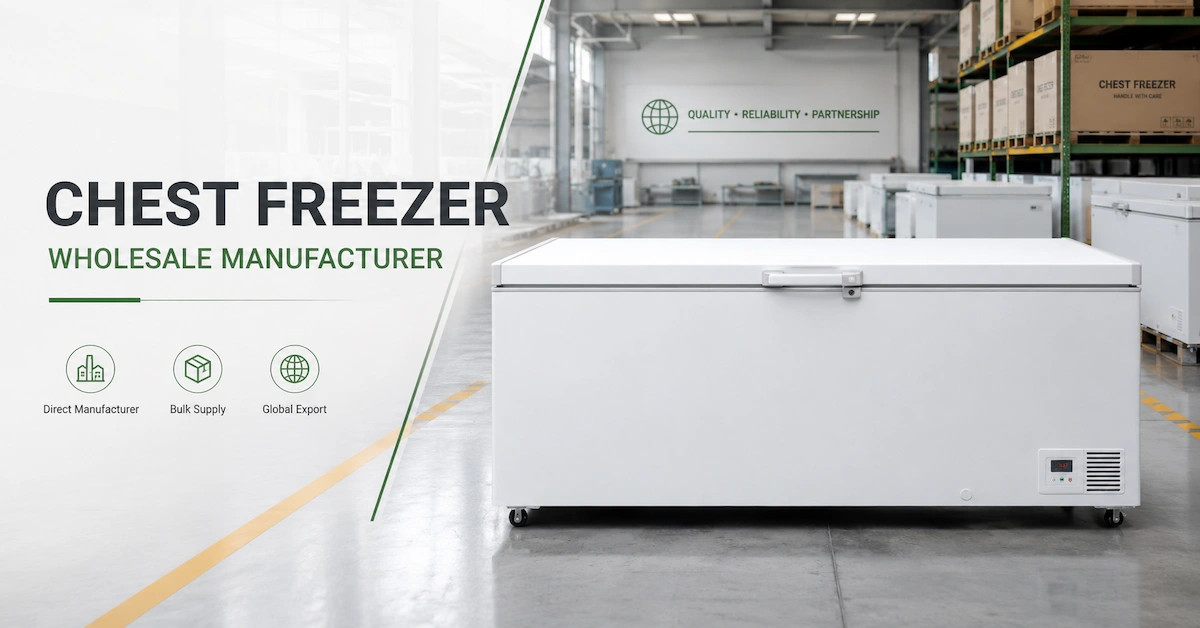
A commercial chest freezer is a horizontal freezer designed for storing frozen food, ice cream, meat, seafood, prepared products, and other temperature-sensitive goods.
Compared with upright cabinets, chest freezers typically offer a large internal storage volume and a top-opening structure.
Common applications include:
- Supermarkets
- Convenience stores
- Restaurants
- Food distributors
- Frozen-food stores
- Ice cream retail
- Commercial kitchens
- Cold-chain distribution points
For B2B buyers, the correct model depends on storage capacity, access frequency, merchandising requirements, and available floor space.
Which Chest Freezer Types Do Wholesale Buyers Need?
Solid-Lid Chest Freezers
Solid-lid models are primarily designed for frozen storage rather than product display.
Potential advantages include:
- Strong thermal insulation
- Simple cabinet structure
- Reduced light exposure
- Large usable storage space
They are commonly considered for back-of-house food storage, restaurants, warehouses, and commercial kitchens.
Sliding Glass-Lid Chest Freezers
Glass-lid models allow customers or employees to view products without fully opening the freezer.
They are often used for:
- Ice cream
- Frozen food
- Packaged meat
- Retail merchandising
Wholesale buyers should compare glass construction, sliding mechanism, frame sealing, and condensation control.
Large-Capacity Commercial Chest Freezers
Higher-capacity models can support distributors, supermarkets, food processors, and other users that require more frozen storage.
However, larger capacity also influences:
- Compressor selection
- Cabinet dimensions
- Insulation requirements
- Packaging size
- Container loading
Buyers should avoid comparing models only by gross volume.
What Should Buyers Compare Between Chest Freezer Manufacturers?
A professional Chest Freezer Wholesale Manufacturer should provide clear technical specifications for each model.
The following areas deserve particular attention.
Compressor and Refrigeration System
The compressor is important, but buyers should evaluate the complete refrigeration system rather than one component alone.
Relevant elements include:
- Compressor
- Condenser
- Evaporator
- Refrigerant
- Capillary or expansion device
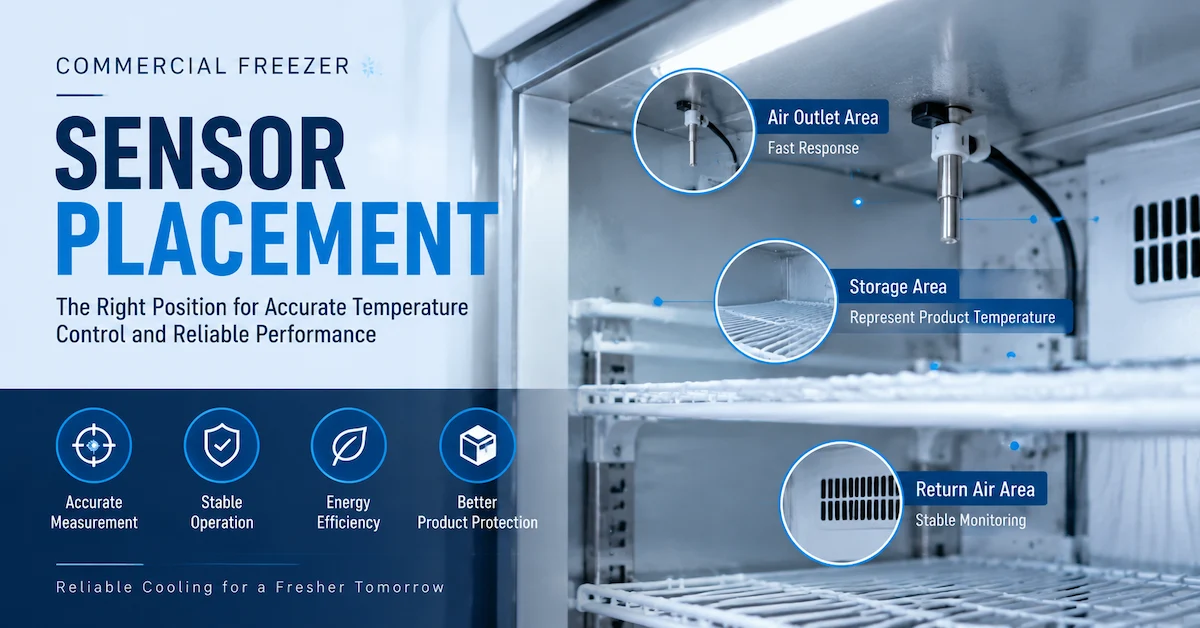
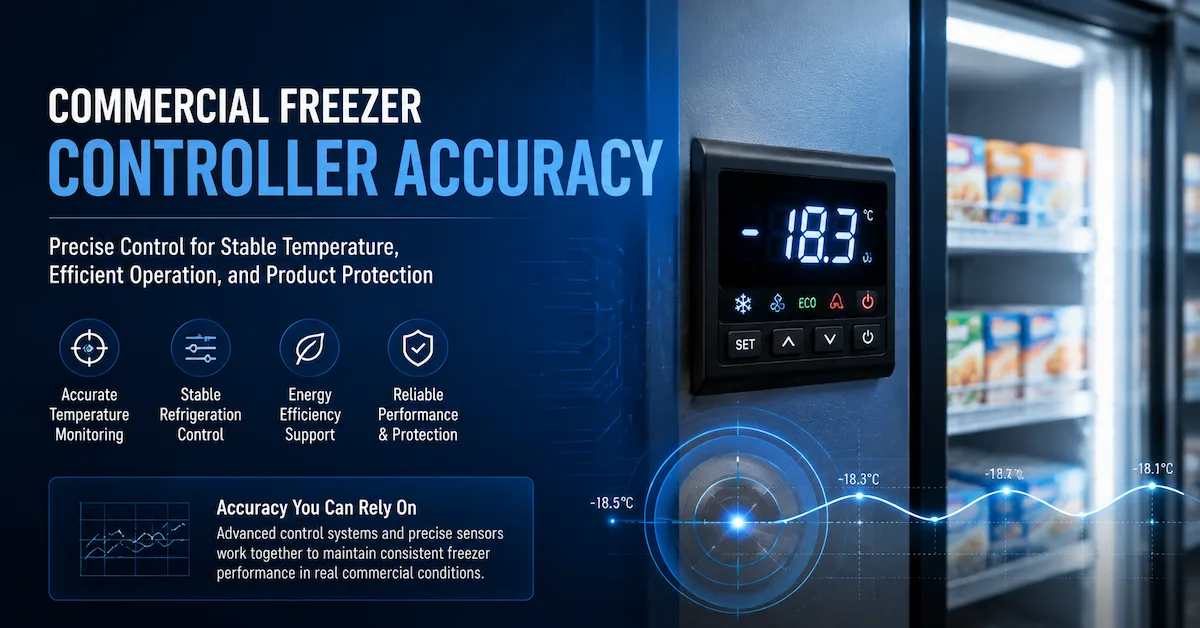
- Temperature controller
The system should be matched to cabinet size, target temperature, ambient conditions, and expected commercial usage.
Snowsea's guide to commercial freezer compressor reliability testing explains why compressor evaluation should include operating conditions and system performance.
Cabinet Insulation
Insulation plays a major role in maintaining low internal temperatures.
Buyers should ask about:
- Insulation material
- Foaming process
- Wall thickness
- Density consistency
- Cabinet construction
Poor insulation can increase heat transfer and make the refrigeration system work harder.
For a deeper comparison, see Snowsea's freezer cabinet insulation performance comparison.
Lid and Gasket Sealing
The lid and gasket form a critical thermal barrier.
A poorly sealed lid may allow warm and humid air to enter the cabinet.
Possible consequences include:
- Frost buildup
- Temperature fluctuation
- Longer compressor running time
- Higher energy consumption
Buyers should check:
- Gasket contact
- Lid alignment
- Hinge operation
- Sliding-glass movement where applicable
- Seal consistency around the opening
Snowsea's freezer door gasket sealing performance guide explains sealing-related purchasing considerations.
Cabinet Material and Corrosion Resistance
Chest freezers may operate in humid kitchens, stores, warehouses, or coastal environments.
Buyers should compare:
- Inner liner material
- Outer cabinet material
- Surface coating
- Corner construction
- Hardware
- Corrosion protection
A lower-cost cabinet may become expensive if surface corrosion or structural damage appears early in service life.
Read Snowsea's guide to freezer cabinet anti-corrosion material for additional sourcing considerations.
How Temperature Recovery Affects Commercial Use
Commercial freezers are repeatedly opened during loading and daily operation.
When the lid opens, warm air enters the cabinet and internal temperature may rise.
Temperature recovery describes how effectively the freezer returns toward its normal operating condition after this disturbance.
Important factors include:
- Compressor capacity
- Insulation
- Product load
- Lid opening duration
- Ambient temperature
- Refrigeration system design
For supermarkets, restaurants, and other frequently accessed applications, recovery behavior can be more meaningful than a single no-load temperature reading.
Snowsea explains this topic further in its commercial freezer temperature recovery guide.
Manual Defrost vs Automatic Defrost
Many chest freezers use manual defrost because of their relatively simple structure.
Manual Defrost
Potential advantages include:
- Fewer defrost components
- Simple control
- Lower structural complexity
The tradeoff is that operators must periodically remove accumulated frost.
Automatic Defrost
Automatic systems can reduce manual intervention but may require:
- Additional heaters
- Sensors
- Controllers
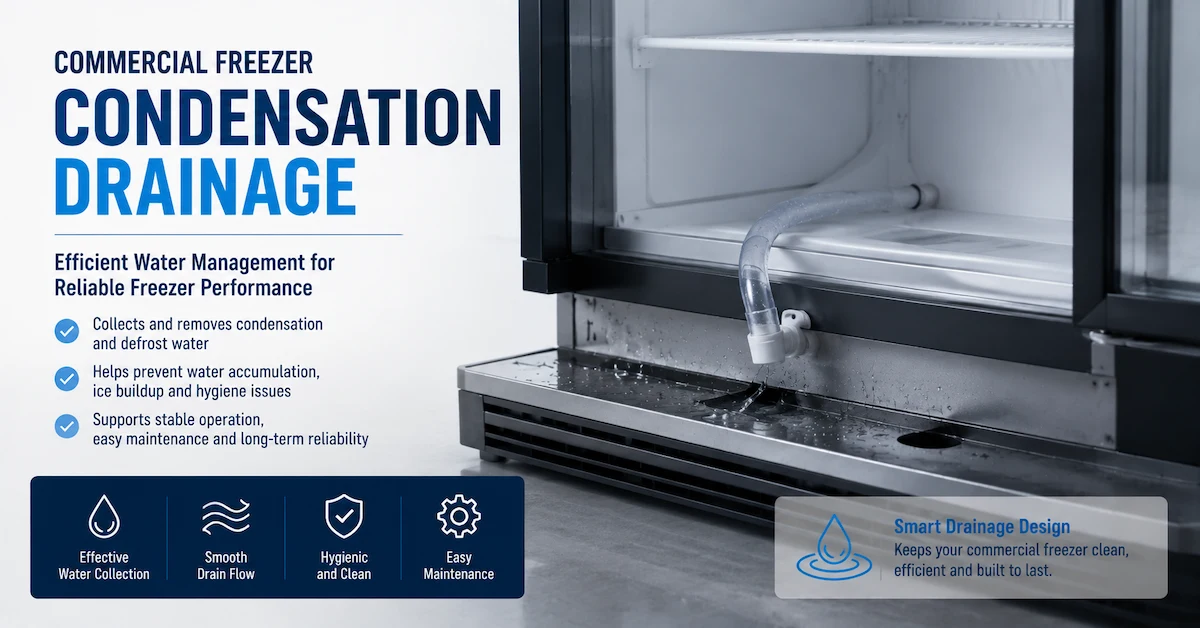
- Drainage design
The right solution depends on product type and usage.
Snowsea's manual defrost vs automatic defrost freezer guide provides a broader comparison.
What Determines Chest Freezer Wholesale Price?
Chest freezers that look similar can have different cost structures.
| Price Factor | Why It Matters |
|---|---|
| Cabinet capacity | Changes materials and refrigeration load |
| Lid type | Solid and glass lids have different structures |
| Compressor | Influences refrigeration configuration |
| Insulation | Affects material use and thermal performance |
| Cabinet material | Changes durability and production cost |
| Controller | Changes temperature-control functionality |
| Refrigerant | May vary by market requirements |
| OEM branding | Adds customization cost |
| Packaging | Influences export protection |
| Order quantity | Affects purchasing and production efficiency |
Buyers should compare specifications before comparing price.
For broader pricing logic, review Snowsea's commercial freezer wholesale price guide.
MOQ, Bulk Orders and Container Planning
MOQ can vary according to:
- Model
- Cabinet color
- Compressor configuration
- Packaging
- Logo printing
- Carton artwork
- Electrical specification
Large buyers may also need to compare:
- MOQ per SKU
- Trial-order quantity
- Container loading
- Mixed-model orders
- Annual purchasing volume
A container-level quotation can provide a more realistic view of sourcing cost than a sample quotation.
Snowsea's commercial freezer bulk order price guide explains how quantity and model mix influence B2B pricing.
Can Different Chest Freezer Models Be Mixed?
Distributors often need more than one capacity.
For example:
- Compact models
- Medium-capacity models
- Large commercial models
- Glass-lid display models
Mixed-model orders can help expand a distributor's product range, but they may also increase:
- SKU complexity
- Spare-parts inventory
- Packaging variations
- Container-planning complexity
Ask the manufacturer which models can be combined efficiently in one order.
OEM and Private Label Chest Freezers
B2B buyers may require customization such as:
- Logo
- Cabinet color
- Model number
- Rating label
- Carton
- Manual
- Barcode
- Selected components
For private-label programs, consistency between batches becomes particularly important.
Snowsea supports OEM and ODM commercial refrigeration solutions for buyers developing branded product lines.
What Quality Tests Should a Manufacturer Provide?
Before bulk shipment, buyers should understand how the factory verifies product performance.
Temperature Performance
Possible checks include:
- Pull-down performance
- Temperature stability
- Recovery performance
Refrigeration Operation
Verify:
- Compressor operation
- Controller response
- Refrigeration cycle
- Noise or abnormal vibration
Cabinet Inspection
Check:
- Lid alignment
- Gasket sealing
- Surface finish
- Hinges
- Handles
- Interior condition
Electrical Inspection
Inspect:
- Wiring
- Plug
- Controller
- Switches
- Internal connections
Snowsea's commercial freezer quality testing procedure provides a broader framework for pre-shipment evaluation.
Export Packaging for Chest Freezers
A wholesale manufacturer should also understand export transportation.
Chest freezer packaging needs to protect:
- Cabinet corners
- Lid
- Hinges
- Compressor compartment
- Base
- Exterior finish
Packaging may include:
- Protective film
- Foam
- Corner protection
- Cartons
- Reinforced bases
- Internal fixation
A freezer that leaves the factory in good condition can still arrive damaged if packaging is inadequate.
See Snowsea's freezer export packaging drop protection guide for more detail.
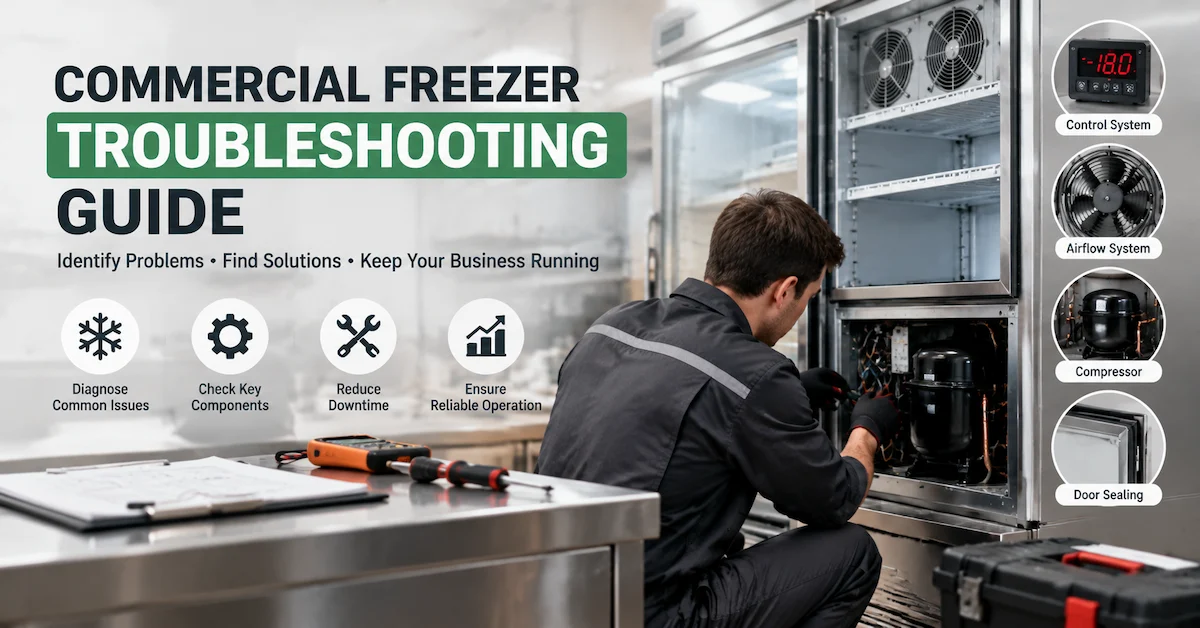
Spare Parts and After-Sales Support
Distributors should plan service requirements before placing the first large order.
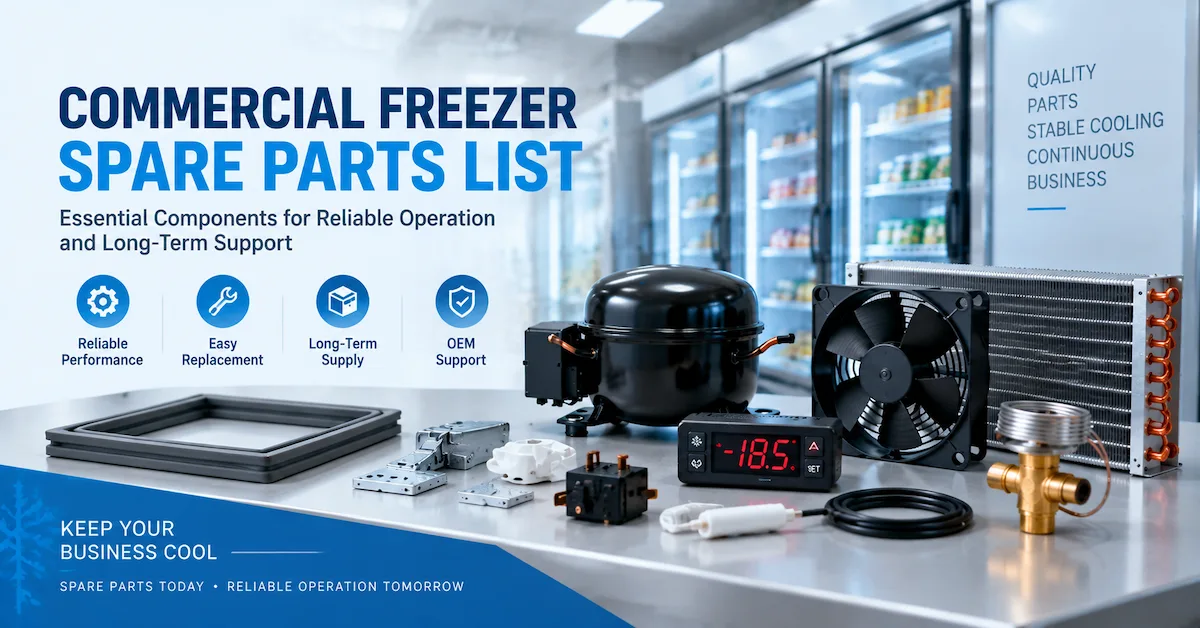
Common spare parts may include:
- Thermostats
- Controllers
- Gaskets
- Hinges
- Handles
- Compressors
- Electrical components
Ask whether the manufacturer can provide:
- Spare-parts lists
- Part numbers
- Recommended quantities
- Technical support
- Replacement procedures
This can reduce future service delays.
How to Evaluate a Chest Freezer Wholesale Manufacturer
Use a structured comparison rather than selecting by quotation alone.
| Evaluation Area | What Buyers Should Verify |
|---|---|
| Product range | Suitable capacities and lid types |
| Refrigeration | System matched to cabinet |
| Insulation | Material and foaming consistency |
| Lid sealing | Gasket and alignment |
| Cabinet | Material and corrosion resistance |
| Testing | Defined QC procedures |
| OEM capability | Brand customization |
| MOQ | Suitable for purchasing plan |
| Packaging | Export-ready protection |
| Spare parts | Long-term availability |
| Lead time | Supports inventory planning |
A factory that clearly documents these areas is easier to evaluate than one that provides only a short product specification.
What Should Buyers Include in a Chest Freezer RFQ?
A professional RFQ should include:
- Required freezer type
- Capacity
- External dimensions if restricted
- Solid or glass lid
- Target temperature range
- Ambient operating conditions
- Voltage and frequency
- Refrigerant requirements
- Cabinet material
- Defrost requirements
- Branding requirements
- Quantity per model
- Destination country
- Certification requirements
- Packaging requirements
- Expected annual volume
- Target delivery schedule
Clear RFQ information helps buyers receive more comparable quotations.
FAQ
What is a chest freezer wholesale manufacturer?
It is a factory that produces chest freezers in B2B quantities for importers, distributors, retailers, food-service companies, and private-label brands.
What should I compare before buying chest freezers wholesale?
Compare refrigeration systems, insulation, lid sealing, cabinet material, temperature recovery, defrost, testing, packaging, MOQ, and after-sales support.
Are glass-lid chest freezers suitable for retail?
Yes. Sliding glass lids can improve product visibility for frozen-food and ice cream merchandising.
What affects chest freezer wholesale price?
Price depends on capacity, lid type, refrigeration components, insulation, cabinet material, customization, packaging, and order quantity.
Can chest freezers be private labeled?
Yes. Depending on the project, buyers may customize logos, labels, cabinet colors, cartons, manuals, and selected technical specifications.
What MOQ should buyers expect?
MOQ varies by model and customization. Buyers should ask the factory to separate standard product MOQ from branding or component-specific MOQ.
Should I test a sample before a bulk order?
Yes. A representative sample can help confirm refrigeration performance, cabinet construction, branding, packaging, and other specifications.
Can different chest freezer capacities be mixed in one order?
Potentially. Buyers should confirm MOQ per model, production requirements, and container-loading efficiency.
What quality tests should a chest freezer factory perform?
Testing may include temperature performance, compressor operation, controller function, sealing, electrical checks, appearance, and packaging inspection.
Can Snowsea manufacture chest freezers for wholesale projects?
Snowsea supports commercial refrigeration wholesale and OEM/ODM projects. Buyers can submit required capacity, lid type, quantity, destination market, branding, and technical requirements for project evaluation.
Conclusion
Choosing the right Chest Freezer Wholesale Manufacturer requires evaluating the entire product and supply system rather than focusing only on unit price.
For distributors, importers, supermarkets, food-service buyers, and private-label brands, refrigeration design, cabinet insulation, lid sealing, temperature recovery, materials, quality testing, packaging, and spare-parts support all influence long-term sourcing value.
A capable Chest Freezer Wholesale Manufacturer should provide clear specifications, stable production, transparent quality-control procedures, and reliable support for repeat orders.
Snowsea supports commercial refrigeration wholesale and OEM/ODM projects for global B2B buyers. Explore Snowsea's commercial refrigeration products, review its OEM/ODM solutions, or contact Snowsea with your capacity, lid type, quantity, destination market, and sourcing requirements.