What Is Commercial Freezer Condenser Design?
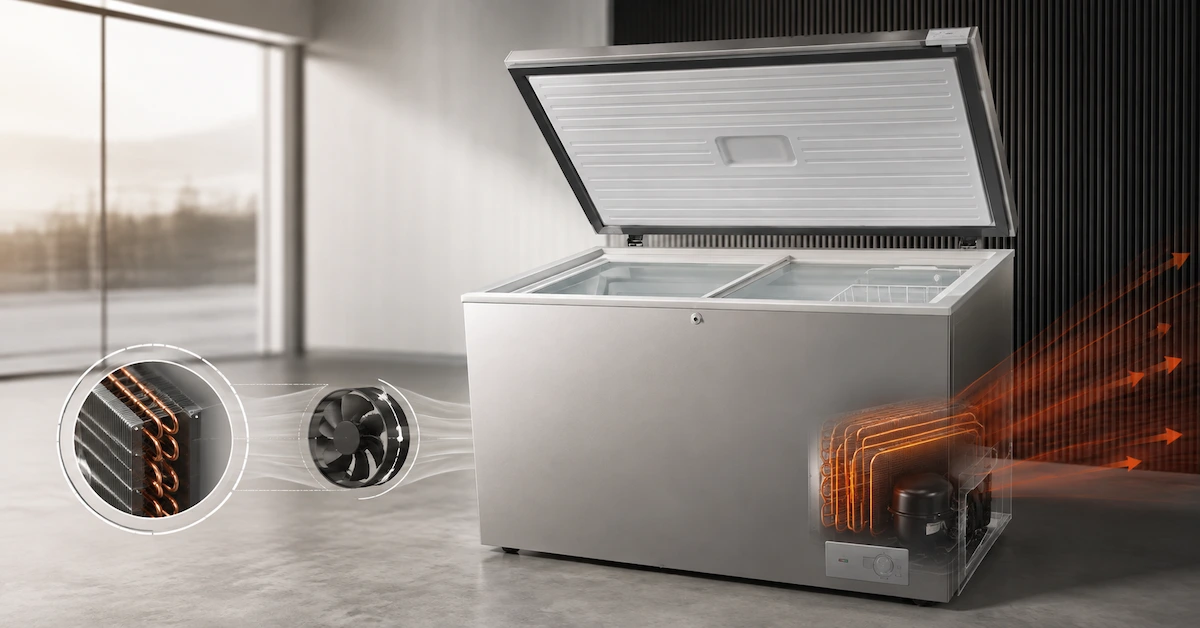
Commercial Freezer Condenser Design refers to the engineering design of the condenser system used in commercial refrigeration equipment to release heat from the refrigeration cycle.
The condenser is a key component that converts high-temperature refrigerant gas from the compressor into liquid refrigerant by removing heat.
The refrigeration cycle typically follows:
Compressor → Condenser → Expansion Device → Evaporator
A well-designed condenser helps commercial freezers achieve:
- Efficient heat rejection
- Stable cooling performance
- Lower energy consumption
- Reliable long-term operation
Snowsea provides commercial refrigeration products for supermarkets, restaurants, catering companies, and global B2B refrigeration applications.
Why Does Condenser Design Matter for Commercial Freezers?
The condenser directly affects how efficiently a freezer removes heat from the refrigeration system.
A poor condenser design may cause:
- Higher operating pressure
- Increased compressor workload
- Reduced cooling efficiency
- Higher electricity consumption
A properly designed condenser improves:
Cooling Efficiency
An efficient condenser can:
- Release heat faster
- Maintain proper refrigerant pressure
- Support stable cooling performance
Energy Efficiency
Better heat rejection reduces stress on the compressor.
This helps:
- Lower power consumption
- Improve refrigeration efficiency
- Reduce operating costs
For more energy-related information, see Snowsea's Energy Efficiency Solutions.
System Reliability
A properly matched condenser helps reduce:
- Excessive pressure conditions
- Compressor overload
- Refrigeration system failures
The Role of a Condenser in Commercial Freezers
The condenser performs several important functions:
Heat Transfer
The condenser removes heat absorbed during the refrigeration process.
Heat comes from:
- Cabinet interior
- Stored products
- External environment
Refrigerant Condensation
The condenser changes refrigerant from:
Gas state → Liquid state
This allows the refrigerant to continue through the cooling cycle.
Pressure Control
A properly designed condenser maintains suitable operating pressure for the refrigeration system.
Main Components of a Commercial Freezer Condenser System
A condenser system includes several important components.
Condenser Coil
The coil provides the surface area needed for heat exchange.
Performance depends on:
- Tube design
- Fin spacing
- Surface area
- Material selection
A larger and better-designed coil can improve heat rejection capability.
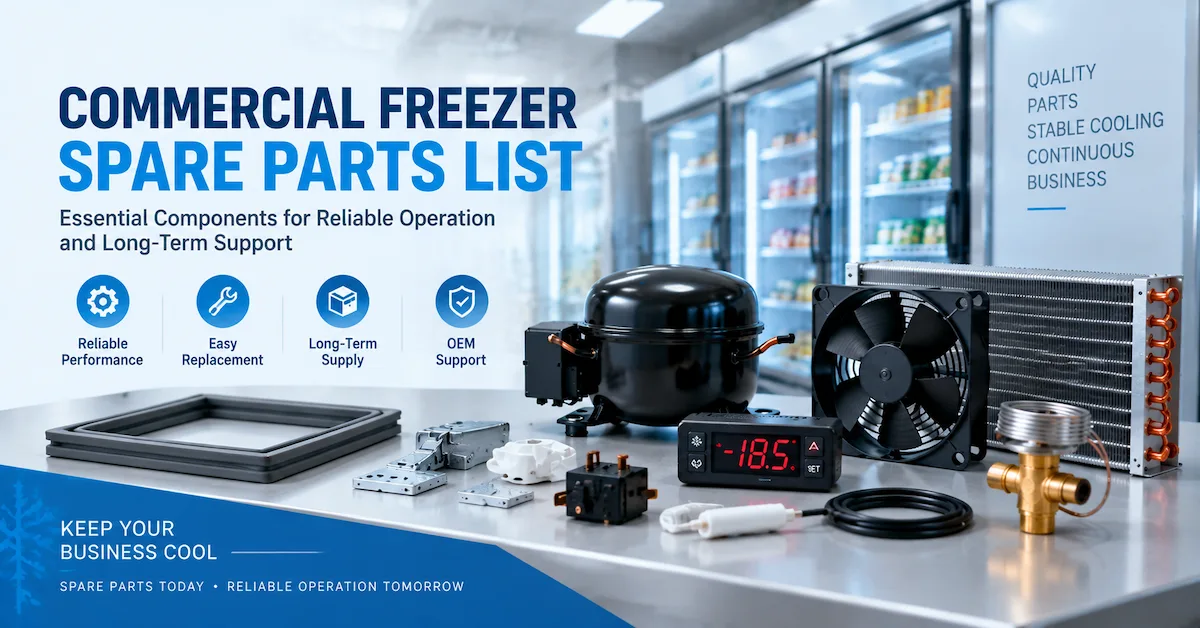
Condenser Fan
In air-cooled systems, fans help move air across the condenser coil.
Important factors include:
- Air volume
- Fan speed
- Noise level
- Airflow direction
Proper airflow improves cooling efficiency.
Refrigerant Circuit
The condenser must be matched with:
- Compressor capacity
- Refrigerant type
- Expansion system
Poor matching may reduce overall system performance.
Common Types of Commercial Freezer Condensers
Different condenser designs are used depending on application requirements.
| Condenser Type | Characteristics | Application |
|---|---|---|
| Air-Cooled Condenser | Simple structure and easy maintenance | Most commercial freezers |
| Water-Cooled Condenser | High heat transfer efficiency | Large refrigeration systems |
| Remote Condenser | Separates heat discharge from cabinet | Commercial projects |
Air-Cooled Condenser Design
Air-cooled condensers are commonly used in commercial freezers.
They use fans to move air across the condenser coil and remove heat.
Advantages include:
- Simple installation
- Lower maintenance requirements
- No additional water system needed
Important design factors include:
Airflow Design
Effective airflow requires:
- Proper air inlet position
- Correct fan placement
- Sufficient ventilation space
Poor airflow may cause:
- Higher condenser temperature
- Reduced efficiency
- Increased energy consumption
Coil Structure
The coil design affects:
- Heat transfer efficiency
- Dust resistance
- Cleaning requirements
Water-Cooled Condenser Design
Water-cooled condensers use circulating water to remove heat.
Advantages include:
- High heat transfer efficiency
- Stable performance
They are commonly used in larger refrigeration systems.
Important considerations include:
- Water quality
- Maintenance requirements
- Installation complexity
Condenser Size and Heat Rejection Capacity
Condenser size must match the refrigeration system requirements.
Important factors include:
- Compressor capacity
- Refrigerant type
- Operating temperature
- Ambient conditions
An undersized condenser may cause:
- High pressure
- Reduced cooling capacity
- Higher energy consumption
An oversized condenser may result in:
- Higher equipment cost
- Larger installation space
The condenser and compressor should be properly matched.
For compressor matching, see Snowsea's commercial freezer compressor sizing guide.
Condenser Design and Ambient Temperature
Ambient temperature strongly affects condenser performance.
In hot environments:
- Heat rejection becomes more difficult
- Condensing pressure increases
- Compressor workload rises
Commercial freezers used in tropical markets often require:
- Larger heat exchange surfaces
- Improved airflow design
- Stronger cooling capability
For environmental conditions, see Snowsea's commercial freezer ambient temperature guide.
Condenser Design and Energy Efficiency
A well-designed condenser improves refrigeration efficiency.
Key factors include:
- Heat exchange efficiency
- Fan motor performance
- Coil design
- Refrigerant characteristics
Improved condenser performance can help:
- Reduce compressor operating time
- Lower electricity usage
- Improve overall system efficiency
Materials Used in Commercial Freezer Condensers
Common condenser materials include:
| Material | Characteristics |
|---|---|
| Copper Tube + Aluminum Fin | Excellent heat transfer performance |
| Aluminum Condenser | Lightweight and corrosion resistant |
| Steel Components | Strong mechanical structure |
Material selection depends on:
- Operating environment
- Durability requirements
- Cost considerations
Condenser Design for Different Applications
Supermarket Freezers
Supermarkets require:
- Long operating hours
- Stable cooling performance
- Low operating costs
A reliable condenser design helps maintain consistent refrigeration performance.
For retail solutions, see Snowsea's supermarket freezer project supplier guide.
Restaurant Freezers
Restaurants often require:
- Compact equipment
- Fast cooling recovery
- Reliable daily operation
Catering Storage Freezers
Catering applications need:
- Continuous operation
- Large storage capacity
- Stable temperature control
For catering solutions, see Snowsea's commercial freezer supplier for caterers guide.
Condenser Maintenance and Cleaning
Even a well-designed condenser requires regular maintenance.
Important maintenance tasks include:
- Cleaning condenser coils
- Checking fan operation
- Ensuring airflow clearance
- Inspecting system performance
Dust accumulation can reduce:
- Heat transfer efficiency
- Cooling performance
- Energy efficiency
How Manufacturers Test Condenser Performance
Professional manufacturers evaluate condenser systems through testing.
Heat Transfer Testing
Measures:
- Heat rejection capability
- Cooling performance
Airflow Testing
Evaluates:
- Fan performance
- Air circulation efficiency
Pressure Testing
Checks:
- Refrigeration system safety
- Operating stability
Energy Efficiency Testing
Measures:
- Power consumption
- System efficiency
For overall equipment evaluation, see Snowsea's commercial freezer quality testing guide.
Common Mistakes When Evaluating Condenser Design
Ignoring Ambient Conditions
A condenser suitable for one environment may not perform well in another.
Choosing a Small Condenser to Reduce Cost
An undersized condenser can increase operating pressure and energy consumption.
Poor Airflow Planning
Insufficient ventilation reduces heat rejection efficiency.
Ignoring Maintenance Requirements
Dirty condensers lose performance over time.
Not Matching Compressor and Condenser
The refrigeration system requires proper component coordination.
How to Choose a Commercial Freezer With Good Condenser Design
A practical selection process includes:
Step 1: Identify Application Requirements
Confirm:
- Freezer type
- Operating environment
- Temperature requirements
Step 2: Evaluate Condenser Type
Compare:
- Air-cooled design
- Water-cooled design
- Heat rejection capacity
Step 3: Check System Matching
Review:
- Compressor compatibility
- Refrigerant type
- Cooling capacity
Step 4: Verify Supplier Capability
Evaluate:
- Engineering experience
- Testing procedures
- Quality control
What Information Should You Send a Freezer Supplier?
To receive accurate recommendations, buyers should provide:
- Application type
- Storage temperature
- Ambient temperature
- Freezer capacity
- Refrigerant preference
- Operating hours
- Energy efficiency requirements
- Installation environment
- Certification requirements
- Customization needs
FAQ
What is commercial freezer condenser design?
Commercial freezer condenser design refers to the engineering of the heat rejection system used in refrigeration equipment.
Why is condenser design important?
A good condenser design improves cooling efficiency, energy performance, and system reliability.
What type of condenser is used in commercial freezers?
Most commercial freezers use air-cooled condensers, while larger systems may use water-cooled or remote condensers.
How does condenser size affect freezer performance?
A properly sized condenser improves heat rejection, while an undersized condenser may increase pressure and energy consumption.
Does ambient temperature affect condenser performance?
Yes. Higher ambient temperatures increase heat rejection difficulty and compressor workload.
How often should freezer condensers be cleaned?
Cleaning frequency depends on the operating environment, dust level, and usage conditions.
What materials are used for freezer condensers?
Common materials include copper tubes, aluminum fins, aluminum structures, and steel components.
Can condenser design affect electricity consumption?
Yes. Better heat rejection efficiency can reduce compressor workload and energy usage.
How is condenser performance tested?
Manufacturers test heat transfer, airflow, pressure stability, and energy efficiency.
Can Snowsea customize condenser designs?
Yes. Snowsea can provide commercial refrigeration solutions based on application requirements and system specifications.
Conclusion
Commercial Freezer Condenser Design is a key factor in achieving efficient, reliable, and energy-saving refrigeration performance.
A properly designed condenser improves heat rejection, reduces compressor stress, supports stable temperatures, and helps lower long-term operating costs.
For supermarkets, restaurants, catering companies, and global refrigeration buyers, evaluating condenser structure, airflow design, material quality, and system matching helps ensure better equipment performance.
Snowsea supports global B2B customers with commercial refrigeration products and OEM/ODM solutions. Explore Snowsea's commercial refrigeration products, review its OEM/ODM solutions, or contact Snowsea with your cooling system requirements, application details, and project goals.