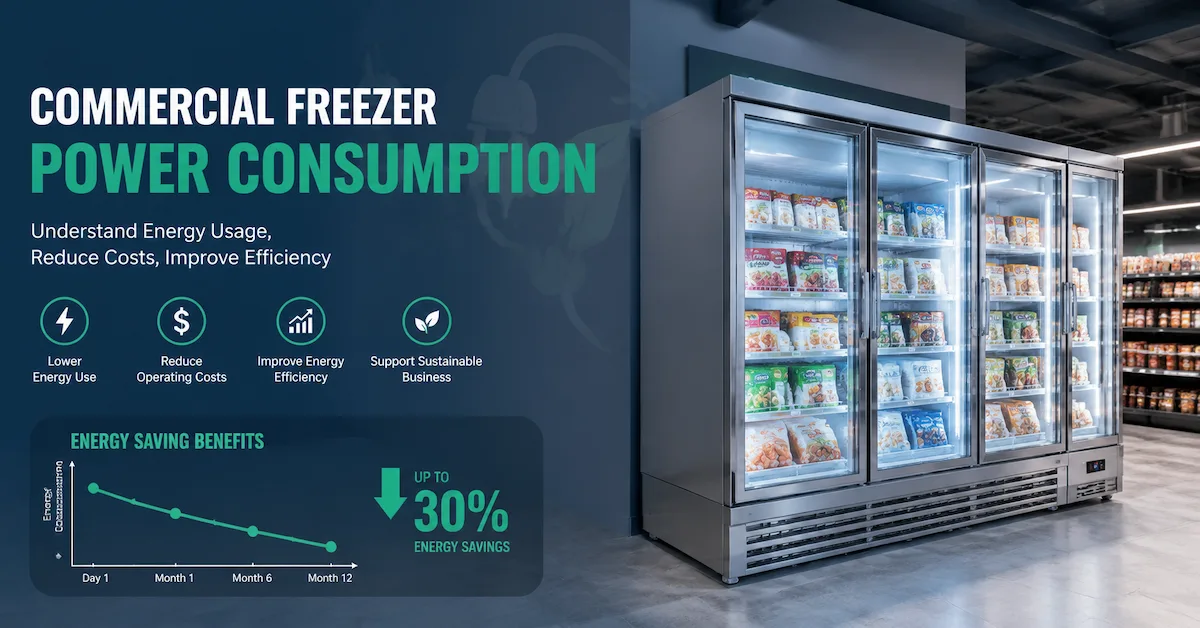
What Is Commercial Freezer Power Consumption?
Commercial Freezer Power Consumption refers to the amount of electrical energy a commercial freezer uses during operation.
For B2B buyers, electricity usage is an important part of the total cost of ownership because commercial freezers often operate continuously in:
- Supermarkets
- Restaurants
- Hotels
- Catering kitchens
- Convenience stores
- Food storage facilities
However, the rated power shown on a specification sheet does not represent the actual electricity consumed every day.
Several factors affect real energy usage, including:
- Compressor operating cycles
- Ambient temperature
- Door opening frequency
- Product loading
- Insulation performance
- Temperature settings
- Maintenance condition
A freezer with a higher rated wattage may still consume less energy overall if it has better efficiency and thermal design.
Snowsea provides commercial refrigeration products for global B2B buyers, distributors, supermarkets, and food-service businesses.
Power Rating vs Actual Energy Consumption
Many buyers confuse power rating with electricity usage.
Power Rating (W)
Power rating indicates the electrical power required when the equipment is operating.
Example:
A commercial freezer may have:
- Rated power: 500W
This means it requires 500 watts during operation.
Energy Consumption (kWh)
Energy consumption measures the electricity used over time.
The common unit is:
kWh (kilowatt-hour)
Electricity bills are usually calculated based on kWh usage.
A freezer does not usually run at full power 24 hours continuously because the compressor cycles on and off according to temperature demand.
How Is Commercial Freezer Electricity Usage Calculated?
A basic calculation method is:
Daily Energy Consumption (kWh) = Power (kW) × Operating Time (hours)
Example:
A freezer rated at 500W:
500W = 0.5kW
If it operates continuously:
0.5kW × 24 hours = 12kWh/day
However, actual consumption may be lower or higher depending on:
- Compressor cycle frequency
- Room temperature
- Product load
- Door opening
Professional energy evaluation should consider real operating conditions.
Commercial Freezer Power Consumption by Type
Different freezer designs have different energy characteristics.
| Freezer Type | General Energy Characteristics |
|---|---|
| Upright Freezer | Efficient vertical storage but frequent door access can affect usage |
| Chest Freezer | Often lower heat loss due to top-opening design |
| Glass Door Freezer | Higher energy demand due to display requirements |
| Large Storage Freezer | Higher total consumption due to larger cooling volume |
Actual energy consumption depends on:
- Capacity
- Compressor technology
- Insulation
- Door structure
- Operating environment
What Factors Affect Commercial Freezer Power Consumption?
Compressor Efficiency
The compressor is one of the most important components affecting energy usage.
A more efficient compressor can help:
- Reduce running time
- Improve cooling performance
- Lower electricity costs
- Extend equipment life
Important factors include:
- Compressor quality
- Refrigeration system design
- Control technology
For reliability evaluation, buyers can review Snowsea's commercial freezer compressor reliability guide.
Cabinet Insulation Performance
Insulation reduces heat transfer between the outside environment and the freezer interior.
Better insulation helps:
- Maintain stable temperatures
- Reduce compressor workload
- Lower energy consumption
Important design factors include:
- Foam thickness
- Cabinet structure
- Material quality
- Door insulation
Poor insulation can cause the refrigeration system to work harder.
Door Gasket Sealing
A damaged or weak gasket allows cold air to escape.
This can lead to:
- Longer compressor operation
- Higher electricity consumption
- Frost buildup
- Temperature instability
Regular inspection of:
- Door seals
- Hinges
- Closing performance
helps maintain efficiency.
Snowsea's commercial freezer door gasket sealing guide explains why sealing performance affects energy usage.
Temperature Settings
Lower temperature settings generally require more cooling effort.
However, choosing the lowest possible temperature is not always the most efficient approach.
Businesses should select temperature settings according to:
- Product requirements
- Storage duration
- Food safety needs
For temperature planning, see Snowsea's commercial freezer temperature range guide.
Ambient Temperature
The installation environment strongly affects energy consumption.
High surrounding temperatures may increase:
- Compressor running time
- Cooling load
- Electricity usage
Installation conditions should consider:
- Ventilation
- Heat sources
- Direct sunlight
- Room temperature
Door Opening Frequency
Frequent door opening increases heat exchange.
Common high-frequency environments include:
- Supermarkets
- Convenience stores
- Restaurant kitchens
Effects include:
- Warm air entering the cabinet
- Longer cooling cycles
- Increased energy demand
Glass door systems and proper airflow design can help reduce unnecessary losses.
Product Loading Methods
Loading affects both cooling performance and energy consumption.
Common problems include:
- Overloading
- Blocking air outlets
- Loading warm products
- Poor product arrangement
Proper organization improves:
- Air circulation
- Cooling efficiency
- Temperature stability
Snowsea's commercial freezer airflow circulation design guide explains how airflow affects refrigeration performance.
Commercial Freezer Energy Consumption Cost Calculation
Businesses can estimate operating costs using:
Monthly Electricity Cost = Daily kWh × 30 × Electricity Price
Example:
Daily consumption:
10kWh/day
Electricity price:
$0.15/kWh
Monthly cost:
10 × 30 × 0.15 = $45/month
This calculation helps buyers compare different freezer models based on long-term operation rather than only purchase price.
Energy Efficient Commercial Freezer Technologies
Modern commercial freezers use several technologies to improve efficiency.
High Efficiency Compressor
Benefits include:
- Lower energy usage
- Stable cooling
- Reduced operating cost
Improved Cabinet Insulation
Better insulation helps maintain internal temperatures with less compressor operation.
Digital Temperature Controller
Digital controllers improve:
- Temperature accuracy
- System management
- Energy optimization
LED Lighting
LED lighting produces less heat compared with traditional lighting systems.
This can reduce additional cooling demand.
Optimized Airflow Design
Proper airflow improves:
- Temperature uniformity
- Cooling efficiency
- Product protection
How to Reduce Commercial Freezer Electricity Costs
Businesses can improve energy efficiency through daily operation and maintenance.
Maintain Door Sealing
Check:
- Gasket condition
- Door alignment
- Closing performance
Clean Condenser Regularly
Dust buildup can reduce heat exchange efficiency.
A cleaner condenser helps the refrigeration system operate more effectively.
Avoid Overloading
Overloading may:
- Restrict airflow
- Increase cooling workload
- Reduce efficiency
Keep Proper Temperature Settings
Avoid unnecessary low-temperature settings when product requirements do not require them.
Improve Installation Environment
Avoid placing freezers near:
- Heat sources
- Poor ventilation areas
- Direct sunlight
Choose Correct Capacity
An oversized freezer may waste space and energy.
An undersized freezer may operate under excessive load.
Capacity should match actual business requirements.
For capacity planning, see Snowsea's commercial freezer capacity guide.
Does a Bigger Commercial Freezer Consume More Electricity?
Not necessarily.
A larger freezer usually requires more cooling capacity, but actual energy consumption depends on:
- Energy efficiency design
- Insulation quality
- Compressor performance
- Usage pattern
A well-designed large freezer may consume less energy per storage volume than a poorly designed smaller freezer.
Initial Price vs Long-Term Operating Cost
When purchasing commercial refrigeration equipment, buyers should consider total cost of ownership.
A lower purchase price may result in:
- Higher electricity bills
- More maintenance
- Shorter service life
A more efficient freezer may have:
- Higher initial investment
- Lower operating expenses
- Better long-term value
For B2B buyers, energy efficiency should be evaluated together with:
- Purchase cost
- Maintenance cost
- Expected lifespan
- Operating environment
How Suppliers Test Commercial Freezer Energy Efficiency
Professional manufacturers evaluate energy performance through testing.
Common evaluations include:
Power Consumption Test
Measures electricity usage under controlled conditions.
Temperature Performance Test
Checks whether the freezer maintains required temperatures.
Load Test
Evaluates performance under realistic product conditions.
Energy Efficiency Evaluation
Compares cooling performance with electricity consumption.
Quality Inspection
Checks:
- Compressor operation
- Insulation
- Sealing
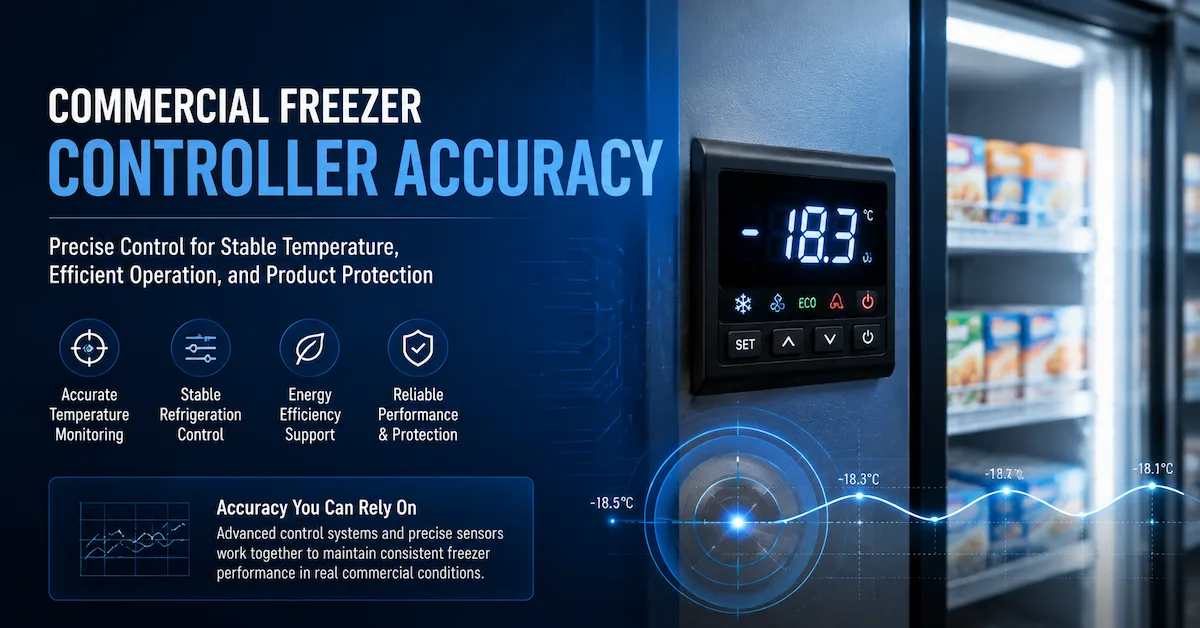
- Controller accuracy
Snowsea's commercial freezer quality testing procedure provides more information about product evaluation.
Common Commercial Freezer Energy Problems
High Electricity Consumption
Possible causes:
- Poor insulation
- Dirty condenser
- Door leakage
- Incorrect temperature settings
Long Compressor Running Time
Possible causes:
- High ambient temperature
- Overloading
- Refrigeration system issues
Temperature Instability
Possible causes:
- Airflow problems
- Frequent opening
- Poor sealing
Frost Buildup
Possible causes:
- Door gasket problems
- Humidity
- Defrost issues
How to Select an Energy Efficient Commercial Freezer
Buyers should evaluate:
1. Application
Identify:
- Store type
- Product category
- Usage frequency
2. Capacity Requirement
Choose capacity based on:
- Inventory volume
- Storage cycle
- Future demand
3. Temperature Requirement
Match freezer performance with product needs.
4. Energy Performance
Compare:
- Power consumption data
- Compressor efficiency
- Insulation design
5. Supplier Capability
Evaluate:
- Manufacturing experience
- Testing procedures
- After-sales support
What Information Should You Send a Freezer Supplier?
For accurate energy and model recommendations, buyers should provide:
- Application type
- Required capacity
- Freezer type
- Operating environment
- Temperature requirements
- Expected daily usage
- Quantity
- Destination market
- Voltage requirements
- Certification needs
FAQ
How much electricity does a commercial freezer use?
Electricity usage depends on freezer capacity, compressor efficiency, temperature settings, environment, and operating habits.
How do I calculate commercial freezer power consumption?
Use the formula: Power (kW) × Operating Hours = Energy Consumption (kWh). Actual usage depends on operating conditions.
Do larger commercial freezers use more electricity?
Larger models generally require more cooling capacity, but efficiency depends on design, insulation, and compressor performance.
Are chest freezers more energy efficient than upright freezers?
Chest freezers often reduce cold air loss because they open from the top, but the best choice depends on application and usage requirements.
How can I reduce commercial freezer electricity costs?
Maintain door seals, clean condensers, avoid overloading, select proper temperatures, and choose energy-efficient equipment.
Does freezer temperature affect electricity consumption?
Yes. Lower temperature settings usually require more cooling effort and may increase energy use.
Why is my commercial freezer using too much power?
Possible reasons include poor sealing, dirty components, incorrect installation, overloading, or refrigeration system issues.
Are energy-efficient commercial freezers worth the higher price?
For businesses with continuous operation, lower energy costs over time can offset higher initial investment.
How do suppliers test freezer energy efficiency?
Manufacturers may perform power consumption tests, temperature tests, load tests, and system performance evaluations.
Can Snowsea recommend an energy-efficient commercial freezer?
Yes. Snowsea can recommend suitable refrigeration solutions based on application, capacity, temperature requirements, and operating conditions.
Conclusion
Understanding Commercial Freezer Power Consumption helps businesses make smarter refrigeration purchasing decisions.
Energy cost is not determined only by freezer size or rated power. Real performance depends on compressor efficiency, insulation quality, temperature settings, door sealing, airflow design, maintenance, and operating environment.
For supermarkets, restaurants, catering companies, and food-service businesses, choosing an energy-efficient commercial freezer can reduce long-term operating costs while improving refrigeration reliability.
Snowsea supports global B2B buyers with commercial refrigeration products and OEM/ODM solutions. Explore Snowsea's commercial refrigeration products, review its OEM/ODM solutions, or contact Snowsea with your application, energy requirements, capacity needs, and project details.