What Is Commercial Freezer Rated Input Power?
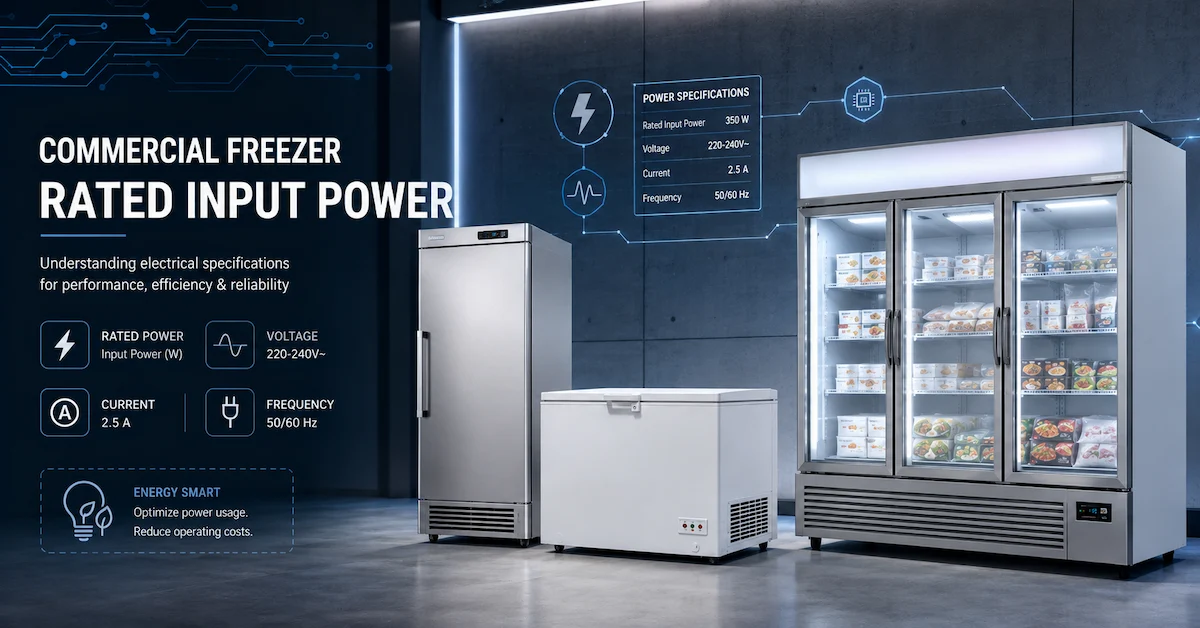
Commercial Freezer Rated Input Power refers to the amount of electrical power a commercial freezer requires under rated operating conditions.
It is usually shown on product specification sheets or nameplates with units such as:
- W (Watts)
- kW (Kilowatts)
For example:
Rated Input Power: 500W
This means the freezer is designed to use approximately 500 watts of electrical power when operating under specified conditions.
For commercial buyers, this specification helps evaluate:
- Electrical installation requirements
- Power supply compatibility
- Equipment operating conditions
- Potential energy costs
However, rated input power should not be confused with actual daily electricity consumption.
Snowsea provides commercial refrigeration products for supermarkets, restaurants, distributors, food-service businesses, and global B2B buyers.
Rated Input Power vs Power Consumption: What Is the Difference?
Many buyers confuse rated input power with energy consumption.
They are related but represent different concepts.
| Term | Meaning |
|---|---|
| Rated Input Power | Electrical power required at a specific operating condition |
| Energy Consumption | Total electricity used over a period of time |
| Power Rating | Electrical specification shown on equipment data |
| Operating Cost | Actual electricity expense during use |
For example:
A freezer with:
Rated Input Power: 500W
does not necessarily consume:
0.5kW × 24 hours = 12kWh every day.
The compressor normally cycles on and off depending on:
- Temperature demand
- Ambient conditions
- Product load
- Door opening frequency
For actual operating costs, buyers should evaluate Commercial Freezer Power Consumption rather than only rated input power.
How to Read a Commercial Freezer Specification Label
Commercial freezer nameplates usually include important electrical information.
Example:
| Specification | Example Value |
|---|---|
| Rated Voltage | 220V |
| Frequency | 50Hz |
| Rated Input Power | 500W |
| Rated Current | 2.5A |
| Refrigerant | R290 |
| Temperature Range | -18°C to -22°C |
These specifications help buyers confirm whether equipment matches local requirements.
Important items include:
Rated Voltage
Common commercial markets use:
- 110V
- 220V
- 230V
- 380V
The freezer must match the local electrical system.
Frequency
Common frequencies include:
- 50Hz
- 60Hz
Frequency compatibility affects electrical performance.
Rated Input Power
This indicates the expected electrical power demand during operation.
Rated Current
Current value helps determine:
- Circuit requirements
- Electrical protection
- Installation safety
Relationship Between Voltage, Current and Input Power
Electrical power is related to voltage and current.
The basic formula is:
Power (W) = Voltage (V) × Current (A)
Example:
220V × 2.5A = 550W
In real commercial refrigeration systems, factors such as:
- Compressor efficiency
- Power factor
- Control system
- Operating conditions
also influence actual electrical performance.
Why Rated Input Power Matters for Commercial Buyers
For B2B buyers, rated input power is not just a technical number.
It affects several purchasing decisions.
Electrical Installation Planning
Before installation, buyers need to confirm:
- Available power supply
- Circuit capacity
- Outlet configuration
- Electrical protection
This is especially important for:
- Supermarkets
- Cold rooms
- Commercial kitchens
- Large retail projects
Safety and Compatibility
Incorrect electrical matching may lead to:
- Circuit overload
- Equipment malfunction
- Installation delays
Buyers should confirm electrical specifications before shipment.
Operating Cost Estimation
Although rated input power does not equal actual electricity usage, it provides a reference for estimating potential energy demand.
Combined with:
- Operating hours
- Electricity price
- Usage environment
it helps create a cost estimate.
Rated Input Power of Different Commercial Freezer Types
Different freezer designs have different electrical requirements.
| Freezer Type | General Input Power Characteristics |
|---|---|
| Upright Freezer | Medium electrical demand |
| Chest Freezer | Often lower heat loss due to top opening |
| Glass Door Freezer | Higher demand due to display lighting and frequent access |
| Large Storage Freezer | Higher cooling load requirements |
Actual input power depends on:
- Cabinet size
- Compressor selection
- Insulation performance
- Temperature requirements
- Refrigeration design
For capacity selection, buyers can also review Snowsea's commercial freezer capacity guide.
How Compressor Performance Affects Rated Input Power
The compressor is one of the main components influencing electrical input.
Factors include:
- Compressor efficiency
- Cooling capacity
- Refrigeration system design
- Refrigerant type
A more efficient compressor may provide:
- Lower electrical demand
- Better cooling performance
- Longer service life
However, buyers should evaluate input power together with cooling output.
A freezer with lower wattage is not always better if it cannot maintain required temperatures.
For component reliability evaluation, see Snowsea's commercial freezer compressor reliability guide.
Starting Power vs Rated Input Power
Commercial freezers may require higher electrical current during compressor startup.
This is different from normal operating input power.
Starting Power
Occurs when:
- Compressor starts
- Motor begins operation
It may create a short-term power surge.
Rated Input Power
Represents normal operating electrical demand.
This difference matters for:
- Generator selection
- Electrical system planning
- Large refrigeration installations
Project buyers should confirm both normal and startup requirements when necessary.
Rated Input Power and Energy Efficiency
A common mistake is judging freezer efficiency only by input power.
Lower input power does not always mean better performance.
Buyers should also evaluate:
- Cooling capacity
- Temperature stability
- Insulation quality
- Compressor efficiency
- Energy consumption
A better evaluation method is:
Cooling Performance / Electrical Input
A freezer that uses slightly more power but provides significantly better cooling efficiency may deliver better long-term value.
For energy analysis, see Snowsea's commercial freezer power consumption guide.
How Suppliers Test Commercial Freezer Input Power
Professional manufacturers verify electrical performance through testing.
Common tests include:
Electrical Safety Testing
Checks:
- Voltage compatibility
- Current performance
- Electrical protection
Running Power Test
Measures operating input power under controlled conditions.
Temperature Performance Test
Evaluates whether the freezer maintains required temperature while operating.
Load Testing
Checks performance under realistic product conditions.
Energy Performance Evaluation
Compares:
- Electrical input
- Cooling performance
- Operating stability
Snowsea's commercial freezer quality testing procedure explains how manufacturers evaluate refrigeration performance.
Common Mistakes When Reading Freezer Power Specifications
Confusing Rated Input Power With Energy Consumption
Rated input power shows electrical demand, not daily electricity usage.
Ignoring Voltage Differences
A freezer designed for one electrical system may not work correctly in another market.
Comparing Only Wattage
Lower wattage does not always mean better refrigeration performance.
Forgetting Startup Current
Large commercial projects should consider compressor startup requirements.
Not Checking Local Electrical Standards
Import buyers should confirm:
- Voltage
- Frequency
- Certification requirements
before ordering.
How to Choose the Right Commercial Freezer Power Specification
A practical selection process includes:
Step 1: Confirm Local Electrical Conditions
Check:
- Voltage
- Frequency
- Power supply
Step 2: Understand Application Requirements
Consider:
- Store type
- Product category
- Operating environment
Step 3: Review Technical Specifications
Compare:
- Rated input power
- Cooling capacity
- Temperature range
- Energy performance
Step 4: Evaluate Total Operating Cost
Consider:
- Purchase price
- Energy usage
- Maintenance
- Equipment lifespan
Step 5: Confirm Supplier Documentation
Request:
- Specification sheet
- Electrical diagram
- Test reports
- Certification documents
What Information Should You Send a Freezer Supplier?
To receive accurate product recommendations, buyers should provide:
- Application type
- Destination country
- Local voltage and frequency
- Required freezer type
- Capacity requirement
- Temperature requirement
- Operating environment
- Quantity
- Certification requirements
- Customization needs
Providing complete information helps suppliers recommend suitable electrical specifications.
FAQ
What does commercial freezer rated input power mean?
Commercial freezer rated input power refers to the electrical power required by the freezer under rated operating conditions, usually measured in watts or kilowatts.
Is rated input power the same as electricity consumption?
No. Rated input power shows electrical demand at operation, while electricity consumption measures energy used over time.
How is commercial freezer input power calculated?
Input power is commonly related to voltage and current using the formula Power = Voltage × Current.
Does a higher wattage freezer always consume more electricity?
Not necessarily. Actual consumption depends on compressor cycles, insulation, temperature settings, and operating conditions.
Why is rated input power important for import buyers?
It helps buyers confirm electrical compatibility, installation requirements, and project planning needs.
What information should be checked on a freezer specification sheet?
Important details include voltage, frequency, rated input power, current, temperature range, refrigerant, and certifications.
Do commercial freezers have higher startup power?
Yes. Compressors may require higher current during startup compared with normal running conditions.
How can buyers compare freezer efficiency?
Compare input power together with cooling performance, temperature stability, insulation, and energy consumption.
Can Snowsea provide freezer electrical specifications?
Yes. Snowsea provides technical specifications and commercial refrigeration solutions for global B2B buyers.
Conclusion
Understanding Commercial Freezer Rated Input Power helps buyers make more accurate refrigeration purchasing decisions.
Rated input power is an important electrical specification, but it should be evaluated together with cooling performance, energy efficiency, compressor technology, and operating conditions.
For supermarkets, restaurants, distributors, and commercial refrigeration projects, reviewing electrical requirements before purchasing helps ensure reliable installation and long-term operation.
Snowsea supports global B2B buyers with commercial refrigeration products and OEM/ODM solutions. Explore Snowsea's commercial refrigeration products, review its OEM/ODM solutions, or contact Snowsea with your application, electrical requirements, capacity needs, and project details.