Why Caterers Need the Right Commercial Freezer Supplier
Catering operations place very different demands on refrigeration equipment than ordinary household use.
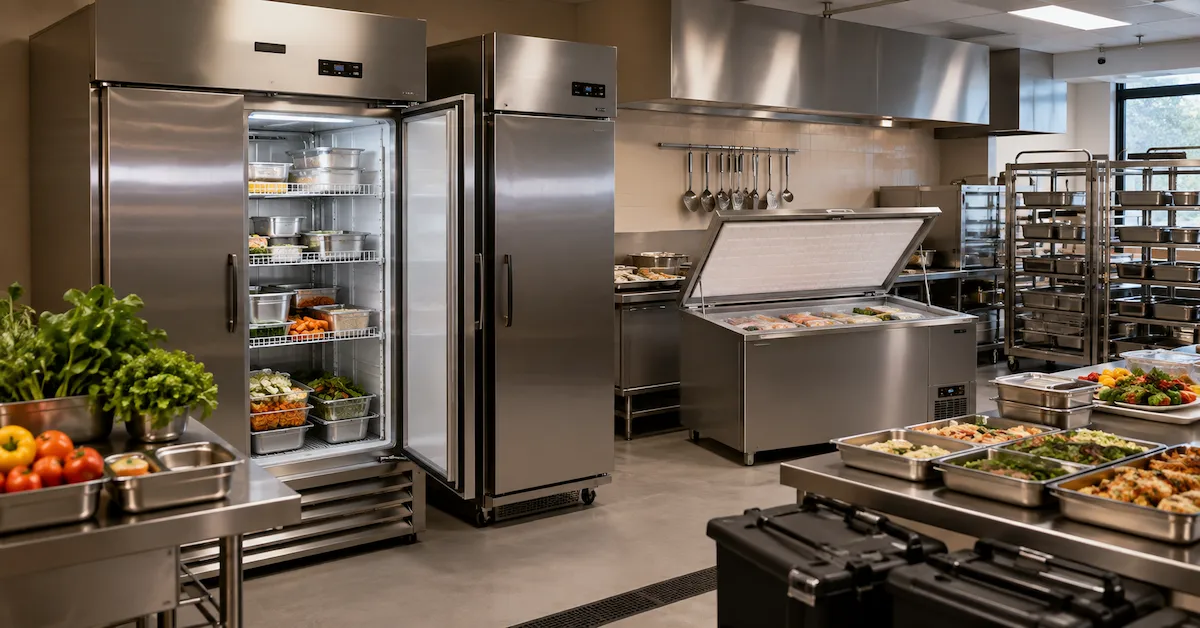
A professional Commercial Freezer Supplier for Caterers should understand that catering businesses often need to store large quantities of meat, seafood, prepared foods, desserts, sauces, and frozen ingredients while handling frequent loading and unloading during busy service periods.
Typical buyers include:
- Contract catering companies
- Central kitchens
- Hotel catering departments
- Banquet operators
- Event catering businesses
- Restaurant groups
- Institutional kitchens
- Food distribution companies
For these buyers, freezer performance directly affects kitchen workflow, food organization, operating reliability, and purchasing efficiency.
Snowsea provides commercial refrigeration products for food-service businesses, distributors, retailers, and other global B2B buyers.
What Is a Commercial Freezer Supplier for Caterers?
A Commercial Freezer Supplier for Caterers provides refrigeration equipment suitable for professional food-storage environments where capacity, durability, temperature control, and daily accessibility matter.
Unlike suppliers focused mainly on retail display, catering freezer suppliers should consider practical kitchen requirements such as:
- High-volume ingredient storage
- Frequent door opening
- Easy food organization
- Compact kitchen layouts
- Easy-clean cabinet surfaces
- Stable low-temperature performance
- Maintenance accessibility
- Spare-parts support
For large catering organizations, the supplier may also need to support multiple kitchens or recurring equipment purchases.
What Freezers Do Catering Businesses Commonly Need?
Different catering operations require different freezer formats.
Upright Freezers
Upright freezers are useful when catering teams need organized storage and fast access.
Common advantages include:
- Vertical shelving
- Smaller floor footprint
- Easy product separation
- Faster ingredient retrieval
They can be suitable for:
- Restaurant kitchens
- Hotel food preparation areas
- Central kitchens
- Banquet facilities
Snowsea's upright freezer wholesale supplier guide explains important considerations such as airflow, shelving, sealing, and refrigeration performance.
Chest Freezers
Chest freezers are useful for larger-volume frozen storage.
Typical applications include:
- Bulk meat storage
- Seafood storage
- Frozen ingredients
- Back-of-house inventory
Catering buyers should compare:
- Capacity
- Lid design
- Cabinet insulation
- Temperature recovery
- Internal organization
Snowsea's chest freezer wholesale manufacturer guide provides additional purchasing guidance.
Commercial Storage Freezers
Larger catering businesses may use several freezer types together.
For example:
| Application | Suitable Equipment |
|---|---|
| Daily-access ingredients | Upright freezer |
| Bulk stock | Chest freezer |
| Dessert or ice cream | Specialized freezer |
| Multi-kitchen inventory | Mixed freezer system |
The right equipment mix should reflect actual food flow rather than simply maximizing capacity.
How to Choose Freezer Capacity for Catering Operations
Catering buyers should calculate storage needs based on operating volume.
Important questions include:
- How many meals are prepared per day?
- How frequently are ingredients delivered?
- How much frozen safety stock is needed?
- Are seasonal events common?
- Does the business operate one kitchen or multiple sites?
A freezer that is too small creates operational pressure.
A freezer that is much larger than necessary may increase:
- Purchase cost
- Floor-space usage
- Energy consumption
Capacity planning should therefore consider both average demand and peak catering periods.
What Should Caterers Compare Between Freezer Suppliers?
A strong supplier should provide technical details that allow buyers to compare equipment objectively.
Temperature Stability
Frozen-food storage requires controlled temperature conditions.
Catering freezers may experience frequent access during:
- Morning preparation
- Event setup
- Lunch service
- Banquet production
Buyers should evaluate whether the freezer can maintain stable conditions under realistic operating patterns.
Important factors include:
- Refrigeration-system capacity
- Insulation
- Door sealing
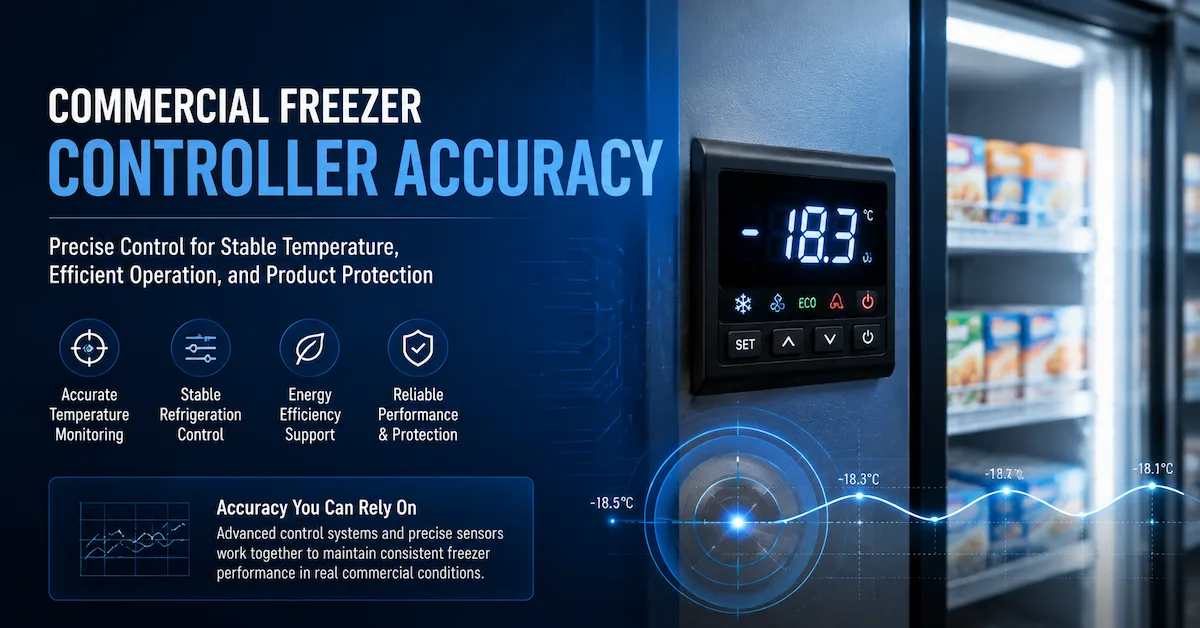
- Controller performance
- Product loading
Temperature Recovery After Frequent Access
When a freezer door or lid opens, warm air enters the cabinet.
Temperature recovery refers to how effectively the equipment returns toward the intended operating range after this disturbance.
This matters in catering environments because kitchen staff may open freezers repeatedly during preparation.
Snowsea's commercial freezer temperature recovery guide explains why recovery performance is useful when evaluating commercial refrigeration equipment.
Storage Organization
Food-service operations often need to separate:
- Raw meat
- Seafood
- Vegetables
- Prepared foods
- Desserts
Buyers should compare:
- Shelf quantity
- Shelf adjustability
- Basket options
- Internal dimensions
- Loading access
Good internal organization can reduce the time kitchen staff spend searching for ingredients.
Cabinet Materials and Cleaning
Commercial kitchens require equipment that is practical to clean and maintain.
Buyers should evaluate:
- Interior surfaces
- Exterior materials
- Corners
- Handles
- Shelf construction
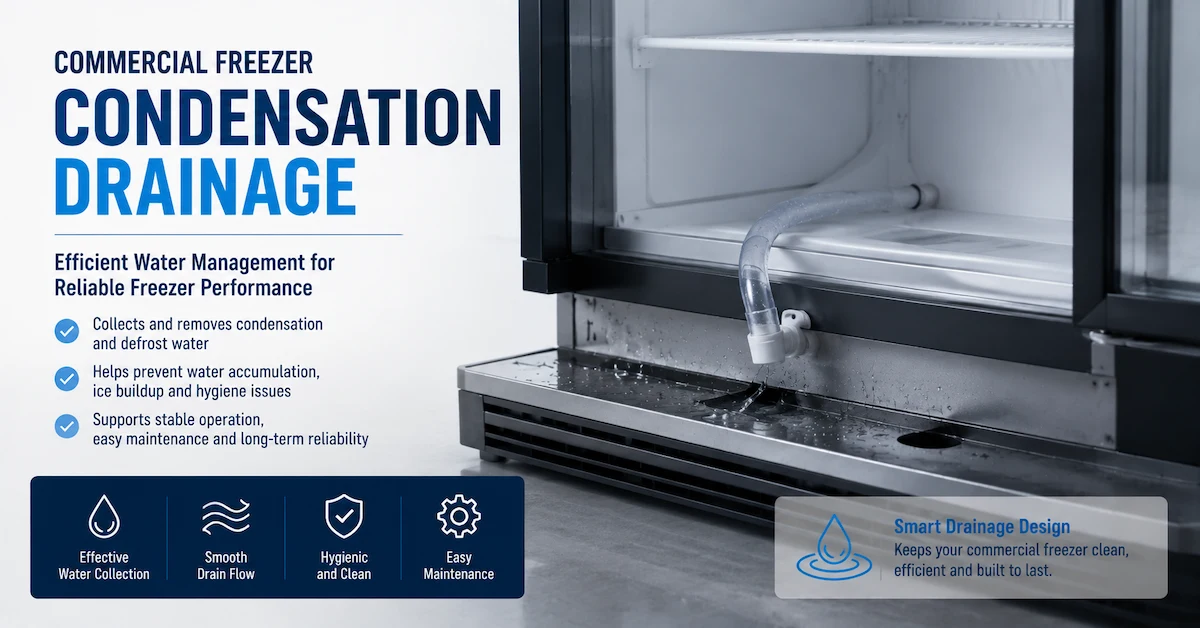
- Drainage where applicable
Stainless steel may be preferred in some catering environments because of durability and cleanability, while other coated materials may be appropriate depending on budget and application.
Snowsea's freezer cabinet anti-corrosion material guide explains how material selection affects durability in different operating environments.
Door Sealing and Insulation
Door sealing helps reduce warm-air infiltration.
Poor gasket contact can contribute to:
- Frost buildup
- Temperature fluctuation
- Longer compressor operation
Insulation also influences thermal performance.
Catering buyers should evaluate both systems together.
For additional detail, see Snowsea's freezer door gasket sealing performance and freezer cabinet insulation performance comparison.
Why Reliability Matters During Peak Catering Operations
A freezer failure during a busy event or banquet can create serious operational disruption.
Catering buyers should therefore evaluate:
- Compressor reliability
- Controller quality
- Fan operation
- Electrical components
- Service accessibility
The cheapest freezer may not provide the best value if downtime affects food preparation or scheduled events.
Reliability should be considered as part of total operating cost.
Defrost and Maintenance Requirements
Commercial freezers may use manual or automatic defrost depending on the design.
Manual Defrost
Potential advantages include:
- Simpler structure
- Fewer components
- Lower maintenance complexity
However, staff must plan periodic defrosting.
Automatic Defrost
Automatic defrost can reduce routine manual work but may involve additional:
- Heaters
- Sensors
- Controllers
- Drainage components
Catering businesses should choose based on operating frequency, maintenance resources, and freezer type.
Snowsea's manual defrost vs automatic defrost freezer guide provides a broader comparison.
How to Plan Freezers for Central Kitchens and Multiple Sites
Large catering organizations may operate:
- Central kitchens
- Satellite kitchens
- Event venues
- Hotel properties
- Regional preparation centers
Standardizing freezer models across these sites can simplify:
- Purchasing
- Staff training
- Spare parts
- Maintenance
- Replacement planning
For multi-site operations, procurement teams should define approved freezer models and technical specifications.
What Determines Commercial Catering Freezer Price?
Commercial freezer pricing depends on multiple factors.
| Cost Factor | Why It Matters |
|---|---|
| Capacity | Changes cabinet and refrigeration requirements |
| Freezer type | Upright and chest models use different structures |
| Compressor | Influences refrigeration-system cost |
| Cabinet material | Affects durability and price |
| Insulation | Influences thermal design |
| Defrost system | Changes component complexity |
| Controller | Affects operating functions |
| Quantity | Influences production efficiency |
| Customization | Adds OEM requirements |
| Packaging | Affects transportation cost |
Catering buyers should compare the same specification before comparing supplier quotations.
Bulk Orders and Project Purchasing
Large catering companies may purchase freezers for:
- Multiple kitchens
- Hotel groups
- New contracts
- Facility expansions
Buyers should ask suppliers about:
- Trial-order quantities
- MOQ
- Bulk pricing
- Mixed-model orders
- Container quantities
- Repeat-order pricing
Snowsea's commercial freezer bulk order price guide explains how quantity and model mix influence B2B purchasing economics.
OEM and Customized Freezers for Catering Brands
Catering equipment distributors and food-service groups may require customized commercial freezers.
Possible OEM options include:
- Logo
- Cabinet color
- Model number
- Product labels
- Cartons
- Manuals
More advanced projects may include different:
- Controllers
- Shelves
- Cabinet configurations
- Refrigeration specifications
Snowsea supports OEM and ODM commercial refrigeration solutions for buyers developing customized freezer programs.
Quality Testing Before Delivery
Before bulk shipment, catering buyers should understand how equipment is tested.
Important checks may include:
Refrigeration Performance
Verify:
- Cooling performance
- Temperature stability
- Compressor operation
- Controller response
Cabinet Inspection
Check:
- Door alignment
- Gasket sealing
- Shelves
- Surface condition
Electrical Inspection
Inspect:
- Wiring
- Controller
- Switches
- Fans
Final Inspection
Confirm:
- Appearance
- Labels
- Accessories
- Packaging
Snowsea's commercial freezer quality testing procedure provides a broader QC framework.
Spare Parts and Emergency Replacement Support
Catering businesses often operate on fixed schedules.
Long equipment downtime may disrupt food preparation.
Buyers should ask suppliers about:
- Spare-parts lists
- Part numbers
- Warranty procedures
- Replacement components
- Technical support
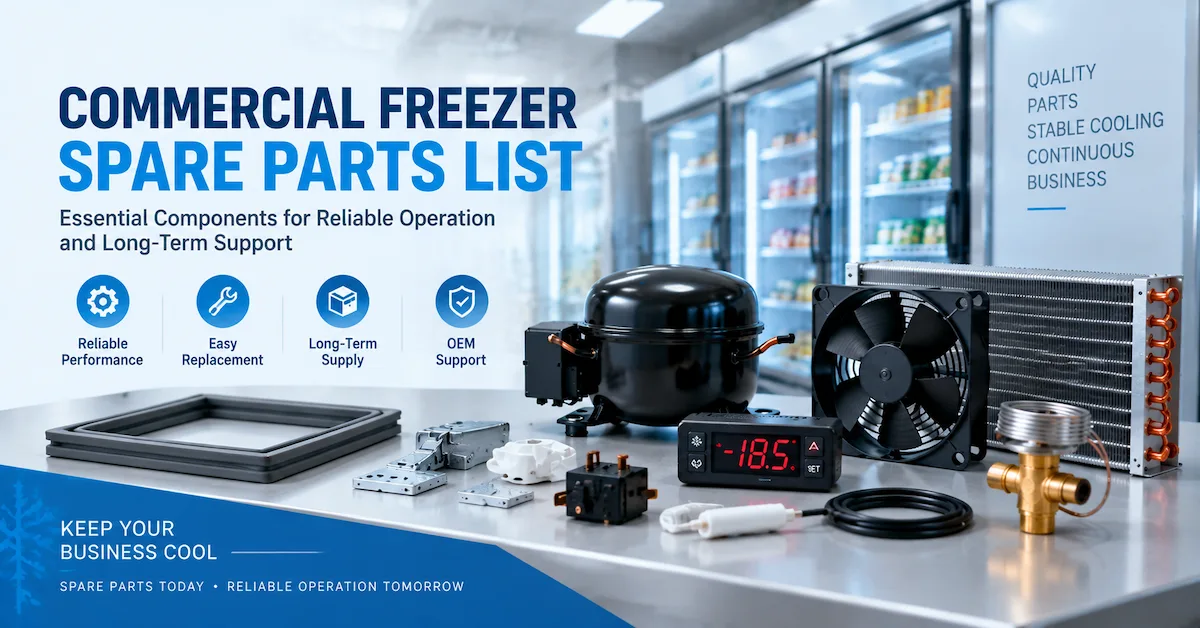
Common service parts may include:
- Controllers
- Door gaskets
- Fan motors
- Hinges
- Handles
- Electrical components
For multi-kitchen catering groups, standardizing equipment can reduce spare-parts complexity.
Export Packaging for Catering Freezers
International buyers should also evaluate export packaging.
Packaging should protect:
- Cabinet corners
- Doors
- Handles
- Compressor areas
- Exterior surfaces
Typical protection may include:
- Foam cushioning
- Protective film
- Reinforced cartons
- Corner protection
- Product fixation
Snowsea's freezer export packaging protection guide explains common transportation risks.
How to Evaluate a Commercial Freezer Supplier for Caterers
Use a structured supplier comparison.
| Evaluation Area | What Catering Buyers Should Verify |
|---|---|
| Product range | Suitable upright and chest models |
| Capacity options | Matches kitchen demand |
| Cooling performance | Stable commercial operation |
| Materials | Suitable for catering environment |
| Cleaning | Practical interior and surfaces |
| Quality control | Defined testing procedures |
| Bulk supply | Supports multiple kitchens |
| OEM capability | Customization when required |
| Spare parts | Long-term availability |
| Delivery | Reliable project schedules |
| After-sales | Technical and warranty support |
A suitable Commercial Freezer Supplier for Caterers should understand that food-service buyers value operational reliability as much as purchase price.
What Should Catering Buyers Include in an RFQ?
A professional RFQ should include:
- Catering business type
- Number of kitchens or sites
- Required freezer type
- Capacity
- Temperature range
- Expected daily usage
- Voltage and frequency
- Refrigerant requirements
- Cabinet material
- Shelf requirements
- Quantity
- Destination market
- Branding requirements
- Packaging requirements
- Certification requirements
- Spare-parts requirements
- Target delivery date
Clear specifications help suppliers provide more accurate quotations.
FAQ
What is a commercial freezer supplier for caterers?
It is a supplier or manufacturer that provides professional frozen-storage equipment for catering companies, central kitchens, hotels, and other food-service operations.
What type of freezer is best for catering businesses?
Upright freezers are useful for organized daily access, while chest freezers are often suitable for larger-volume bulk storage.
How should caterers calculate freezer capacity?
Consider daily meal volume, delivery frequency, inventory levels, peak events, and available kitchen space.
Why is temperature recovery important in catering kitchens?
Frequent freezer access allows warm air into the cabinet, so good recovery performance helps restore appropriate storage conditions after opening.
Are stainless steel freezers better for catering?
Stainless steel can offer durability and easy cleaning, but the best material depends on operating conditions, budget, and application.
Can catering companies buy commercial freezers in bulk?
Yes. Larger buyers can request volume pricing, mixed-model orders, and project-based purchasing arrangements.
Can catering freezers be customized?
Depending on the project, suppliers may support logos, colors, labels, packaging, shelving, and selected technical configurations.
What spare parts should catering companies keep?
Common parts may include controllers, gaskets, fan motors, hinges, handles, and electrical components.
What quality tests should be completed before delivery?
Typical checks include refrigeration performance, temperature stability, electrical functions, door sealing, cabinet condition, and packaging.
Can Snowsea supply commercial freezers for catering projects?
Snowsea supports commercial refrigeration wholesale and OEM/ODM projects. Catering buyers can provide freezer types, capacities, quantities, destination markets, and customization requirements for evaluation.
Conclusion
Choosing the right Commercial Freezer Supplier for Caterers requires evaluating how equipment performs under real food-service conditions rather than focusing only on cabinet capacity and initial price.
For catering companies, central kitchens, hotels, and food-service operators, temperature stability, recovery performance, storage organization, cabinet materials, maintenance, reliability, spare-parts support, and supplier responsiveness all influence long-term value.
A reliable Commercial Freezer Supplier for Caterers should be able to support both daily kitchen operations and larger multi-site procurement programs with consistent products and dependable service.
Snowsea supports commercial refrigeration projects for global food-service and B2B buyers. Explore Snowsea's commercial refrigeration products, review its OEM/ODM solutions, or contact Snowsea with your catering application, freezer requirements, quantity, and target market.