What Is Commercial Freezer Temperature Range?
The Commercial Freezer Temperature Range refers to the operating temperature zone that a commercial freezer maintains during normal operation.
Unlike household freezers designed for general storage, commercial freezers are used in demanding environments such as:
- Supermarkets
- Restaurants
- Catering kitchens
- Hotels
- Food processing facilities
- Frozen food retailers
Commercial buyers need to consider more than the lowest temperature a freezer can reach.
Important temperature factors include:
- Target temperature
- Operating range
- Temperature stability
- Recovery performance
- Temperature uniformity
A freezer that reaches a very low temperature but cannot maintain stability during frequent use may not provide the best business value.
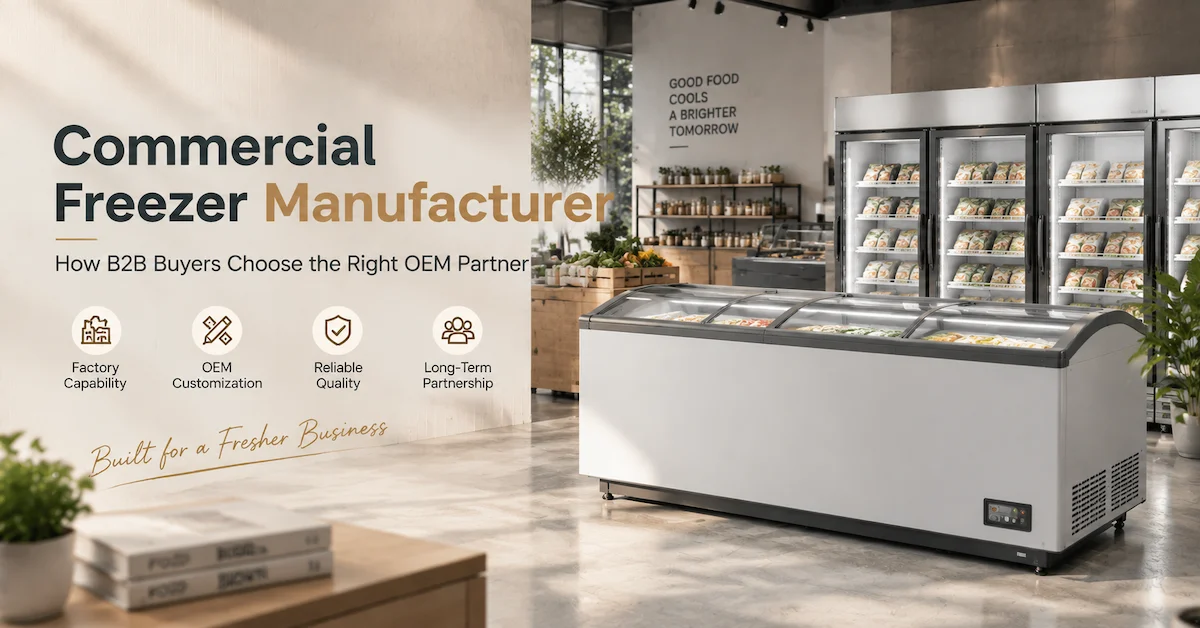
Snowsea provides commercial refrigeration products for global B2B buyers, distributors, supermarkets, and food-service businesses.
What Temperature Should a Commercial Freezer Be?
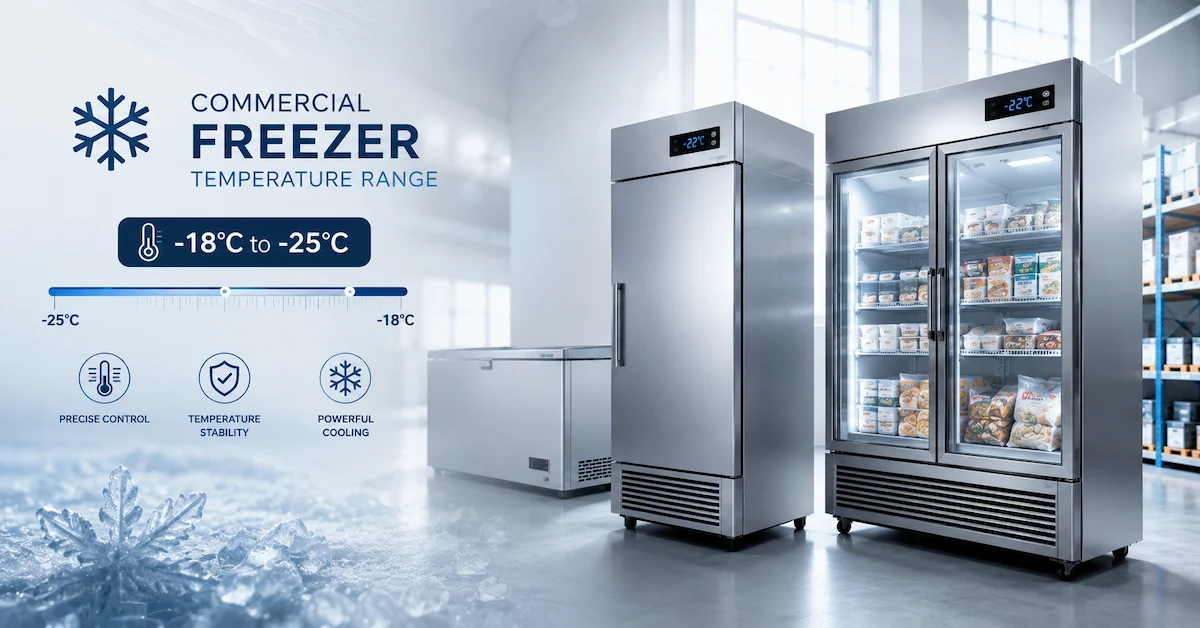
For many frozen food applications, commercial freezers typically operate around:
-18°C to -22°C (-0.4°F to -7.6°F)
However, the ideal setting depends on:
- Product type
- Storage duration
- Local regulations
- Business application
- Equipment design
The following ranges are general references:
| Application | Typical Temperature Range |
|---|---|
| Frozen food storage | Around -18°C to -22°C |
| Ice cream storage | Around -20°C to -25°C |
| Meat storage | Around -18°C or lower |
| Seafood storage | Around -18°C to -25°C |
| Supermarket display freezer | Around -18°C |
Actual requirements may vary depending on product specifications, market regulations, and freezer design.
Commercial Freezer Temperature Range by Application
Different industries have different temperature priorities.
Restaurant Freezer Temperature Requirements
Restaurants usually store:
- Meat
- Seafood
- Frozen ingredients
- Prepared food
- Desserts
The freezer should provide:
- Stable temperature
- Fast recovery after opening
- Easy product organization
Restaurant kitchens often open freezer doors frequently, so temperature recovery is just as important as the minimum temperature.
For space and equipment selection, buyers can also review Snowsea's commercial freezer supplier for caterers guide.
Supermarket Freezer Temperature Requirements
Supermarkets require temperature performance for both storage and customer-facing display.
Challenges include:
- Frequent door opening
- High customer traffic
- Product loading during business hours
- Long operating periods
Important factors include:
- Temperature uniformity
- Glass door performance
- Air circulation
- Defrost control
For larger retail applications, see Snowsea's supermarket freezer project supplier guide.
Ice Cream Freezer Temperature Requirements
Ice cream products often require lower temperatures compared with many frozen foods.
Temperature affects:
- Product texture
- Hardness
- Customer experience
- Storage quality
Ice cream businesses usually need freezers designed for stable low-temperature operation.
For product-specific selection, see Snowsea's ice cream freezer wholesale supplier guide.
Catering Freezer Temperature Requirements
Catering companies often handle large quantities of frozen ingredients.
Their challenges include:
- Large product loading
- Frequent inventory changes
- Event-based demand
- Multiple storage cycles
A suitable freezer should maintain temperature stability even during intensive use.
Why Temperature Stability Matters More Than Lowest Temperature
Some buyers focus only on the lowest temperature a freezer can achieve.
However, commercial refrigeration performance depends more on maintaining consistent conditions.
A freezer that reaches -30°C but frequently fluctuates may create problems such as:
- Frost buildup
- Product quality changes
- Higher energy consumption
- Increased compressor workload
A well-designed commercial freezer should balance:
- Cooling capability
- Temperature stability
- Energy efficiency
- Operating reliability
Factors That Affect Commercial Freezer Temperature
Many factors influence actual freezer performance.
Ambient Temperature
The surrounding environment affects refrigeration efficiency.
High ambient temperatures can increase:
- Compressor running time
- Cooling load
- Energy consumption
Installation location matters.
Freezers placed near:
- Heat sources
- Direct sunlight
- Poor ventilation areas
may experience reduced performance.
Door Opening Frequency
Every door opening allows warmer air to enter.
Frequent opening may cause:
- Temperature fluctuations
- Frost formation
- Longer cooling cycles
This is especially important for:
- Supermarkets
- Convenience stores
- Restaurants
Product Loading
Loading methods directly affect temperature performance.
Problems may occur when:
- Hot products are loaded
- Cabinets are overloaded
- Air outlets are blocked
Proper product arrangement helps maintain airflow.
See Snowsea's commercial freezer airflow circulation design guide.
Insulation Performance
Good insulation reduces heat transfer.
Important insulation factors include:
- Cabinet structure
- Foam thickness
- Door sealing
- Material quality
Poor insulation can increase compressor operation and reduce temperature stability.
Door Gasket Sealing
A damaged or weak door gasket can allow warm air infiltration.
Common results include:
- Frost around doors
- Temperature instability
- Higher energy use
Snowsea's commercial freezer door gasket sealing guide explains why sealing performance affects freezer operation.
How Commercial Freezer Temperature Control Works
Modern commercial freezers typically use several components to maintain temperature.
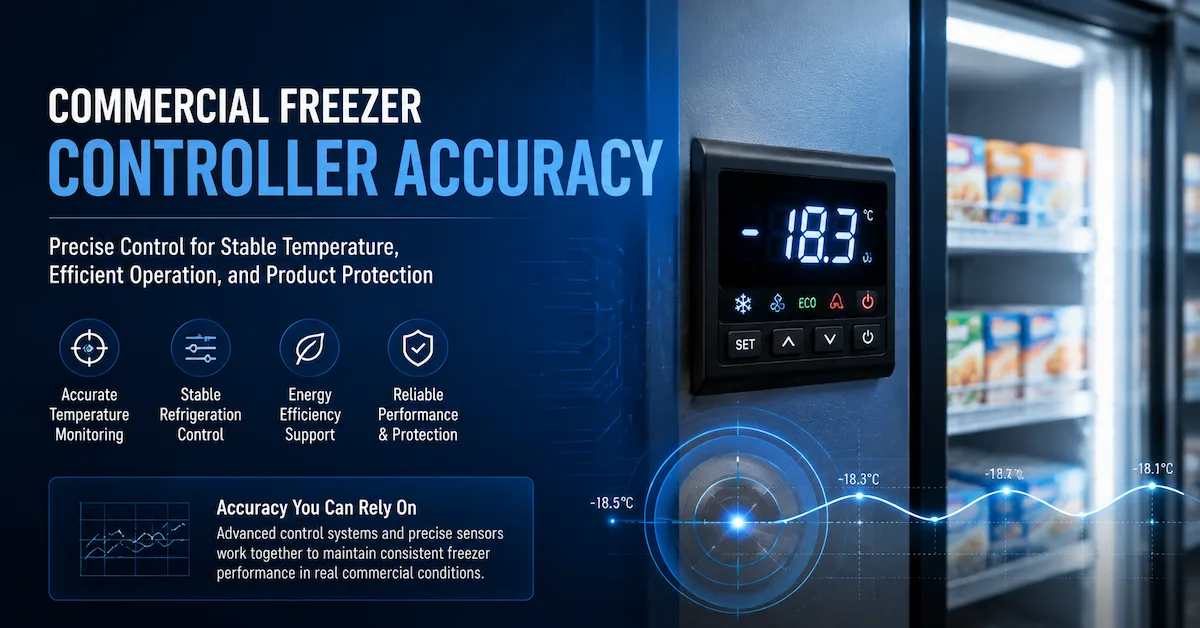
Thermostat
The thermostat detects temperature changes and controls cooling operation.
Digital Controller
Digital controllers allow users to:
- Set temperature
- Monitor operation
- Adjust parameters
- Check alarms
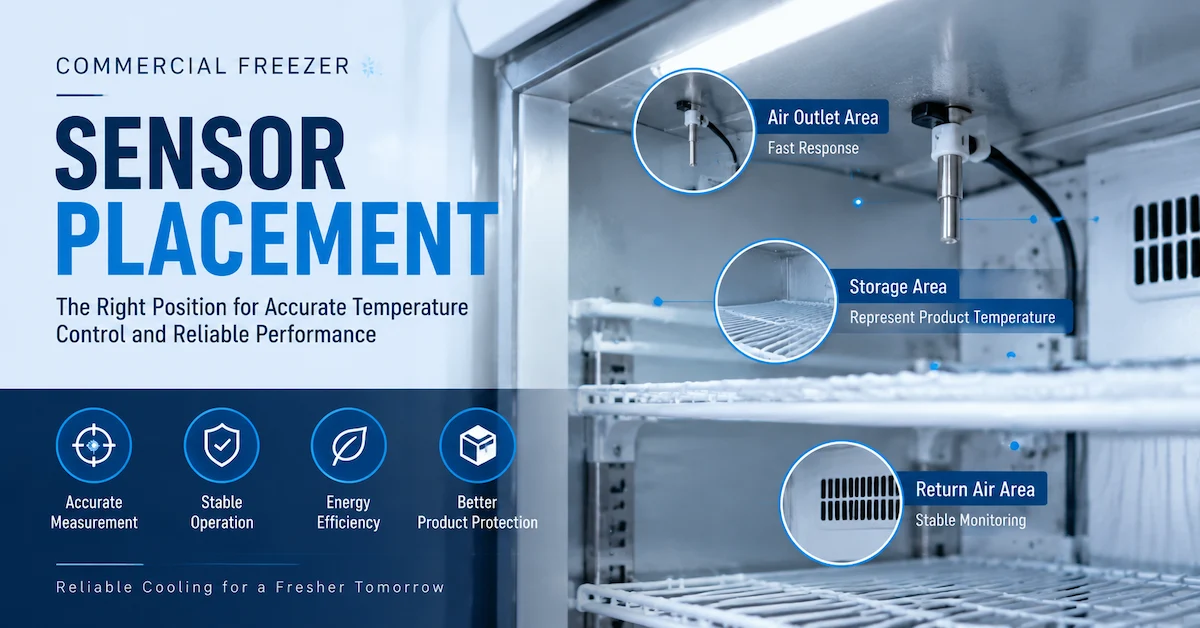
Temperature Sensor
Sensors provide real-time temperature information to the control system.
Compressor Control
The compressor starts and stops according to cooling demand.
Efficient compressor control helps balance:
- Cooling performance
- Energy consumption
- Equipment life
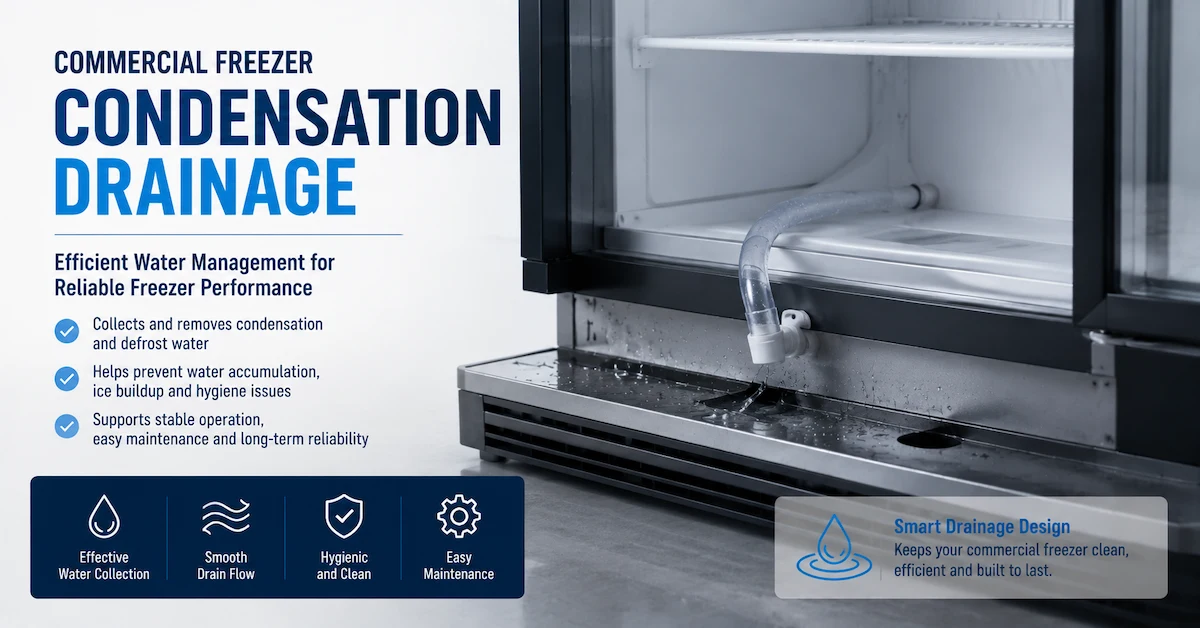
Defrost System
Defrost design affects temperature stability.
A freezer must remove frost buildup while minimizing temperature fluctuation.
Temperature Recovery After Door Opening
Temperature recovery refers to how quickly a freezer returns to its normal operating range after disturbance.
Common causes of temperature changes include:
- Door opening
- Product loading
- High customer traffic
- Cleaning operations
A freezer with good recovery performance can maintain better product protection.
Snowsea's commercial freezer temperature recovery guide provides more details about this performance factor.
Manual Defrost vs Automatic Defrost Temperature Performance
Different defrost systems influence temperature behavior.
| Feature | Manual Defrost | Automatic Defrost |
|---|---|---|
| Temperature fluctuation | Usually lower | May fluctuate during cycles |
| Maintenance | More manual work | More automated |
| Structure | Simpler | More components |
| Application | Long-term storage | Frequent-access applications |
The right choice depends on:
- Usage frequency
- Maintenance capability
- Product requirements
How Suppliers Test Commercial Freezer Temperature
Professional manufacturers evaluate temperature performance through testing.
Common tests include:
Pull-Down Test
Measures how quickly the freezer reaches the target temperature.
Temperature Mapping
Checks temperature distribution in different cabinet areas.
Load Test
Evaluates performance under realistic product conditions.
Recovery Test
Measures temperature return after door opening or loading.
Ambient Condition Test
Checks performance under different environmental temperatures.
Snowsea's commercial freezer quality testing procedure explains how suppliers evaluate product reliability before delivery.
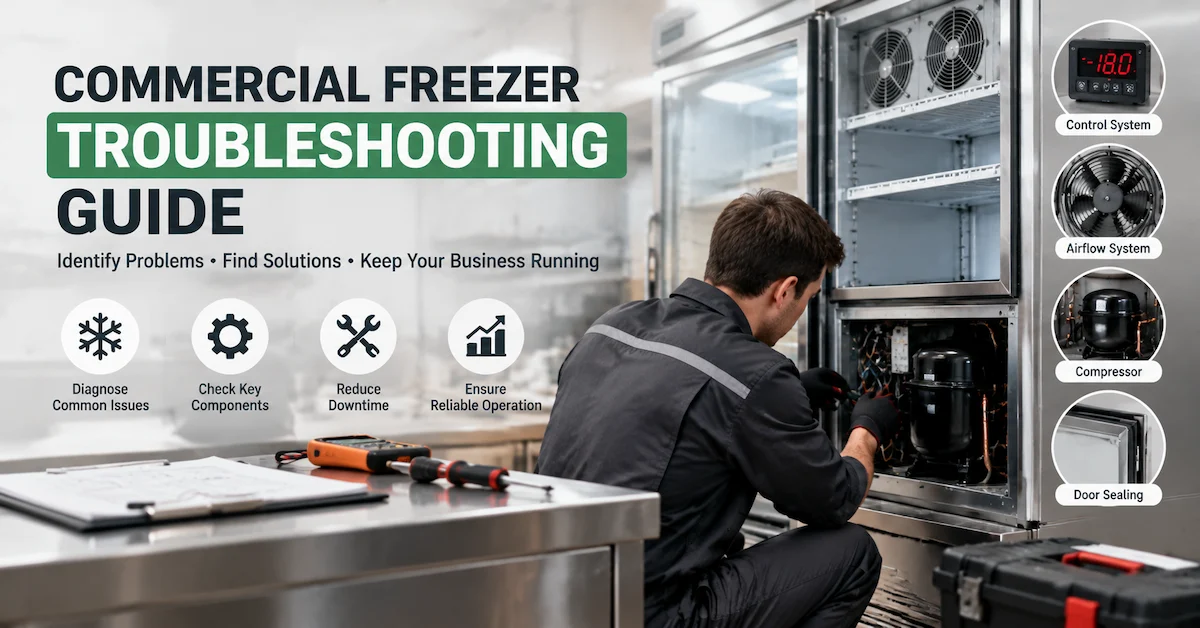
Common Commercial Freezer Temperature Problems
Freezer Not Cold Enough
Possible causes:
- Dirty condenser
- Poor door sealing
- Overloading
- Incorrect settings
- Refrigeration system issues
Temperature Fluctuation
Possible causes:
- Frequent opening
- Poor airflow
- Incorrect product loading
- Environmental temperature changes
Excess Frost Formation
Possible causes:
- Door gasket problems
- High humidity
- Defrost system issues
Compressor Running Continuously
Possible causes:
- Excessive heat load
- Poor insulation
- Refrigeration problems
- Incorrect installation
How to Choose the Right Temperature Range for Your Business
A practical selection process:
Step 1: Identify Products
Determine what will be stored:
- Frozen food
- Meat
- Seafood
- Ice cream
- Prepared meals
Step 2: Confirm Required Temperature
Match the freezer operating range with product requirements.
Step 3: Select the Correct Freezer Type
Consider:
- Upright freezer
- Chest freezer
- Glass door freezer
- Storage freezer
Step 4: Evaluate Temperature Stability
Review:
- Recovery performance
- Temperature uniformity
- Control system
Step 5: Confirm Supplier Testing
Ask about:
- Test methods
- Quality inspection
- Performance verification
What Information Should You Send a Freezer Supplier?
To receive accurate recommendations, buyers should provide:
- Application type
- Product category
- Required temperature range
- Storage capacity
- Operating environment
- Door opening frequency
- Quantity required
- Destination market
- Voltage requirements
- Certification requirements
This information helps suppliers recommend suitable refrigeration solutions.
FAQ
What is the normal commercial freezer temperature range?
Many commercial freezers operate around -18°C to -22°C, but the ideal range depends on product type and application requirements.
What temperature should a commercial freezer be set at?
Most frozen food applications use settings around -18°C or lower, but specific products may require different temperatures.
Is colder always better for commercial freezers?
No. Extremely low temperatures may increase energy use without providing additional business value if product requirements are already satisfied.
Why does commercial freezer temperature fluctuate?
Common causes include door opening, product loading, ambient temperature, airflow problems, and sealing issues.
What temperature is best for ice cream freezers?
Ice cream often requires lower temperatures, commonly around -20°C to -25°C depending on product requirements.
How does door opening affect freezer temperature?
Frequent opening allows warm air inside, causing temperature changes and requiring the refrigeration system to recover.
How can I improve commercial freezer temperature stability?
Improve installation conditions, maintain door seals, avoid overloading, and choose equipment with suitable refrigeration performance.
Do commercial freezers need temperature monitoring?
Yes. Temperature monitoring helps businesses identify problems early and maintain storage conditions.
How do suppliers test freezer temperature performance?
Manufacturers may use pull-down tests, temperature mapping, load tests, recovery tests, and ambient condition tests.
Can Snowsea recommend the right freezer temperature range?
Yes. Snowsea can evaluate application, product type, storage requirements, and operating conditions to recommend suitable commercial refrigeration solutions.
Conclusion
Understanding the Commercial Freezer Temperature Range helps businesses make better refrigeration decisions.
The right temperature is not simply the lowest possible setting. Successful commercial freezing depends on temperature stability, recovery performance, insulation quality, airflow design, control systems, and correct equipment selection.
For supermarkets, restaurants, catering companies, and food-service businesses, choosing a freezer with the correct operating temperature range can improve product protection, reduce operating issues, and support long-term reliability.
Snowsea provides commercial refrigeration solutions for global B2B buyers. Explore Snowsea's commercial refrigeration products, review its OEM/ODM solutions, or contact Snowsea with your temperature requirements, application, capacity, and project details.