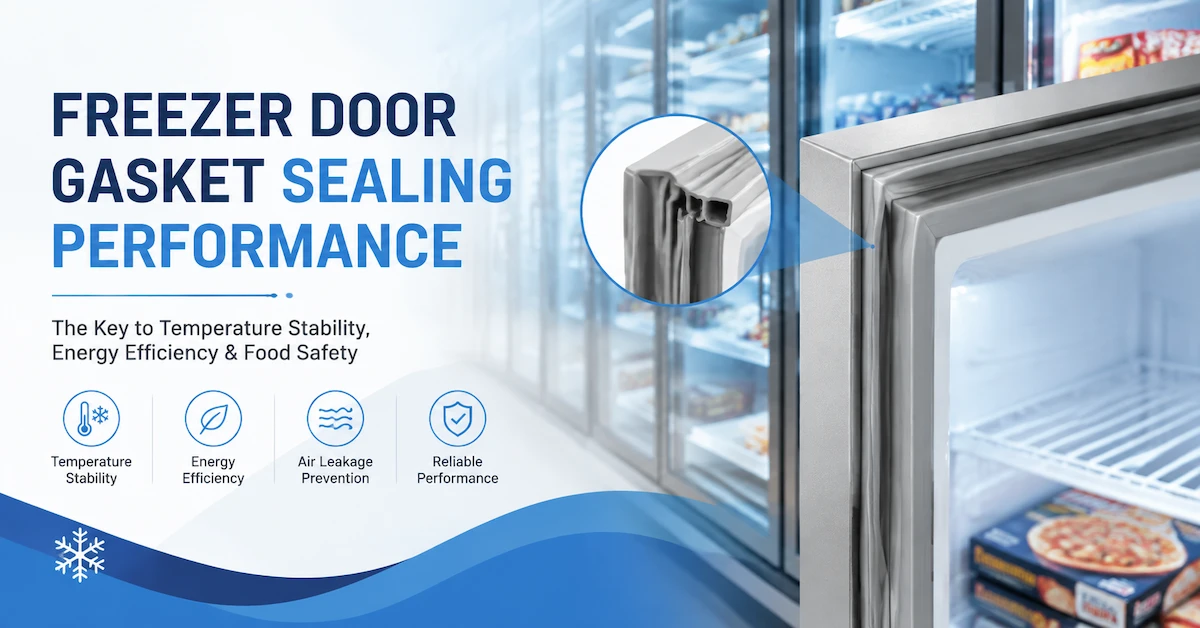
Freezer door gasket sealing performance is a critical factor that directly affects cooling efficiency, temperature stability, energy consumption, and long-term operating reliability in commercial refrigeration equipment.
Although the door gasket is a relatively small component compared with the compressor or refrigeration system, it plays an important role in maintaining the thermal barrier between the cold cabinet interior and the warmer external environment.
For supermarkets, convenience stores, frozen food retailers, restaurants, ice cream shops, and refrigeration equipment distributors, poor door sealing can lead to continuous cold air leakage, longer compressor operation, unstable temperatures, and increased operating costs.
When selecting a commercial freezer, buyers should evaluate door gasket quality together with insulation performance, refrigeration capacity, temperature recovery ability, and cabinet structure.
Snowsea focuses on integrated commercial refrigeration manufacturing, including cabinet structure, insulation, refrigeration system installation, and performance testing. Buyers can explore Snowsea’s complete range of commercial refrigeration products when evaluating freezer configurations for different applications.
How Does a Freezer Door Gasket Work?
A freezer door gasket creates a flexible sealing connection between the door and cabinet frame. When the door closes, the gasket compresses against the frame and forms an airtight barrier that helps prevent warm air infiltration.
A properly designed door seal should provide:
- Stable compression after repeated opening and closing
- Resistance to temperature changes
- Flexible contact with the cabinet frame
- Long-term sealing durability
- Reduced cold air leakage
In commercial environments, freezer doors may be opened hundreds of times per day. The gasket must maintain performance despite frequent mechanical stress and temperature fluctuations.
Creating an Airtight Barrier Against Warm Air
Cold storage performance depends on controlling heat transfer.
When a freezer door does not seal properly, warmer outside air enters the cabinet while cold air escapes. This creates additional cooling demand because the refrigeration system must remove the extra heat.
Air leakage can result in:
- Longer cooling cycles
- Increased compressor operation
- Higher electricity consumption
- Faster frost formation
- Reduced temperature stability
For commercial users, these issues can directly affect product quality and operating costs.
Supporting Temperature Stability and Cooling Efficiency
A strong door seal helps maintain a stable internal environment by reducing unnecessary temperature fluctuations.
This is especially important for products requiring consistent low temperatures, including:
- Ice cream
- Frozen food
- Meat products
- Seafood
- Frozen ingredients
Temperature stability is closely connected with other refrigeration factors such as insulation, airflow design, compressor capacity, and temperature recovery performance.
For more information about temperature recovery factors, buyers can also review Snowsea’s guide on commercial freezer temperature recovery.
What Factors Affect Commercial Freezer Door Seal Performance?
Gasket Material and Elasticity
The material quality of a freezer door gasket directly influences sealing reliability.
A suitable gasket material should maintain flexibility under low temperatures while resisting:
- Hardening
- Cracking
- Permanent deformation
- Loss of elasticity
If a gasket becomes stiff or damaged, it may no longer create sufficient compression against the door frame.
For commercial refrigeration equipment used in different climates, material selection should consider ambient temperature, humidity, and operating conditions.
Door Frame Design and Compression
A gasket cannot perform effectively without accurate door and cabinet design.
Important structural factors include:
- Door alignment
- Frame accuracy
- Hinge quality
- Gasket contact pressure
- Cabinet manufacturing precision
An uneven door frame may create small gaps where cold air escapes.
During commercial freezer manufacturing, accurate cabinet assembly and final inspection are essential to ensure consistent sealing performance.
Cabinet Insulation and Structural Accuracy
Door sealing works together with cabinet insulation.
Even with a high-quality gasket, poor insulation can increase heat transfer and reduce refrigeration efficiency.
Important insulation-related factors include:
- Foam quality
- Insulation thickness
- Cabinet panel structure
- Thermal bridge control
A complete refrigeration system requires cooperation between sealing, insulation, and cooling components.
Temperature and Environmental Conditions
Commercial freezers often operate in challenging environments:
- High ambient temperatures
- High humidity
- Frequent door opening
- Heavy product loading
- Long operating hours
In tropical or high-temperature markets, door sealing performance becomes even more important because the temperature difference between inside and outside the cabinet is greater.
How Poor Door Gasket Sealing Impacts Commercial Freezer Performance
Increased Energy Consumption
Cold air leakage forces the refrigeration system to work harder to maintain the target temperature.
The compressor may run for longer periods, increasing electricity usage and operating costs.
For businesses operating multiple freezers, even small efficiency losses can become significant annual expenses.
Energy efficiency should therefore be evaluated as a complete system performance factor, including:
- Door sealing
- Compressor efficiency
- Refrigerant selection
- Insulation
- Temperature control
Longer Temperature Recovery Time
A damaged or poorly sealed door gasket allows more heat to enter the cabinet after opening.
As a result, the freezer requires more time to return to the desired temperature.
This can affect:
- Product protection
- Customer experience
- Energy consumption
- Equipment lifespan
Temperature recovery should always be evaluated together with sealing performance rather than as an isolated specification.
Frost and Ice Formation
Air leakage introduces moisture into the freezer cabinet.
Over time, this can cause:
- Frost accumulation
- Ice around the door area
- Reduced cooling efficiency
- More frequent maintenance
For glass-door freezers and display equipment, condensation control is also important because visibility affects product presentation.
Compressor Overworking
When cold air continuously escapes, the compressor compensates by operating more frequently.
Long-term consequences may include:
- Increased mechanical wear
- Higher maintenance requirements
- Reduced system efficiency
A properly sealed freezer helps reduce unnecessary refrigeration workload.
How to Evaluate Freezer Door Gasket Sealing Performance Before Purchasing
B2B buyers should not evaluate freezer quality only by appearance or cooling temperature. Door sealing performance should be part of supplier evaluation.
Check Door Closing and Alignment
Important questions include:
- Does the door close evenly?
- Is gasket compression consistent?
- Are there visible gaps?
- Does the door remain sealed after repeated opening?
Evaluate Air Leakage Prevention
Manufacturers should have quality-control procedures for:
- Door sealing inspection
- Cabinet assembly accuracy
- Temperature testing
- Final performance verification
A supplier should be able to explain how sealing performance is controlled during production.
Review Long-Term Durability
For commercial applications, the gasket must withstand continuous daily operation.
Buyers should consider:
- Expected opening frequency
- Replacement availability
- Maintenance requirements
- Spare parts support
Snowsea provides commercial refrigeration solutions with factory manufacturing, quality inspection, and performance testing processes. Buyers interested in customized configurations can review Snowsea’s OEM/ODM commercial freezer solutions.
How Door Gasket Performance Affects Different Commercial Applications
Supermarkets and Convenience Stores
Retail stores often have high customer traffic and frequent door opening.
For these applications, reliable sealing helps maintain:
- Stable product temperature
- Lower energy consumption
- Better equipment reliability
Glass-door display equipment requires a balance between visibility, accessibility, and thermal performance.
Snowsea’s three-door display refrigerator is designed for commercial beverage and retail display environments where cooling stability and product visibility are important.
Ice Cream Retail
Ice cream products require stable low temperatures to maintain texture and quality.
Poor door sealing can create temperature fluctuations that affect product condition.
Snowsea’s ice cream display freezer is designed for commercial ice cream applications with deep cooling performance and retail display requirements.
Frozen Food Storage
Frozen food distributors and retailers often require freezers that operate continuously under heavy loads.
Door sealing performance helps reduce unnecessary temperature changes during daily loading and unloading operations.
What Should Importers Ask a Freezer Manufacturer?
Before placing bulk orders, distributors and importers should ask:
- What gasket material is used for commercial freezer doors?
- How is door sealing performance tested?
- How does the gasket perform in low-temperature conditions?
- Are replacement gaskets available?
- How does door sealing affect energy consumption?
- Are cabinet doors tested for alignment and compression?
- Can gasket specifications be customized for different markets?
- What quality-control steps are completed before shipment?
- How does the freezer perform under frequent door-opening conditions?
- Does the manufacturer provide technical support after delivery?
These questions help buyers compare suppliers based on manufacturing capability rather than only purchase price.
FAQ
What is freezer door gasket sealing performance?
It refers to how effectively a freezer door gasket prevents cold air leakage and maintains a stable thermal barrier between the cabinet interior and outside environment.
Why is door gasket sealing important for commercial freezers?
A reliable door seal helps maintain temperature stability, reduce energy consumption, prevent frost buildup, and reduce unnecessary compressor operation.
How does a damaged freezer gasket affect energy use?
A damaged gasket allows warm air to enter continuously, forcing the refrigeration system to work harder and consume more energy.
How often should a commercial freezer gasket be replaced?
Replacement frequency depends on usage conditions, door-opening frequency, cleaning practices, and gasket material durability.
Can poor door sealing affect food quality?
Yes. Temperature fluctuations caused by air leakage may affect frozen food storage conditions and product quality.
Does a thicker gasket always provide better sealing?
Not necessarily. Effective sealing depends on material quality, compression design, door alignment, and cabinet structure.
How can buyers test freezer door sealing?
Buyers should check door alignment, gasket compression, visible gaps, and supplier testing procedures before purchasing.
Does door sealing influence freezer temperature recovery?
Yes. Better sealing reduces heat infiltration, helping the freezer return to the target temperature more efficiently after door opening.
Can freezer door gaskets be customized for OEM projects?
Yes. OEM projects may include adjustments to cabinet design, door structure, gasket specifications, and operating requirements.
What should distributors consider when selecting freezer suppliers?
Distributors should evaluate manufacturing capability, quality control, product reliability, customization ability, and after-sales support.
Conclusion
Freezer door gasket sealing performance is a small but important factor that influences commercial refrigeration reliability, energy efficiency, and temperature stability.
For supermarkets, restaurants, food retailers, and refrigeration distributors, selecting equipment with reliable door sealing can help reduce operating costs and improve long-term performance.
A high-quality commercial freezer requires more than a powerful compressor. Door design, gasket materials, insulation, refrigeration systems, and manufacturing quality must work together.
When evaluating a commercial refrigeration supplier, buyers should consider complete system performance and request detailed information about sealing tests, product specifications, and OEM customization options.
Snowsea provides commercial freezer manufacturing and OEM/ODM solutions for global distributors, brands, and project buyers. Contact Snowsea to discuss freezer configurations, technical requirements, and customized refrigeration solutions.