What Is a Freezer for School Cafeteria Storage?
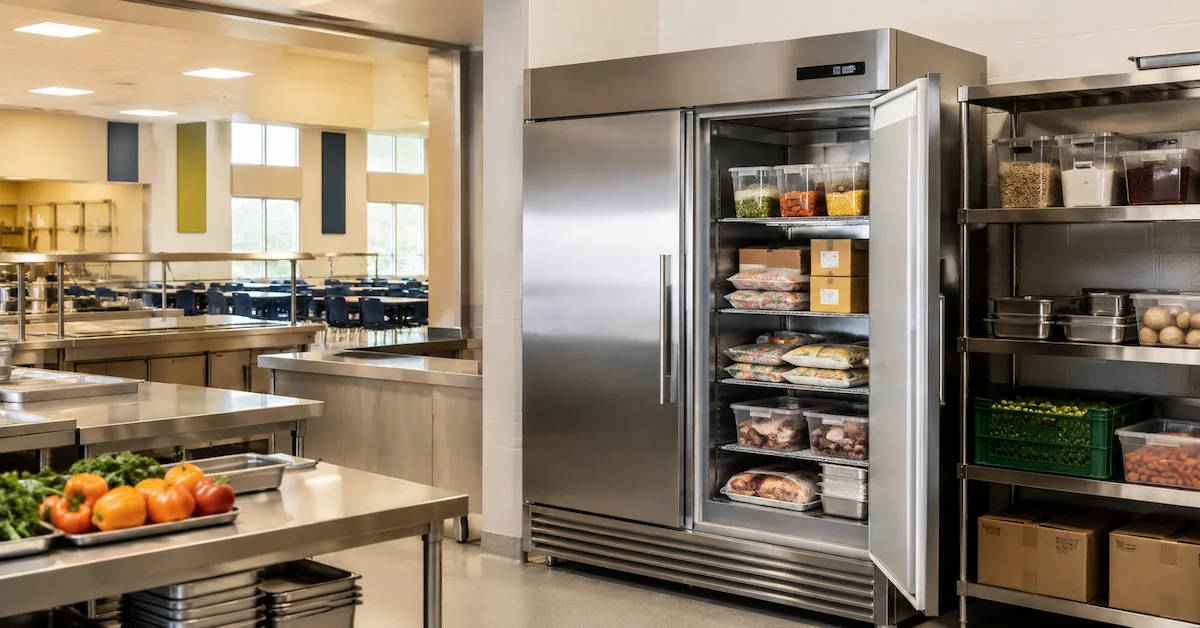
A Freezer for School Cafeteria Storage is a commercial refrigeration unit designed for schools, universities, and institutional kitchens that need reliable storage for frozen ingredients and prepared food products.
Unlike household freezers, school cafeteria freezers are designed for commercial foodservice environments with higher storage demands and frequent daily access.
Key features include:
- Large food storage capacity
- Stable freezing performance
- Frequent opening capability
- Long-term commercial operation
Common stored products include:
- Frozen vegetables
- Frozen meat
- Frozen seafood
- Frozen meals
- Ice cream
- Prepared food ingredients
A suitable school cafeteria freezer helps educational institutions maintain food quality while supporting efficient meal preparation.
Snowsea provides commercial refrigeration products for schools, institutional kitchens, foodservice operators, and global B2B customers.
Why Do School Cafeterias Need Dedicated Freezers?
School cafeterias have unique food storage requirements because they serve large numbers of students every day.
Professional freezer solutions help improve:
- Food storage efficiency
- Ingredient management
- Food safety control
- Kitchen workflow
Supporting Large-Volume Food Storage
School cafeterias often prepare meals for:
- Hundreds of students
- Multiple daily meal periods
- Different food programs
A reliable freezer helps:
- Store bulk ingredients
- Maintain food availability
- Support scheduled meal preparation
Maintaining Food Quality and Safety
Frozen ingredients require stable temperature conditions to maintain quality.
Commercial freezers help:
- Maintain consistent freezing temperatures
- Reduce food spoilage risks
- Protect ingredient quality
For temperature requirements, see Snowsea's commercial freezer temperature range guide.
Improving Kitchen Efficiency
An organized freezer system helps cafeteria staff:
- Find ingredients faster
- Reduce preparation delays
- Improve inventory management
Efficient storage supports smoother daily foodservice operations.
Types of Freezers for School Cafeteria Storage
Different educational facilities require different freezer solutions.
Upright Commercial Freezer
Upright freezers are suitable for organized kitchen storage.
Advantages:
- Easy product access
- Better inventory visibility
- Space-efficient design
Suitable for:
- Daily ingredient storage
- Packaged frozen foods
- School kitchen operations
Chest Freezer
Chest freezers are suitable for bulk frozen storage.
Advantages:
- Large storage capacity
- Strong cold retention
- Efficient backup storage
Applications:
- Bulk ingredients
- Seasonal food inventory
- Emergency stock
Walk-In Freezer Solution
Walk-in freezers are suitable for large schools and universities.
Advantages:
- Maximum storage capacity
- Easy loading and unloading
- Large-scale food storage capability
Applications:
- Campus dining facilities
- Central school kitchens
- Institutional foodservice centers
Key Factors When Choosing a School Cafeteria Freezer
Storage Capacity
Schools should evaluate:
- Number of students served
- Daily meal volume
- Ingredient categories
- Delivery frequency
Proper capacity planning helps:
- Avoid storage shortages
- Improve kitchen efficiency
- Reduce food waste
For storage planning, see Snowsea's commercial freezer shelf capacity guide.
Temperature Stability
School food storage requires reliable freezing performance.
Important factors include:
- Stable temperature control
- Fast cooling recovery
- Uniform cold distribution
This is especially important during:
- Daily ingredient loading
- Frequent door opening
- Busy meal preparation periods
Easy Cleaning and Maintenance
Institutional kitchens require equipment that supports hygiene management.
Important features:
- Easy-to-clean surfaces
- Reliable door sealing
- Convenient maintenance access
Benefits include:
- Better sanitation control
- Reduced maintenance time
- Longer equipment lifespan
Energy Efficiency
Schools often need to manage operating budgets carefully.
Energy-efficient freezers help reduce:
- Electricity consumption
- Long-term operating costs
- Maintenance expenses
Important factors include:
- Compressor efficiency
- Insulation performance
- Refrigeration system design
For energy solutions, see Snowsea's Energy Efficiency Solutions.
School Cafeteria Freezer Applications
Primary and Secondary Schools
School freezers support:
- Student meal preparation
- Frozen ingredient storage
- Daily food service
Key requirements:
- Reliable operation
- Easy management
- Stable cooling
Universities and Colleges
University dining facilities require:
- Larger storage capacity
- Continuous operation
- Efficient inventory management
Campus Dining Facilities
Campus kitchens use freezers for:
- Multiple food stations
- Central ingredient storage
- Bulk inventory management
School Meal Suppliers
Food suppliers serving schools require:
- Reliable frozen storage
- Distribution support
- Consistent refrigeration performance
How to Organize School Cafeteria Freezer Storage?
Separate Food Categories
Recommended storage zones:
- Meat products
- Seafood products
- Vegetables
- Prepared meals
- Desserts
Clear organization helps:
- Speed up ingredient selection
- Improve inventory control
- Reduce handling time
Use FIFO Inventory Management
Schools can improve food management through:
- Date labeling
- Batch tracking
- First-in-first-out rotation
Benefits include:
- Reduced food waste
- Better food management
- Improved traceability
Optimize Kitchen Workflow
A practical layout should include:
- Receiving area
- Freezer storage area
- Preparation area
- Cooking area
Good planning improves daily kitchen efficiency.
Airflow Design for School Freezers
Efficient airflow helps maintain stable freezer performance.
A good airflow system helps:
- Prevent temperature differences
- Improve cooling efficiency
- Protect stored ingredients
For airflow technology, see Snowsea's commercial freezer fan motor selection guide.
Maintenance Requirements for School Cafeteria Freezers
Regular maintenance helps ensure reliable operation.
Important tasks include:
- Temperature monitoring
- Door seal inspection
- Interior cleaning
- Refrigeration system checks
Benefits include:
- Longer equipment life
- Reduced downtime
- Better cooling performance
Common Mistakes When Choosing School Freezers
Choosing Insufficient Capacity
An undersized freezer may cause:
- Storage shortages
- Frequent restocking
- Lower kitchen efficiency
Ignoring Food Safety Requirements
Poor temperature management may affect:
- Ingredient quality
- Food safety processes
Choosing Only Based on Price
Schools should consider:
- Energy consumption
- Equipment reliability
- Maintenance requirements
How Manufacturers Test School Cafeteria Freezers?
Professional manufacturers evaluate freezer performance through multiple tests.
Cooling Performance Testing
Checks:
- Temperature stability
- Cooling recovery speed
Load Testing
Evaluates:
- Heavy-use conditions
- Storage performance
Energy Efficiency Testing
Measures:
- Power consumption
- Refrigeration efficiency
Durability Testing
Verifies:
- Cabinet structure
- Component reliability
- Long-term operation
For quality evaluation, see Snowsea's commercial freezer quality testing guide.
How to Choose a School Cafeteria Freezer Supplier?
Before purchasing, buyers should prepare:
- Number of meals served
- Storage requirements
- Kitchen space
- Food categories
- Temperature requirements
- Operating schedule
- Energy efficiency goals
- Quantity requirements
- Certification requirements
- Customization needs
FAQ
What is a freezer for school cafeteria storage?
A freezer for school cafeteria storage is a commercial refrigeration unit designed for educational institutions to store frozen ingredients and food products.
What type of freezer is best for school cafeterias?
The best option depends on the school's meal volume, kitchen size, storage requirements, and operational needs.
Why do schools need commercial freezers?
Commercial freezers provide stable temperature control and sufficient capacity for daily food preparation.
How important is temperature stability for school food storage?
Stable temperatures help maintain ingredient quality and support food safety management.
How can schools reduce freezer energy costs?
Schools can reduce energy costs through efficient refrigeration systems, proper maintenance, and suitable freezer selection.
Are walk-in freezers suitable for large schools?
Yes. Walk-in freezers are suitable for universities, large campuses, and high-volume foodservice operations.
Can school cafeteria freezers be customized?
Yes. Commercial refrigeration suppliers can customize capacity, structure, and specifications according to project needs.
How often should school freezers be maintained?
Regular inspection, cleaning, and temperature monitoring help maintain reliable operation.
What foods can be stored in school cafeteria freezers?
Schools commonly store frozen vegetables, meat, seafood, meals, desserts, and other food ingredients.
Can Snowsea provide school cafeteria freezer solutions?
Yes. Snowsea provides customized commercial refrigeration solutions for schools, institutional kitchens, and foodservice operators.
Conclusion
A Freezer for School Cafeteria Storage is an essential refrigeration solution for educational institutions that require reliable frozen food storage and efficient kitchen operations.
The right school cafeteria freezer should provide:
- Suitable storage capacity
- Stable temperature control
- Easy maintenance
- Energy-efficient operation
- Reliable long-term performance
For schools, universities, and institutional foodservice operators, choosing the right commercial freezer helps protect food quality, improve kitchen efficiency, and support safe meal preparation.
Snowsea supports global B2B customers with commercial refrigeration products and OEM/ODM solutions. Explore Snowsea's commercial refrigeration products, review its OEM/ODM solutions, or contact Snowsea with your school cafeteria freezer requirements, project details, and storage needs.