What Determines Commercial Freezer Bulk Order Price?
Commercial Freezer Bulk Order Price is influenced by much more than the number of units purchased.
When an importer moves from a sample to a trial order and then to container-volume purchasing, the factory may gain efficiencies in material procurement, production scheduling, branding, packaging, and assembly. However, these savings depend heavily on product configuration and order structure.
Important pricing factors include:
- Order quantity
- Number of freezer models
- Compressor and refrigeration configuration
- Cabinet materials
- Door type
- Insulation
- Controller
- Defrost system
- OEM branding
- Packaging requirements
- Destination market
- Inspection requirements
For this reason, a buyer ordering 100 identical freezers may receive a different cost structure from a buyer ordering the same total quantity across five different models.
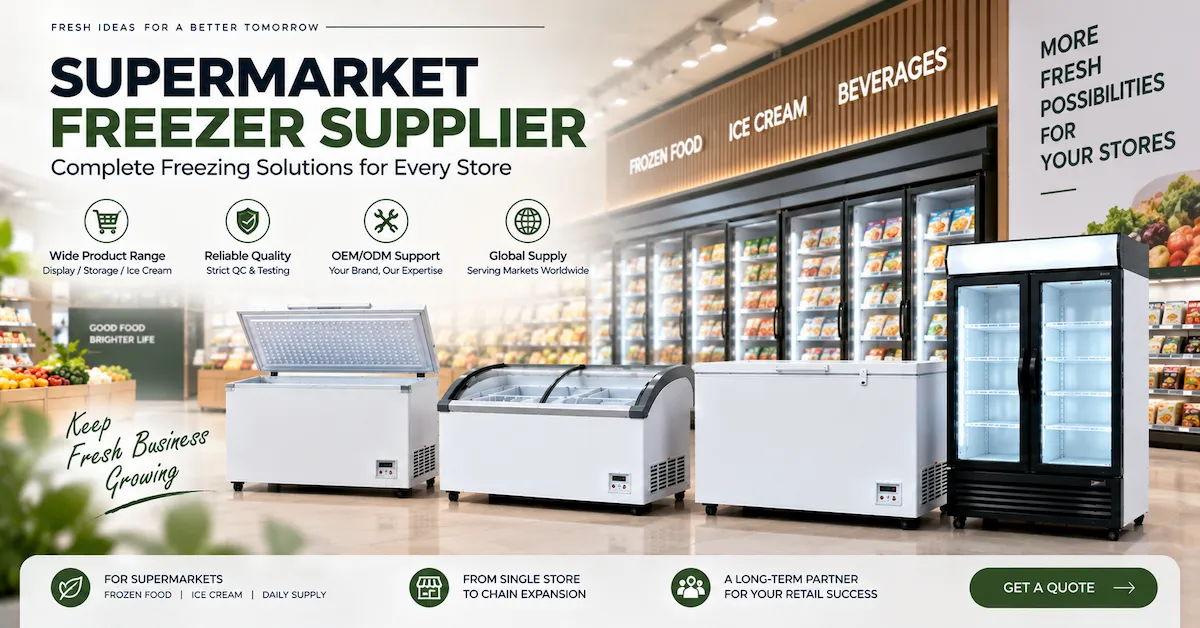
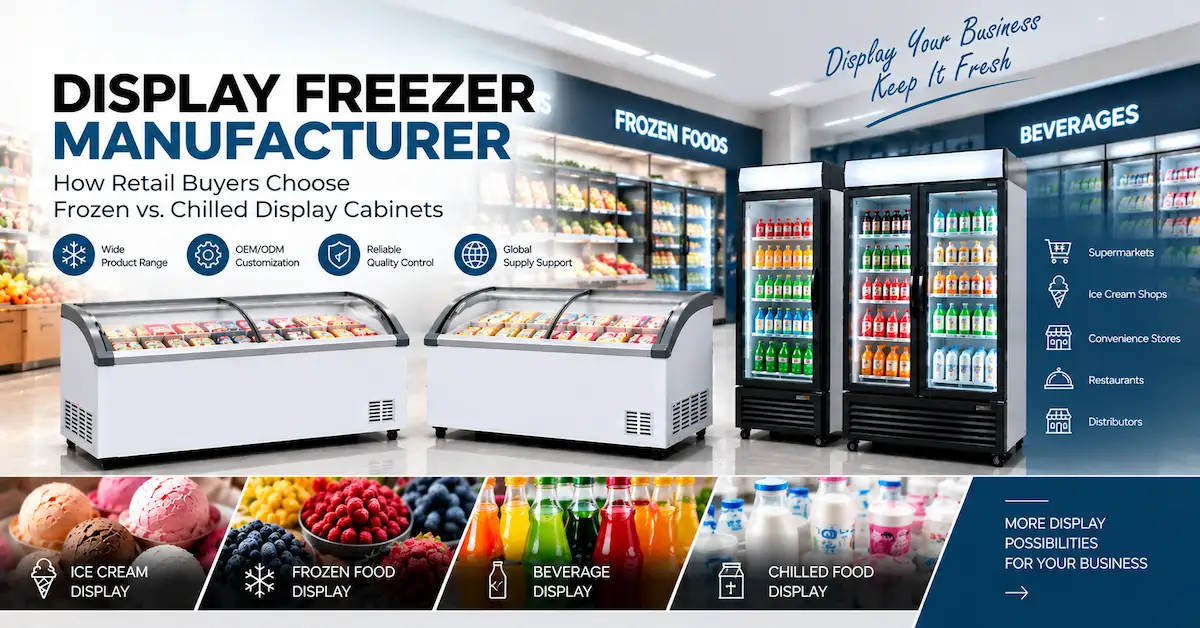
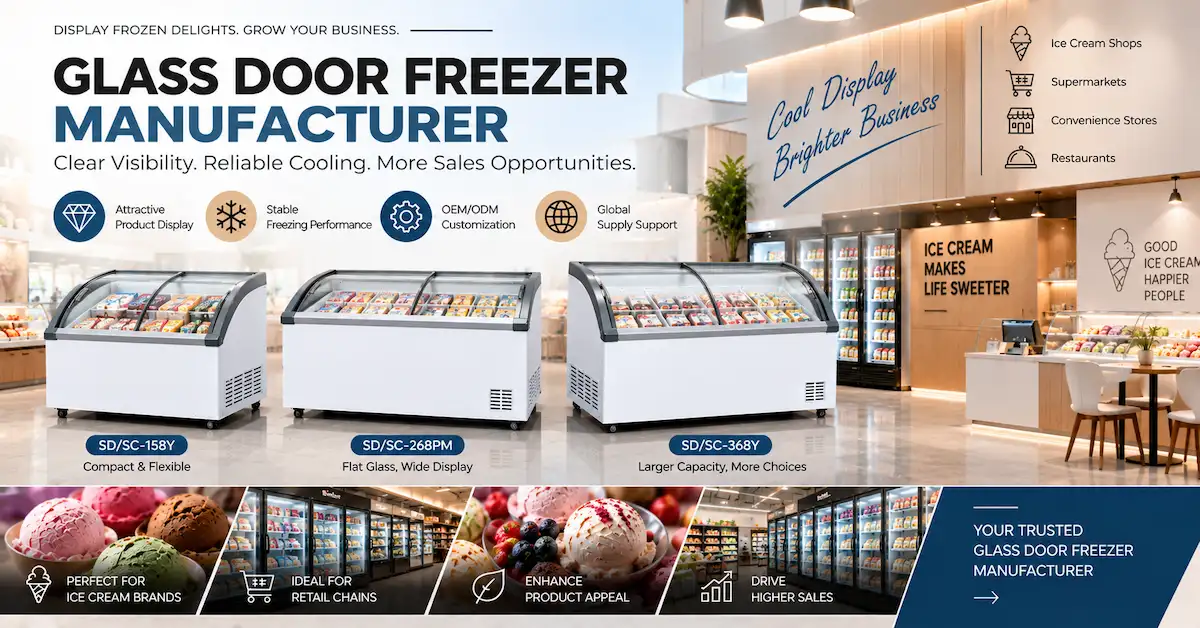
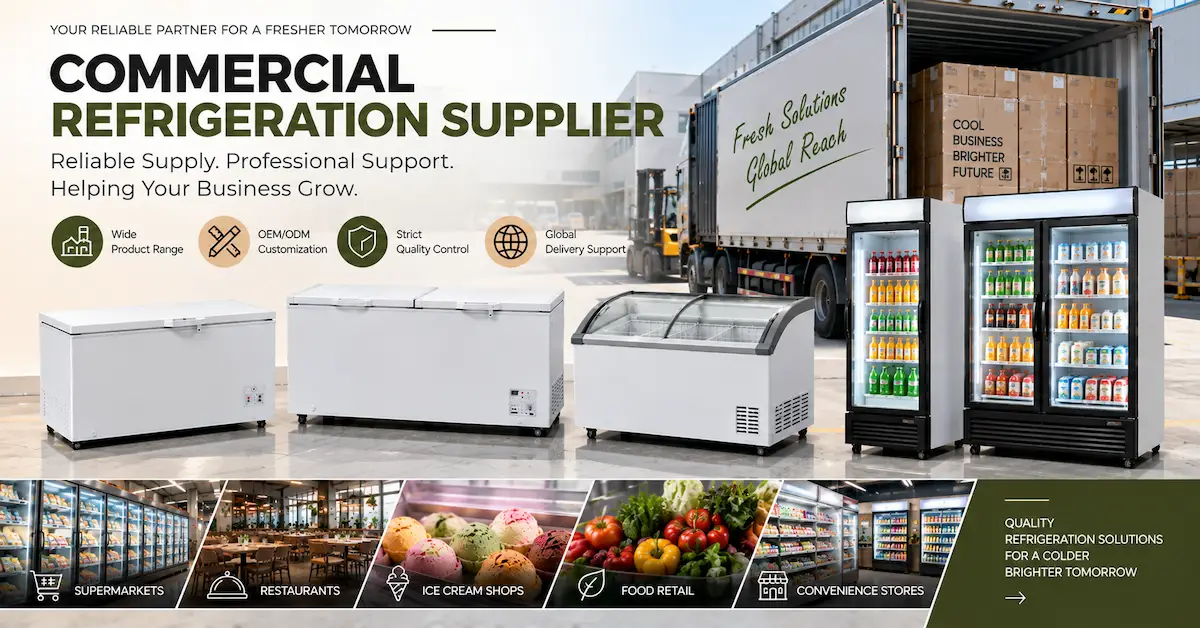
Snowsea offers different commercial refrigeration products for retail, food service, frozen-food storage, and distribution projects where bulk-order requirements can vary significantly.
Bulk Order Price vs Wholesale Price: What Is the Difference?
Wholesale pricing describes the general business-to-business price level for commercial refrigeration equipment.
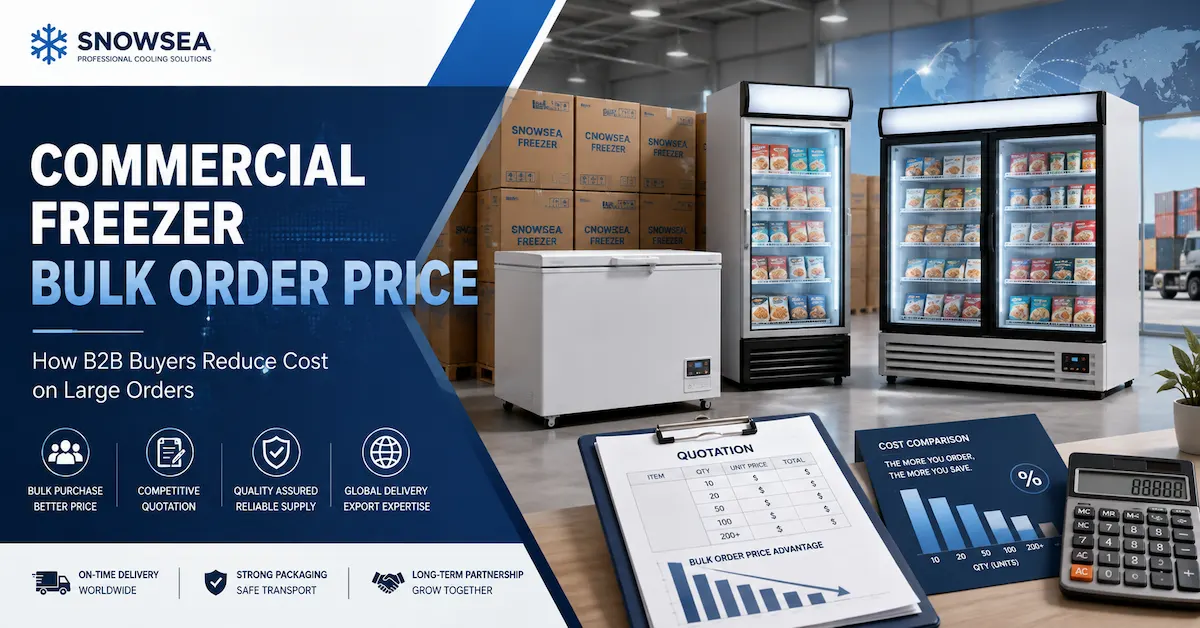
Bulk-order pricing focuses more specifically on how order volume and order structure influence the quotation.
Buyers researching the broader cost structure can first review Snowsea's guide to commercial freezer wholesale price.
The bulk-order question is more specific:
How does the price change when the buyer moves from a sample to a commercial-scale order?
Sample, Trial Order, Bulk Order and Repeat Order
Different purchasing stages create different factory cost structures.
| Order Stage | Main Buyer Objective | Typical Cost Consideration |
|---|---|---|
| Sample | Product validation | Development and individual handling |
| Trial order | Market testing | Limited production efficiency |
| Bulk order | Commercial distribution | Volume production efficiency |
| Container order | Logistics optimization | Loading and packaging efficiency |
| Repeat order | Supply continuity | Stable materials and production planning |
Sample Orders
Samples are commonly used to verify:
- Product dimensions
- Temperature performance
- Appearance
- Branding
- Packaging
- Components
The unit cost of a sample should not automatically be used as the expected mass-production price.
Trial Orders
A trial order allows buyers to test market acceptance while limiting inventory exposure.
However, smaller production quantities may not achieve the same purchasing and production efficiency as larger orders.
Bulk Orders
Bulk orders can improve cost efficiency when the factory can:
- Purchase components in larger quantities
- Reduce repeated setup
- Produce longer runs of the same model
- Standardize packaging
- Optimize labor planning
Repeat Orders
Long-term repeat purchasing may improve supply planning because future requirements become more predictable.
But buyers should still confirm specifications before each order if components, regulations, packaging, or market requirements change.
How Order Quantity Affects Unit Cost
Higher quantities can reduce certain costs per unit, but pricing rarely follows a simple fixed discount percentage.
A factory's ability to improve pricing depends on whether greater volume actually reduces its costs.
Component Purchasing
Compressors, controllers, fans, glass, panels, and other components may have their own supplier purchasing conditions.
Larger production quantities can sometimes improve procurement efficiency.
Production Setup
A production line may need preparation for:
- Model changeover
- Branding
- Electrical configuration
- Packaging
- Testing
Producing a larger quantity of one consistent model can spread these setup activities across more units.
Packaging Printing
Custom cartons, labels, manuals, and branding may become more economical when ordered in larger quantities.
However, highly customized packaging may also introduce its own minimum-order requirements.
MOQ Is Not the Same as the Best Bulk Price
MOQ means the minimum quantity a supplier is willing or able to produce under a specific configuration.
It does not necessarily mean that quantity receives the supplier's best possible unit price.
For example, MOQ may simply cover:
- Component purchasing
- Production setup
- Custom branding
- Packaging printing
- Engineering requirements
B2B buyers should therefore request pricing by quantity tier rather than asking only:
“What is your MOQ?”
A more useful RFQ question is:
“Please provide your MOQ and quotation for several realistic order quantities.”
This allows the buyer to evaluate where meaningful cost efficiencies begin.
How Buyers Should Request Tiered Pricing
For a serious project, request quotations at several volume levels that match your purchasing plan.
For example, the RFQ can ask the factory to quote:
- Sample quantity
- Trial-order quantity
- Expected first bulk order
- Expected container order
- Estimated annual volume
The goal is not to force a discount.
It is to understand how the supplier's cost structure changes as the relationship scales.
One Model vs Mixed Models in a Bulk Order
A bulk order containing one model is generally easier to standardize than an order containing many different freezer configurations.
Mixed orders may require:
- More production changeovers
- Different components
- Different cartons
- Different labels
- Different test settings
- More warehouse coordination
However, mixed-model orders can be valuable for distributors who need a broader product portfolio.
Buyers should therefore ask:
- Can different freezer models be mixed?
- Is there an MOQ per model?
- Does mixed loading affect price?
- Does each model require separate packaging?
- Does branding remain the same across models?
How Container Loading Can Affect Bulk Order Economics
Commercial freezers occupy significant shipping volume.
For international buyers, unit price should therefore be evaluated together with loading efficiency.
Important factors include:
- Freezer dimensions
- Packaging dimensions
- Product orientation
- Pallet requirements
- Mixed-model loading
- Protective space
- Container utilization
A slightly smaller packaging design may improve logistics efficiency, but protection should never be reduced simply to fit more units into a container.
Snowsea's guide to freezer export packaging drop protection explains why carton strength, cushioning, glass protection, and base reinforcement should remain part of the purchasing decision.
How OEM Branding Affects Bulk Order Pricing
OEM customization can change the Commercial Freezer Bulk Order Price depending on the depth of customization.
Basic OEM Changes
Common changes include:
- Logo
- Rating label
- Product stickers
- Carton printing
- Manuals
- Exterior color
These changes may be relatively straightforward when based on an existing freezer platform.
Deeper OEM Changes
More extensive projects may involve:
- Different compressor
- New controller
- Special refrigerant
- Cabinet material changes
- Door configuration
- New shelves
- Insulation changes
These modifications can affect component purchasing, testing, tooling, or production processes.
Buyers considering a private-label project can review Snowsea's OEM and ODM commercial refrigeration solutions.
How ODM Development Changes Bulk Pricing
ODM projects may involve additional development before mass production.
Possible costs include:
- Product engineering
- Prototype development
- Tooling
- Mold development
- Testing
- Engineering revisions
These expenses should be separated from recurring unit cost whenever possible.
Otherwise, buyers may find it difficult to understand whether a quotation is high because the freezer itself is expensive or because development expenses are being included.
Quality Testing Should Not Be Removed Just to Lower Price
When comparing bulk quotations, buyers should confirm whether quality-control procedures are equivalent.
Testing may include:
- Temperature pull-down
- Temperature stability
- Airflow
- Door sealing
- Compressor operation
- Defrost
- Electrical checks
- Appearance inspection
Reducing inspection simply to lower the purchase price can increase the risk of batch-level defects.
Snowsea's commercial freezer quality testing procedure explains what B2B buyers should verify before shipment.
Bulk Price vs Total Landed Cost
Factory unit price is only one part of the procurement cost.
Buyers may also need to calculate:
- Export transport
- Freight
- Insurance
- Import duty
- Customs clearance
- Port charges
- Local delivery
- Warehousing
- Inspection
- Spare parts
This is why a lower factory quotation does not automatically create the lowest landed cost.
Spare Parts Should Be Included in Bulk Order Planning
Commercial refrigeration distributors should consider spare parts before shipping the main order.
Possible parts may include:
- Controllers
- Fan motors
- Door gaskets
- Hinges
- Handles
- Lighting components
- Electrical components
Shipping small spare parts together with the main order can support after-sales service in the destination market.
Buyers should confirm whether spare parts are:
- Included
- Charged separately
- Recommended by quantity
- Available for repeat orders
How Payment Terms Affect a Large Purchase
For large orders, payment structure also affects the buyer's cash flow.
Commercial terms should clearly define:
- Deposit
- Balance payment
- Production milestone
- Inspection timing
- Shipment release
- Currency
Price should not be evaluated separately from payment risk and working-capital requirements.
How to Compare Bulk Commercial Freezer Quotations
A practical Commercial Freezer Bulk Order Price comparison should normalize every major specification.
| Comparison Item | Supplier A | Supplier B | Supplier C |
| Quantity | Confirm | Confirm | Confirm |
| Model | Confirm | Confirm | Confirm |
| Capacity | Confirm | Confirm | Confirm |
| Compressor | Confirm | Confirm | Confirm |
| Refrigerant | Confirm | Confirm | Confirm |
| Cabinet material | Confirm | Confirm | Confirm |
| Door type | Confirm | Confirm | Confirm |
| Defrost | Confirm | Confirm | Confirm |
| Controller | Confirm | Confirm | Confirm |
| Branding | Confirm | Confirm | Confirm |
| Testing | Confirm | Confirm | Confirm |
| Packaging | Confirm | Confirm | Confirm |
| Spare parts | Confirm | Confirm | Confirm |
| Payment terms | Confirm | Confirm | Confirm |
| Shipping term | Confirm | Confirm | Confirm |
Only after these factors are aligned should buyers compare the final unit price.
What Should Buyers Include in a Bulk Order RFQ?
A detailed RFQ helps suppliers provide a more accurate quotation.
Include:
- Product type
- Required models
- Quantity per model
- Capacity
- Temperature range
- Voltage and frequency
- Refrigerant
- Compressor preference if required
- Door configuration
- Cabinet material
- Defrost system
- Branding requirements
- Packaging requirements
- Destination market
- Certification requirements
- Expected first-order quantity
- Estimated annual volume
- Requested shipping term
If several quantities are possible, request tiered quotations.
Common Bulk Order Pricing Mistakes
Comparing Different Specifications
Two quotations are meaningless if one supplier uses different components or materials.
Asking Only for the Lowest MOQ
MOQ does not show where the best production economics begin.
Ordering Too Many Models
Too many SKUs can increase production and inventory complexity.
Ignoring Packaging Dimensions
Packaging affects container utilization and shipping cost.
Removing QC to Reduce Cost
Lower inspection costs may increase warranty risk.
Ignoring After-Sales Parts
Destination-market repair costs should be considered before shipment.
FAQ
What determines commercial freezer bulk order price?
Bulk price depends on quantity, models, components, materials, customization, packaging, quality requirements, production planning, and shipping conditions.
Does buying more commercial freezers always lower the price?
Not automatically. Larger quantities can improve production economics, but actual pricing depends on component purchasing, model mix, customization, and factory planning.
What is the difference between MOQ and bulk quantity?
MOQ is the minimum acceptable production quantity, while a bulk order is typically a larger commercial purchase that may create greater production efficiency.
Can I mix different freezer models in one order?
Many projects can include mixed models, but buyers should confirm MOQ per model, packaging, production requirements, and container-loading conditions.
Does OEM branding increase freezer price?
It can. Logo, labels, cartons, manuals, colors, and component changes can add different levels of cost.
Does a full container order give a better price?
Container-volume purchasing can improve production or logistics efficiency, but it does not guarantee a fixed discount. Buyers should request a specific quotation.
Should quality testing be included in bulk pricing?
Yes. Buyers should confirm what inspections and performance tests are included rather than comparing price without quality-control scope.
Should spare parts be ordered with bulk commercial freezers?
For distributors and private-label brands, including suitable spare parts can improve after-sales support and reduce future shipping delays.
How should I request a commercial freezer bulk quotation?
Provide models, quantity, specifications, destination market, branding, packaging, compliance requirements, and estimated annual purchasing volume.
Can Snowsea provide bulk commercial freezer quotations?
Buyers can send Snowsea their target models, specifications, quantities, destination market, and OEM/ODM requirements for project evaluation and quotation.
Conclusion
Commercial Freezer Bulk Order Price should be evaluated according to the complete purchasing structure rather than simply asking for the lowest price per unit.
For importers, distributors, supermarket chains, wholesalers, and private-label brands, order quantity can influence component purchasing, production setup, packaging, branding, and logistics efficiency. However, the best bulk price is only valuable when product specifications, quality requirements, and supply conditions remain aligned.
B2B buyers should request tiered quotations, normalize specifications, evaluate container loading, include spare parts and quality control, and calculate the total landed cost before committing to a large order.
Snowsea provides commercial refrigeration equipment and OEM/ODM support for global buyers. Explore Snowsea's commercial refrigeration products, review OEM/ODM solutions, or contact Snowsea with your model requirements, expected quantity, destination market, and bulk purchasing plan.