Why Commercial Freezer Quality Testing Matters
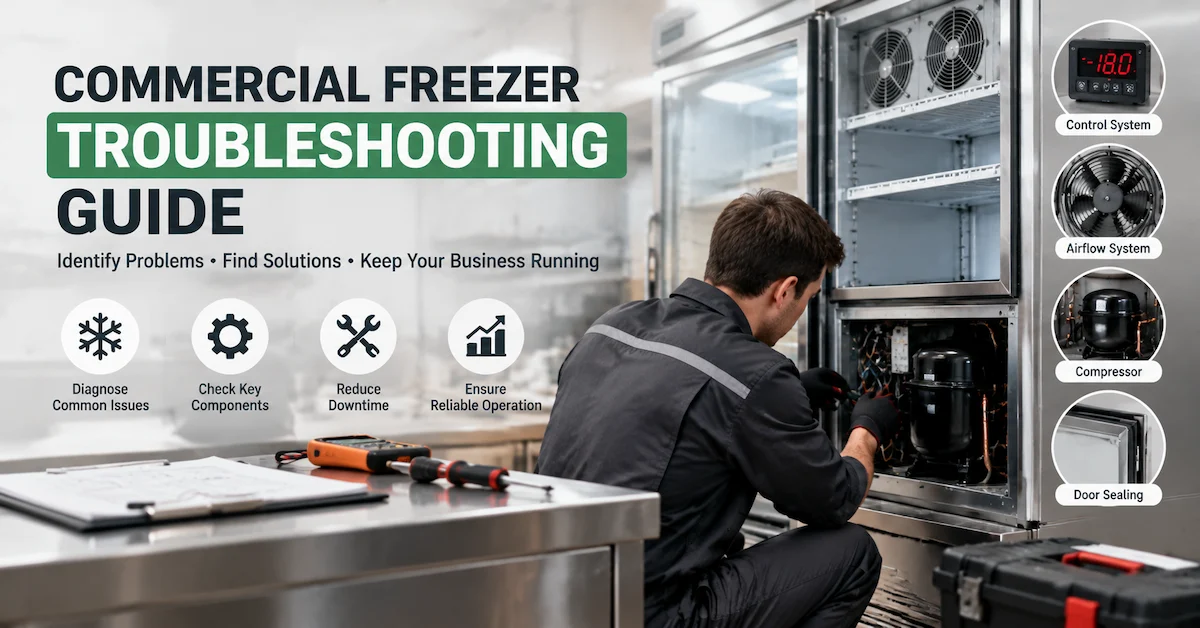
A reliable Commercial Freezer Quality Testing Procedure helps manufacturers identify performance, assembly, electrical, refrigeration, and appearance problems before equipment reaches the buyer.
For importers, distributors, supermarket chains, food-service equipment companies, and private-label brands, freezer quality cannot be judged only by compressor brand, cabinet appearance, or sample performance.
Bulk orders introduce additional risks such as:
- Temperature inconsistency between units
- Refrigerant leakage
- Poor door sealing
- Abnormal compressor operation
- Fan or airflow problems
- Defrost faults
- Electrical assembly defects
- Cabinet damage
- Packaging problems
The purpose of factory testing is therefore not simply to confirm that a freezer turns on. It should verify whether the complete refrigeration system performs consistently under defined conditions.
Snowsea manufactures different commercial refrigeration products for frozen-food storage, retail display, food service, and distribution applications, where testing requirements may vary by cabinet design and target market.
What Is a Commercial Freezer Quality Testing Procedure?
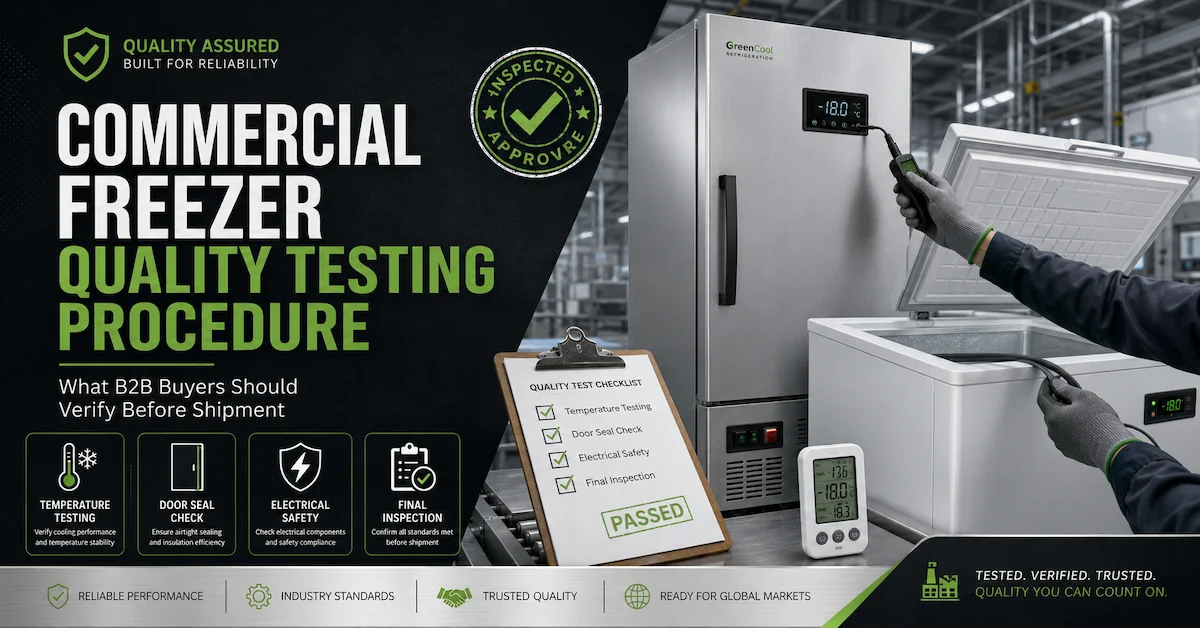
A commercial freezer quality testing procedure is a structured series of inspections and performance checks performed during manufacturing and before shipment.
Depending on the freezer design, the process may include:
- Incoming material inspection
- Cabinet and assembly inspection
- Refrigeration-system verification
- Electrical inspection
- Temperature pull-down testing
- Temperature stability testing
- Door sealing inspection
- Airflow and fan inspection
- Defrost-system testing
- Noise and vibration checks
- Appearance inspection
- Final packing verification
Different tests identify different risks.
For example, a temperature test cannot identify every cabinet scratch, while an appearance inspection cannot confirm whether the refrigeration system can maintain the required operating temperature.
Incoming Materials and Component Inspection
Commercial freezer quality control should begin before final assembly.
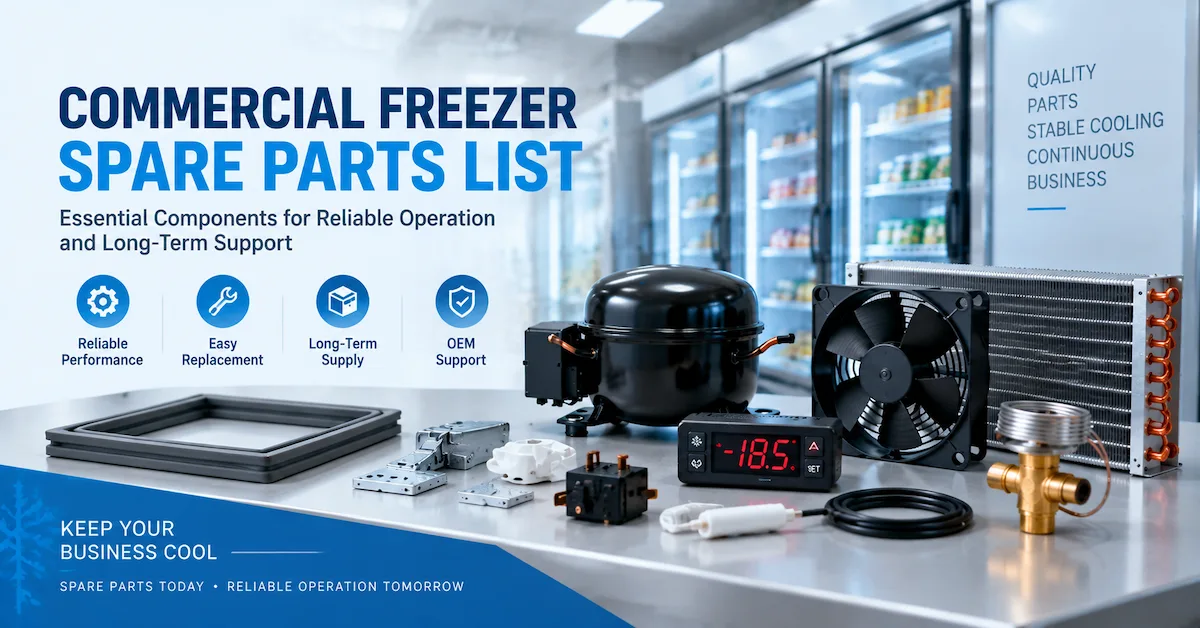
Important incoming components may include:
- Compressor
- Condenser
- Evaporator
- Fan motors
- Temperature controller
- Thermostat or sensors
- Door gaskets
- Glass doors
- Electrical wiring
- Cabinet panels
- Insulation materials
- Casters and hinges
Why Incoming Inspection Matters
If incorrect or damaged components enter production, final inspection becomes more difficult and expensive.
Manufacturers may check:
- Model and specification
- Dimensions
- Surface condition
- Electrical rating
- Material consistency
- Visible damage
- Supplier documentation
For OEM projects, this stage is particularly important because component specifications may differ between markets or customer programs.
Refrigeration System Inspection Before Testing
Before running a complete performance test, the refrigeration circuit should be checked for correct assembly.
Typical inspection points include:
- Compressor installation
- Refrigeration tubing
- Brazed joints
- Condenser positioning
- Evaporator installation
- Refrigerant charging
- Capillary or expansion components
- Fan installation
Refrigerant Leakage Risk
A small leak may not immediately prevent a freezer from cooling, but it can reduce performance over time.
This is why refrigeration-system inspection should be completed before shipment rather than relying only on a short startup test.
Temperature Pull-Down Test
The pull-down test measures how the freezer cools from a warmer starting condition toward its intended operating range.
The test can help evaluate whether:
- Compressor capacity is appropriate
- Refrigerant charge is reasonable
- Evaporator performance is adequate
- Condenser heat rejection is effective
- Cabinet insulation supports cooling
- Air circulation distributes cold air effectively
A freezer that eventually reaches its target temperature may still have weak pull-down performance.
For commercial buyers, this matters when equipment must recover after initial loading, cleaning, installation, or extended door opening.
Temperature Stability Testing
Reaching the target temperature once is not enough.
The freezer also needs to maintain stable operating conditions as the refrigeration system cycles.
Temperature stability testing can identify:
- Excessive temperature fluctuation
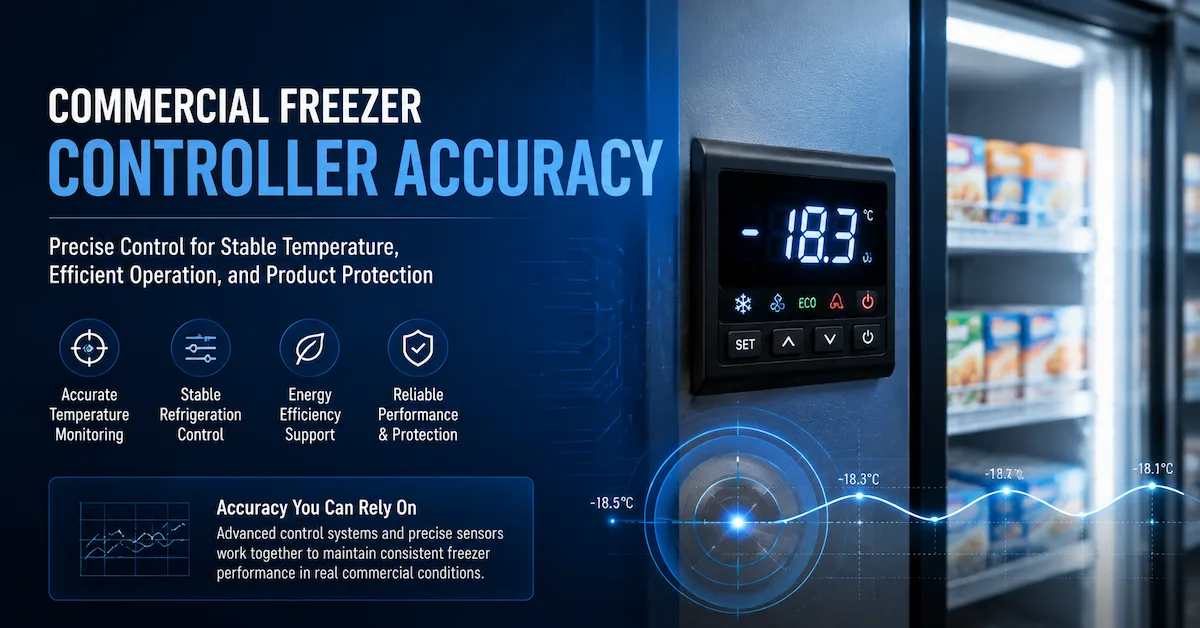
- Controller problems
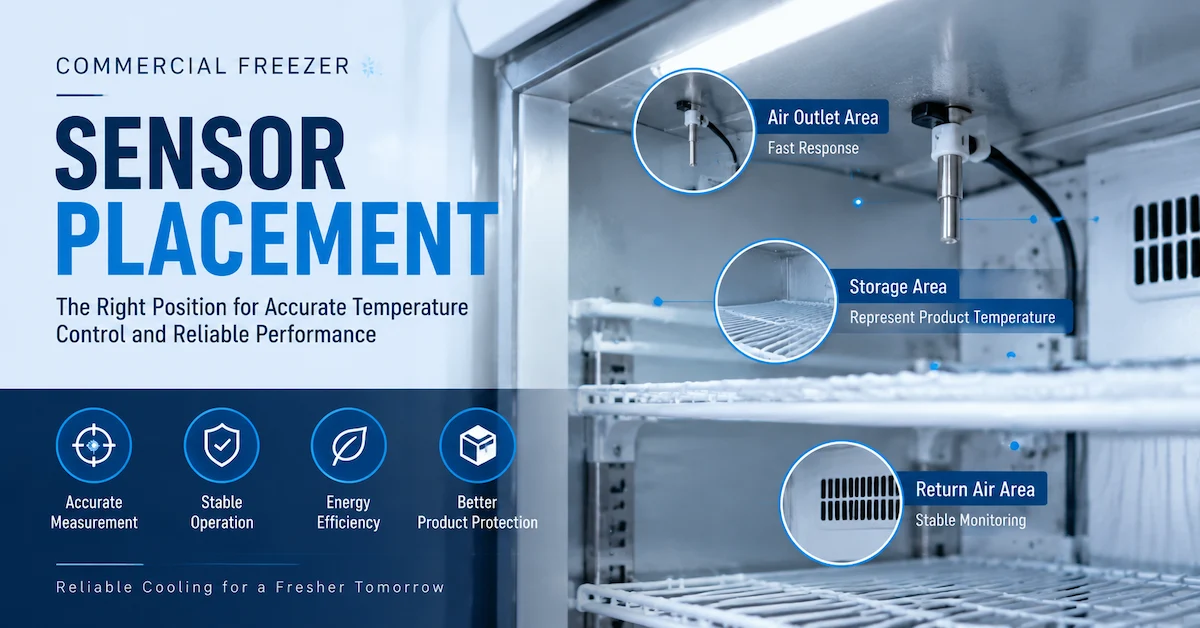
- Sensor positioning issues
- Cooling imbalance
- Door leakage
- Inappropriate system matching
Temperature should ideally be evaluated at relevant locations inside the cabinet instead of relying only on the value shown on the front controller.
Multi-Point Temperature Testing
Large commercial freezer cabinets can develop different temperature zones.
Sensors may therefore be placed at several locations, such as:
- Upper cabinet area
- Middle shelves
- Lower storage zone
- Front area
- Rear area
- Areas close to doors
The goal is to understand temperature distribution across the usable storage area.
This is closely connected with commercial freezer airflow circulation design, because poor air distribution can create warm or overcooled zones even when the refrigeration system has adequate capacity.
Temperature Recovery Testing
Commercial freezers are frequently exposed to thermal disturbances.
Typical examples include:
- Door opening
- Warm product loading
- Defrost operation
- Ambient temperature changes
Temperature recovery testing evaluates how effectively the freezer returns toward stable operating conditions after a disturbance.
This can be particularly important for:
- Supermarkets
- Convenience stores
- Restaurants
- Ice cream retailers
- High-turnover frozen-food applications
Snowsea's guide to commercial freezer temperature recovery explains this factor in greater detail.
Compressor Operation and Reliability Checks
The compressor is a core refrigeration component, but quality testing should evaluate its operation as part of the complete refrigeration system.
Inspection points may include:
- Startup behavior
- Running sound
- Vibration
- Operating temperature
- Cycling behavior
- Electrical connections
- System cooling response
Abnormal compressor behavior can indicate problems involving component quality, refrigerant conditions, installation, controls, or system matching.
Buyers evaluating this area can also review Snowsea's commercial freezer compressor reliability test.
Door Gasket and Sealing Inspection
A freezer may have strong refrigeration capacity but still waste cooling if the door does not seal correctly.
Door inspection should check:
- Gasket contact
- Door alignment
- Hinge position
- Closing force
- Visible gaps
- Gasket deformation
- Frame alignment
Poor sealing can allow warm and humid air to enter the cabinet, increasing:
- Frost formation
- Compressor workload
- Energy consumption
- Temperature fluctuation
For additional evaluation points, see Snowsea's guide to freezer door gasket sealing performance.
Cabinet Insulation and Structural Inspection
Insulation performance cannot always be judged visually, but cabinet construction should still be checked carefully.
Inspection may include:
- Panel alignment
- Foam filling consistency
- Cabinet deformation
- Surface flatness
- Joint condition
- Door-frame alignment
Insulation plays an important role in reducing external heat transfer.
Snowsea's freezer cabinet insulation performance comparison explains how insulation material, thickness, cabinet construction, and thermal performance work together.
Airflow and Fan Testing
Forced-air freezers depend on correct air circulation.
The test should verify:
- Fan operation
- Fan direction
- Abnormal fan noise
- Supply-air openings
- Return-air paths
- Evaporator airflow
- Shelf-related airflow restrictions
Poor airflow can cause temperature differences between cabinet areas even when the compressor is operating normally.
Defrost System Testing
For automatic-defrost freezers, defrost operation should be verified as part of final performance testing.
Depending on the system, inspectors may check:
- Defrost initiation
- Heater operation
- Sensor response
- Defrost termination
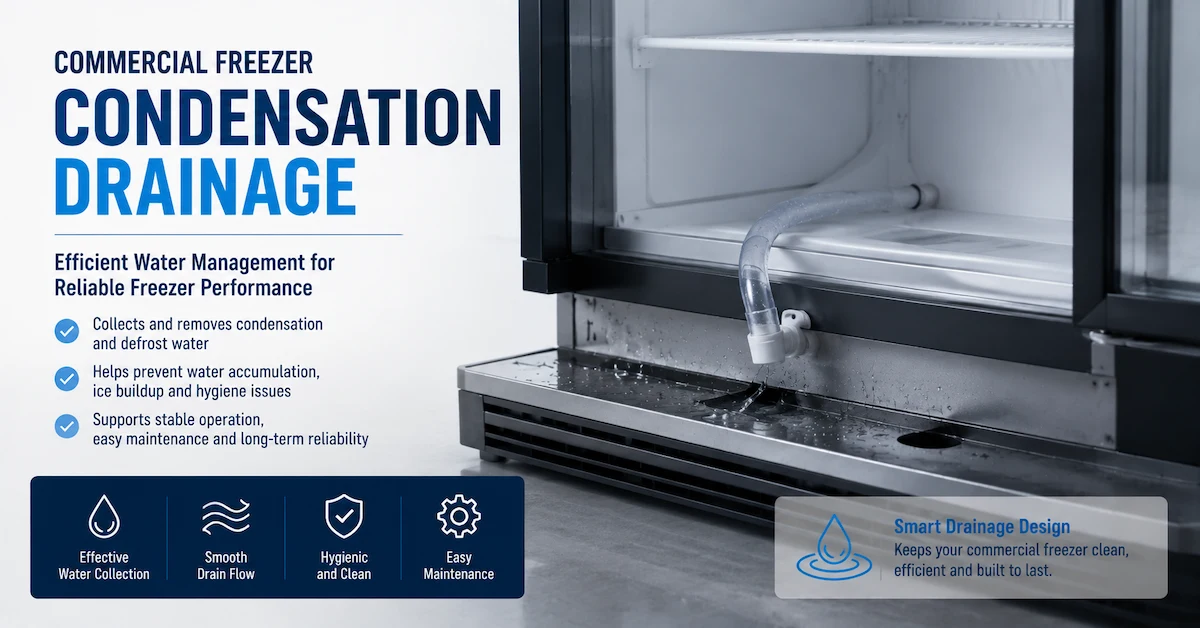
- Drainage
- Refrigeration restart
- Temperature recovery
For manual-defrost units, buyers should still confirm drainage and frost-management design.
Snowsea's Manual Defrost vs Automatic Defrost Freezer guide explains the procurement differences between the two approaches.
Electrical and Safety Inspection
Commercial freezer electrical systems should be inspected according to the product specification and requirements of the target market.
Typical factory checks may include:
- Power cord
- Plug
- Grounding
- Wiring connections
- Controller
- Switches
- Lighting
- Fans
- Compressor electrical connections
Depending on the manufacturer's test plan and applicable requirements, electrical tests may also address insulation or electrical leakage-related safety checks.
The exact test method and acceptance criteria should be defined by the relevant product specification and market requirements rather than assumed to be identical for every freezer.
Noise and Vibration Inspection
Unexpected noise may indicate:
- Fan contact
- Loose components
- Tubing vibration
- Compressor mounting problems
- Panel resonance
Noise inspection should therefore be performed after complete assembly.
A freezer that cools normally but produces abnormal vibration can still result in customer complaints and after-sales costs.
Loaded vs Empty Cabinet Testing
One important question for B2B buyers is whether testing reflects real use.
An empty cabinet may behave differently from a freezer filled with packaged products.
Product loading changes:
- Airflow
- Thermal mass
- Temperature recovery
- Evaporator demand
- Door-opening effects
For important projects, buyers should ask whether the manufacturer has experience testing equipment under representative loading conditions.
Final Appearance and Assembly Inspection
Technical performance is only one part of commercial freezer quality.
Before packing, inspectors should also check:
- Cabinet scratches
- Dents
- Panel gaps
- Door alignment
- Glass condition
- Handle installation
- Label position
- Controller display
- Casters or feet
- Logo and branding
- Internal accessories
- Protective film
For private-label brands, appearance consistency can directly affect retail acceptance.
Packaging and Pre-Shipment Inspection
Quality control should continue after freezer testing.
Packing inspection may verify:
- Protective materials
- Corner protection
- Foam protection
- Carton condition
- Pallet requirements
- Accessories
- Manuals
- Labels
- Shipping marks
A freezer can leave the production line in good condition but still be damaged during export transportation if packaging is inadequate.
Commercial Freezer Quality Testing Procedure Checklist
A practical Commercial Freezer Quality Testing Procedure should cover multiple quality dimensions rather than relying on one temperature reading.
| Test Area | What Buyers Should Verify | Main Risk Controlled |
|---|---|---|
| Incoming components | Correct model and condition | Component mismatch |
| Refrigeration circuit | Assembly and leakage condition | Cooling failure |
| Pull-down test | Cooling toward target range | Undersized system |
| Temperature stability | Stable operation over time | Product temperature fluctuation |
| Multi-point test | Temperature distribution | Warm zones |
| Recovery test | Recovery after disturbance | Slow commercial performance |
| Compressor check | Sound, vibration and operation | Reliability problems |
| Door sealing | Gasket and alignment | Air leakage |
| Airflow test | Fan and circulation | Uneven cooling |
| Defrost test | Complete defrost operation | Frost accumulation |
| Electrical inspection | Wiring and safety-related checks | Electrical risk |
| Appearance inspection | Cabinet and assembly quality | Customer complaints |
| Packaging inspection | Export protection | Shipping damage |
What Test Records Should B2B Buyers Request?
For bulk purchasing, buyers should ask suppliers what quality records are available.
Useful documentation may include:
- Inspection checklist
- Product serial or batch number
- Temperature test record
- Electrical test result
- Refrigeration test record
- Final inspection status
- Nonconformance records
- Corrective-action records
- Packing inspection result
Not every order requires the same amount of documentation.
However, clearer records improve traceability when buyers are purchasing large volumes or developing private-label programs.
Sample Approval Does Not Replace Bulk Quality Control
A good sample is important, but one approved sample cannot guarantee that every mass-production unit will perform identically.
Bulk production introduces variation through:
- Components
- Assembly
- Refrigerant charging
- Cabinet construction
- Wiring
- Door alignment
- Packaging
Importers should therefore define acceptance requirements before production begins.
For OEM/ODM projects, Snowsea can discuss product specifications, cabinet configurations, branding, and testing requirements through its OEM/ODM commercial refrigeration solutions.
What Should Importers Ask a Freezer Manufacturer?
Before placing a bulk order, consider asking:
- Which performance tests are completed before shipment?
- How long is temperature performance evaluated?
- Is temperature measured at multiple cabinet points?
- Is loaded-cabinet testing available?
- How is refrigerant leakage checked?
- How is door sealing inspected?
- Is automatic defrost tested?
- Are electrical checks recorded?
- How are failed units handled?
- Can inspection reports be supplied for OEM orders?
- Is each unit tested or only sampled?
- What final inspection is completed before packing?
These questions help buyers distinguish a structured quality-control process from a simple power-on inspection.
FAQ
What is a commercial freezer quality testing procedure?
It is a structured set of inspections and performance tests used to verify refrigeration, temperature, electrical, structural, sealing, airflow, appearance, and packaging quality before shipment.
Is reaching -18°C enough to prove freezer quality?
No. A single temperature reading does not show temperature uniformity, stability, recovery performance, sealing quality, airflow, or long-term system behavior.
How should freezer temperature be tested?
Temperature can be evaluated at multiple cabinet positions over a defined operating period to understand cooling stability and distribution.
Why is temperature recovery testing important?
Commercial freezers experience door openings and product loading. Recovery testing helps show how effectively the system returns toward normal operation after these disturbances.
Should every commercial freezer be tested before shipment?
The exact inspection plan depends on the manufacturer's quality system, order requirements, and product type. Buyers should confirm whether testing is performed unit-by-unit, by sampling, or through a combination of both.
What causes uneven freezer temperatures?
Possible causes include airflow restrictions, shelf loading, fan problems, door leakage, sensor position, insulation issues, or refrigeration-system imbalance.
How is freezer door sealing tested?
Manufacturers typically inspect gasket contact, door alignment, closing behavior, and visible sealing gaps according to their quality procedure.
Should automatic defrost be tested before shipment?
Yes, when the product includes an automatic defrost system, its controls, drainage, restart, and recovery should be verified according to the product design.
What quality documents should importers request?
Depending on the project, buyers may request inspection checklists, test records, batch identification, temperature records, electrical results, and final inspection documentation.
Can OEM buyers define additional quality tests?
Yes. OEM buyers can discuss additional test requirements, acceptance standards, inspection documentation, and packaging checks before bulk production.
Conclusion
A complete Commercial Freezer Quality Testing Procedure should verify much more than whether a freezer powers on and reaches a low temperature.
For importers, distributors, supermarket chains, food-service equipment buyers, and private-label brands, reliable quality control should evaluate refrigeration performance, temperature stability, recovery, airflow, door sealing, compressor operation, defrost, electrical assembly, cabinet construction, appearance, and export packaging.
The most valuable supplier is not necessarily the one claiming the largest number of tests. Buyers should look for defined procedures, measurable acceptance criteria, consistent execution, traceable records, and corrective action when a unit fails.
Snowsea provides commercial refrigeration equipment and OEM/ODM solutions for global B2B buyers. Explore Snowsea's commercial refrigeration products or contact Snowsea to discuss freezer specifications, factory testing requirements, inspection standards, and customized commercial refrigeration projects.